Hotel cabinet programs in Africa: 551 decisions, or one
The difference between hotel cabinet programs in Africa that open on date and programs that open late is rarely the factory. It is whether the building was planned as rooms, or as units. The Nigerian resort that delivered in 2024 ran bungalows and chalets from unit 201 to unit 551 - not "forty rooms" as a description, but numbered units as the planning unit. When the plan fixes the module, procurement, fit-out and handover stay identical from the first unit to the last, and the program stops being 551 separate decisions.
This is how the two largest African programs on this site actually ran: the numbered-unit resort in Nigeria, and the new-classical hotel in Uganda. Different styles, different buildings, the same underlying mechanic - a repeated standard carried by a number system, with everything custom built against it.
The Nigeria resort: one module to the pool edge
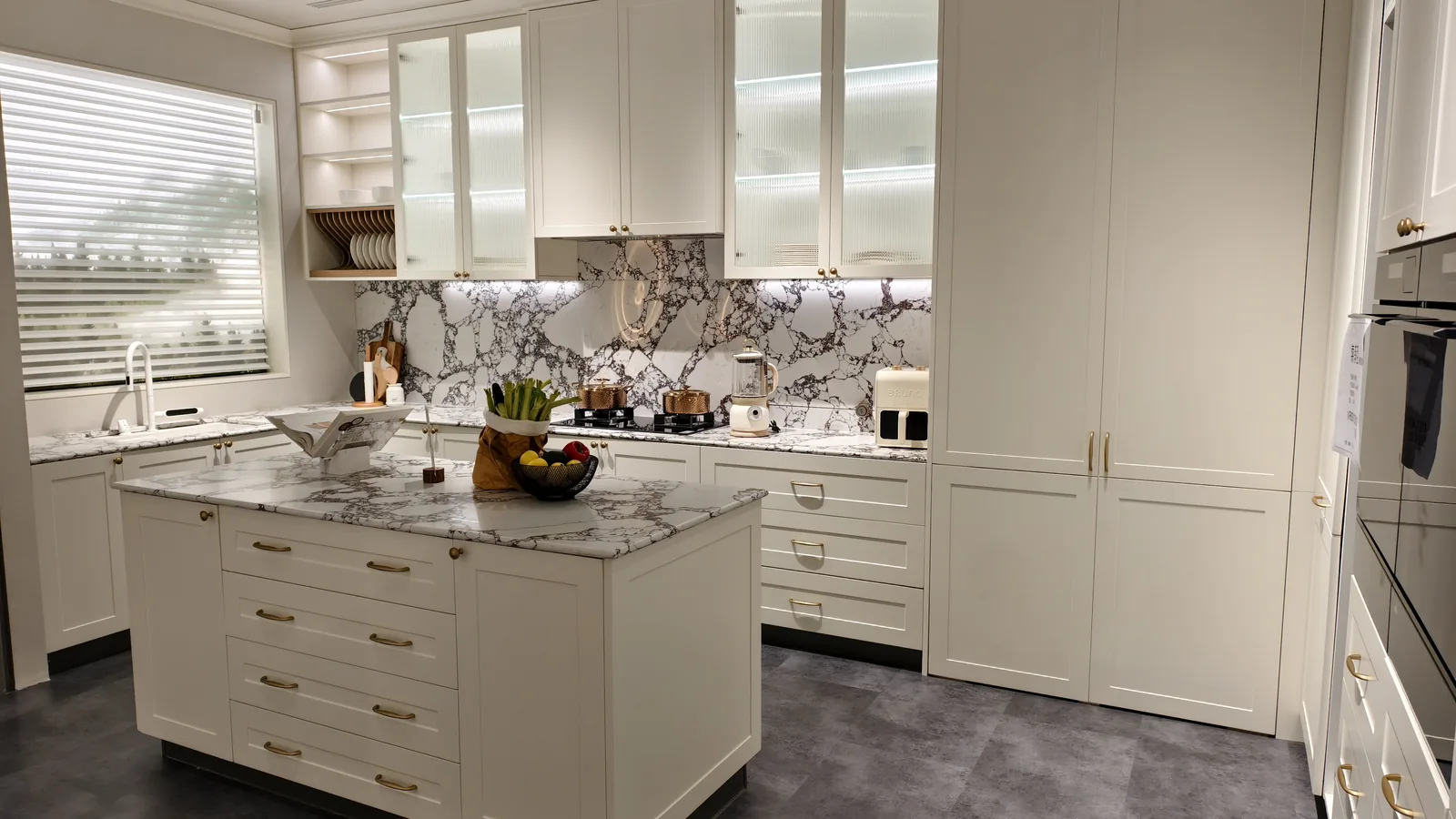
The brief was a destination that has to feel like a hotel: numbered bungalows and chalets, two restaurants, a reception, a gym and the pool deck, with wooden finishes set early - warm across every unit. So the package covered the full property: guest-room cabinetry to a repeated standard, wet areas as integrated kits, and the public areas as custom builds on the same material language.
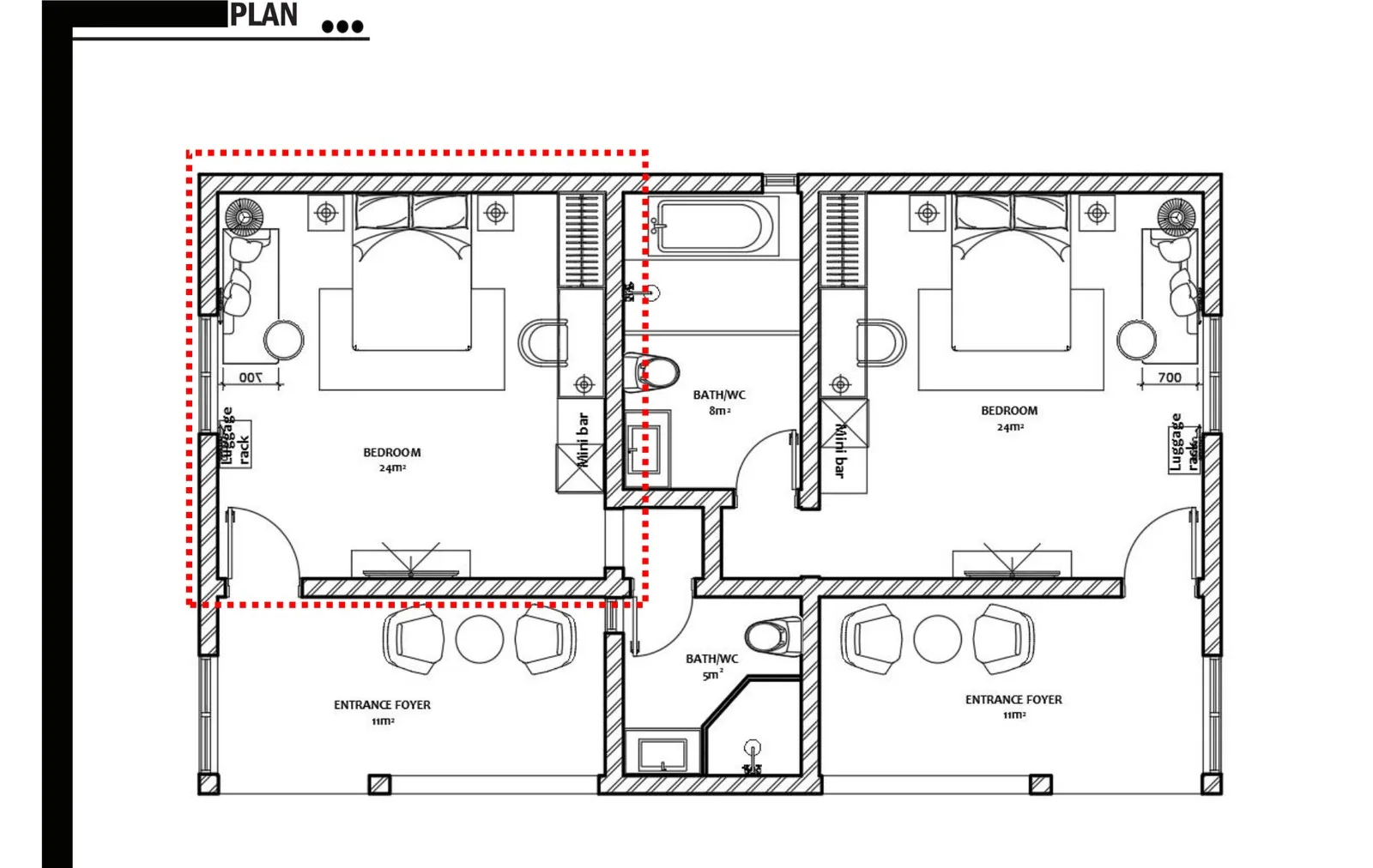
The module did the work. The bungalow plan fixes the foyer, the bedroom and the bath on one grid - a 24 m² bedroom with its bath, opening onto the entrance foyer - so one drawing covers the whole block. That is the discipline: one sheet to price, one sheet to schedule, one sheet to hand over.
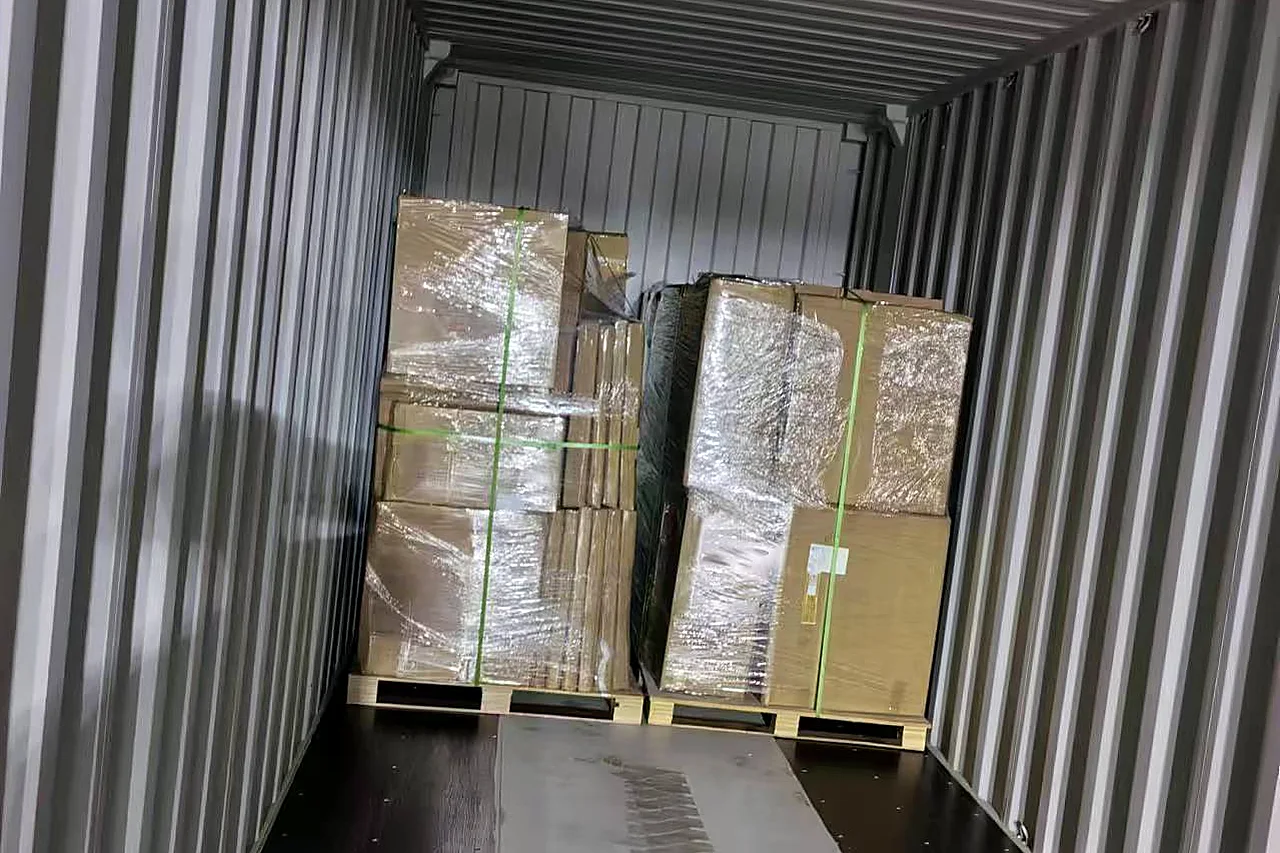
Sixty guest rooms ran to that single wooden standard - the same door, the same hardware, the same finish code in every unit. The wet areas shipped as complete kits, fixtures, stone and joinery matched and test-fitted in the factory, because a shower room that is right in unit 201 has to be right in unit 450 without anyone re-deciding it. Production ran in sequences - unit kits built in the order the building's calendar needed them - and the room groups shipped as staged ocean freight while the floors came ready, duty-paid to Nigeria, with installation running to the opening.
The Uganda hotel: the opening date was the spec
The Uganda hotel ran the other shape hotel cabinet programs in Africa take: guest rooms repeat, but lobbies, bars and service areas do not. The constraint was the calendar, not the style - every public area fully custom, guest rooms on a repeated standard, and the opening date as the master spec that every category was staged against.
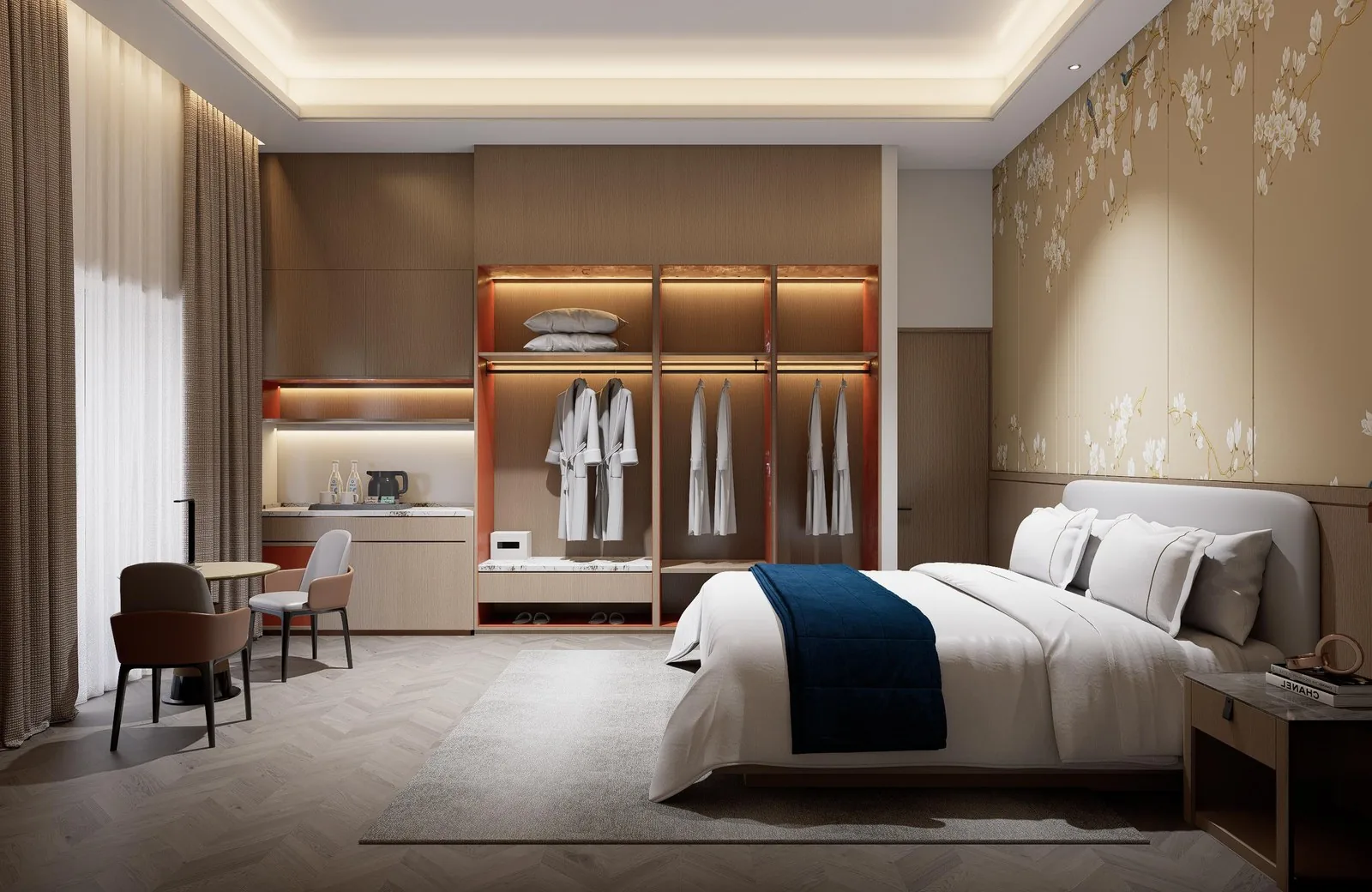
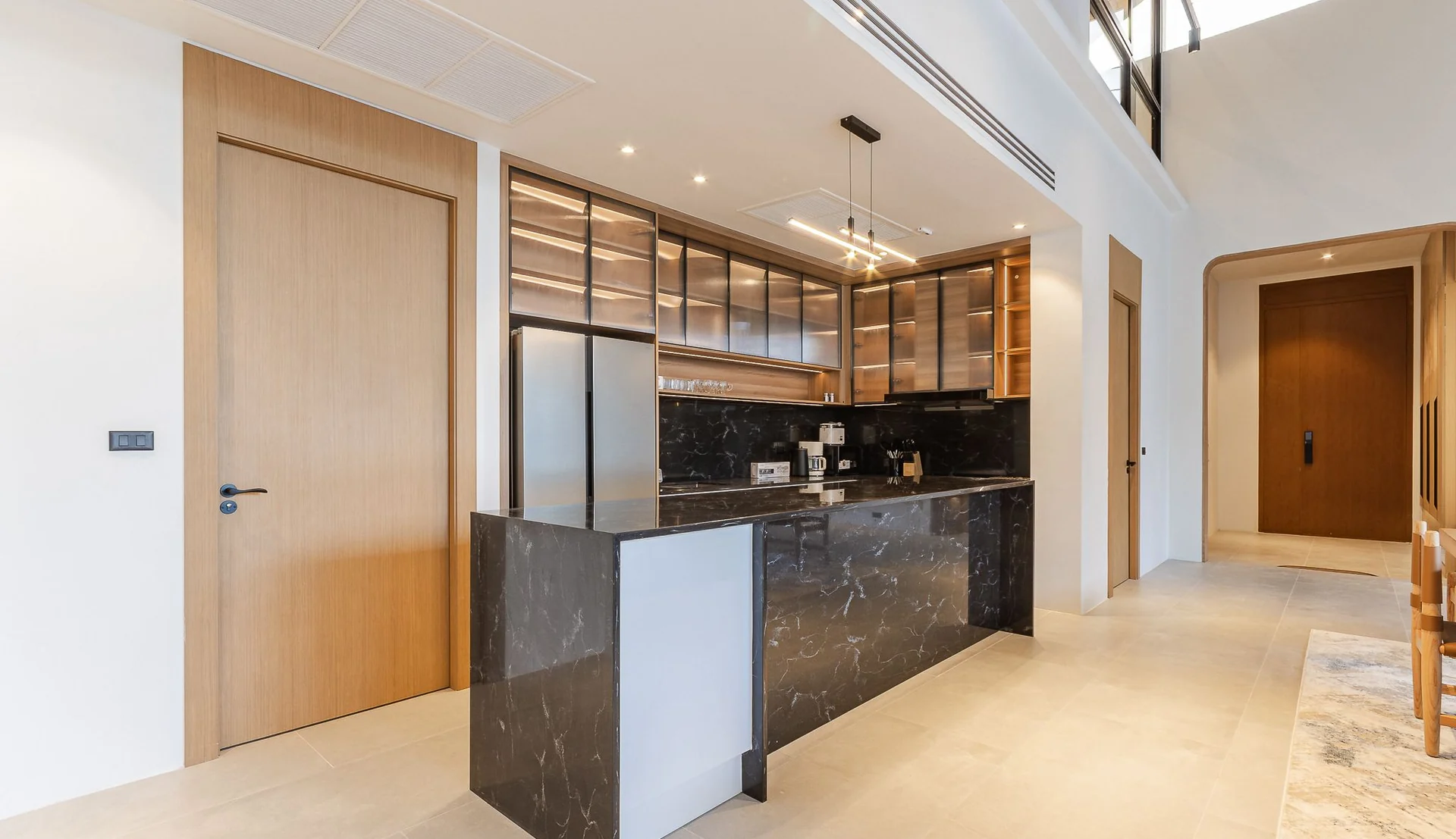
The package went beyond cabinetry and ran six categories as one: custom furnishings, matched metalwork, stone, brick, custom lighting and smart integrated bathrooms. The mechanics that kept it together: custom pieces test-fitted against the room standard before they left, stone inspected slab by slab, and the public areas shipped ahead of the final room groups so the site never had to hold what it could not yet install. One project team coordinated every category against the opening date - the repeated suite was the floor plan, and the custom rooms were built to the interior design, not approximated from it.
The mechanics that carry both programs
| Step | What it does for the program |
|---|---|
| Spec freeze | One layout per unit type, on a signed frozen spec - the repeat schedule is built from it, and the freeze is what makes "unit 450 like unit 201" a fact instead of a hope |
| Production in sequences | Floors and units built in the order the building's calendar needs them, not in the order the factory finds convenient |
| Repeat-unit QC | Panel-by-panel checks at the 24/48/72-hour gates; unit one and every later unit must be indistinguishable |
| Production codes | Each finish carries a production code, so a replacement door or panel matches the original run - not re-mixed from a sample |
| Per-unit crating | Crates numbered to install order, pallets racked bay by bay - the installer's first-morning document is the packing list |
| Staged shipping | Containers land as the fit-out is ready; the site holds only what the next stage needs |
| The 48-hour window | Damage claims run from delivery, photos plus order number, replacements matched by production code - written into the contract, covered in the damaged-in-transit guide |
The first row is the one that does the most quiet work, and it is the subject of the multi-unit standardisation guide - one frozen spec per unit type, per-unit measurement, and the QC that checks repeat units against the first approved kit. Hotel cabinet programs in Africa that hold their opening date all run on this shape - repeated units plus a custom core - and the commercial line is built for exactly it, with the container-level structure behind it walked in the OEM/ODM at container level guide.
Why the number beats the room count
A room count is a description; a number is a system. The three places the system pays:
- On the floor. A site that works from the same numbered document for every unit does not re-decide anything at height, in a bungalow, in week seventeen. The crew installs unit 388 the way they installed unit 201, because the crate, the layout callout and the production code all say the same thing.
- On the schedule. When every unit is a module, the shipping plan is arithmetic, not negotiation: how many crates per container, which floor is ready, which group goes next. Staged shipping is what lets a resort open floor by floor instead of waiting for the last container.
- On the warranty. A replacement part that matches by production code is a part that fits the year-one run and the year-four run. That is the difference between a guarantee a factory can honour across an ocean leg and one it cannot.
None of this shows up in a render. It shows up as sixty rooms that read as one property, and an opening date that held.
What to send to start a program
Hotel cabinet programs in Africa start with the same file the Africa market page names: the floor plan, the room dimensions and the unit count - plus the opening date. The quote comes back per unit: the repeated spec, the per-unit crating and the written schedule, usually within one business day. The terms follow the record: the 2024 Nigerian resort program shipped duty-paid in staged containers, the South Africa and Zambia villa programs ran duty-paid, and new markets are quoted FOB or DAP per port, with the term, the port and the document pack named in writing before the deposit.
The two programs, on the record: the Nigerian resort, units 201 to 551, and the Uganda hotel, custom to the last room - with the full delivered record across all markets on the projects page.
FAQ
How many repeated rooms can a program hold on one standard?
The Nigerian resort ran sixty guest rooms - unit numbers 201 to 551 - on one wooden standard: the same door, the same hardware, the same finish code in every unit, with the wet areas kit-built and test-fitted in the factory. The repeated standard is the product; the public areas are the accent.
What keeps unit 201 and unit 450 identical?
One frozen spec per unit type, one hardware list, one finish code, and QC that checks repeat units against the first approved kit at the 24, 48 and 72-hour gates. Each finish carries a production code, so a replacement door or panel matches the original run - it is not re-mixed from a sample.
How does a container schedule meet an opening date?
Production runs in the sequence the building's calendar needs, crating is per unit and numbered to install order, and the containers are staged against the fit-out instead of landing all at once. The site holds only what the next stage needs - in the Uganda hotel, the public areas shipped before the final room groups.
Can one factory run the custom public areas and the repeated rooms together?
Yes - that is the package structure. The Uganda hotel ran guest-room suites on the repeated standard with fully custom lobby, bar, restaurant, stone, matched metalwork and smart bathrooms as one program, with custom pieces test-fitted against the room standard and stone inspected slab by slab before it left the factory.
What happens when a panel is damaged in transit?
The claim window is 48 hours from delivery, with photos and the order number. Replacement parts match by production code and ship by courier where practical or with the next container - the window is written into the contract, which is what makes a 551-unit program serviceable across an ocean leg.
Which terms do these programs run on?
The 2024 Nigerian resort program shipped duty-paid in staged containers, and the South Africa and Zambia villa programs also ran duty-paid. New markets are quoted FOB or DAP per port, with the term, the port and the document pack named in writing before the deposit.