




Five documents that decide a repeat order
None of these are contracts in the legal sense. All of them are what you reach for when container four looks different, and each one closes a specific hole.
| Document | What it prevents |
|---|---|
| Frozen spec sheet, version-numbered | Board, banding, finish and hardware drift between orders |
| Report numbers with expiry dates | "Equivalent" material substitution in the same emissions class |
| Approved sample photos with IDs | Colour and sheen arguments that no screen can settle |
| The photo-gate schedule (24 / 48 / 72 hours) | Faults discovered after the container has sailed |
| The change log on the same page | "We thought you had agreed" - dated, attributed, signed |
The eight blocks of a spec sheet
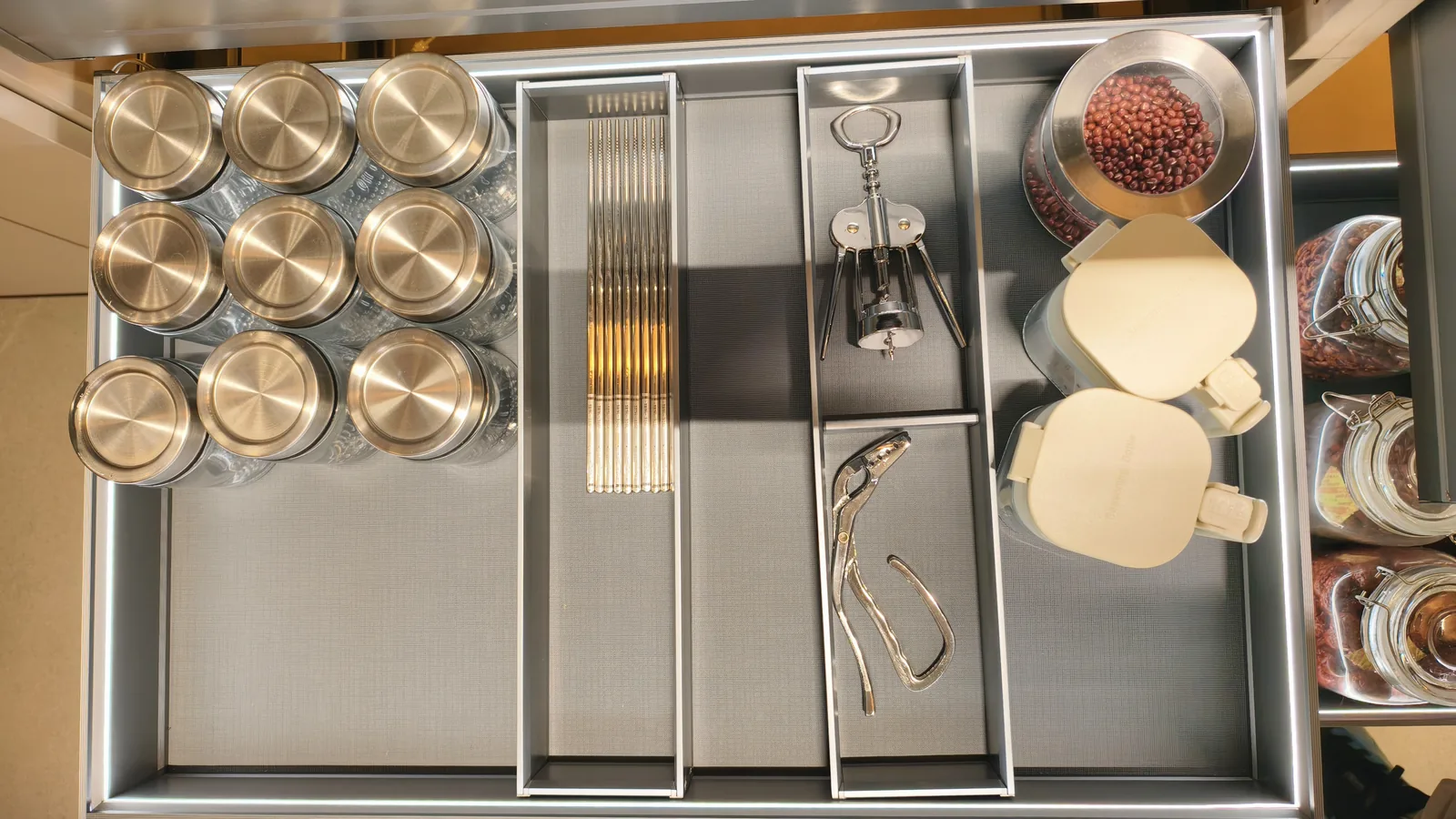
Dimension grid and cut tolerance; carcase board; door substrate and finish system; back panel; edge banding; hinges; slides; packaging and labelling. Each block names a brand, a grade or a model number - never a class or a feature. The reasoning, and the template itself, are in the frozen-spec guide.
Reading a factory's first reply
Before you pay for a sample, the first two emails already show most of what you need to know. Send the eight-block spec with a floor plan, and score the reply against these four lines:
| What you sent | What a production factory answers | What it signals |
|---|---|---|
| A floor plan or kitchen photo with rough dimensions | Questions on opening direction, hinge side, worktop overhang and wall conditions | They price what they build, not a catalogue line |
| The eight-block spec sheet | A line-by-line reply: confirmed, substituted with a model number, or priced separately | They read specifications instead of negotiating them away |
| A request for report numbers | Numbers with expiry dates, PDF available on request | The documents exist in the factory, not only in the sales deck |
| A question about samples | Sample cost, lead time and how the fee credits the first order | Sampling is a normal part of their process |
Three red flags in the same first reply - a firm price before any specification questions, a "we can do anything" scope answer, and no sample terms offered unprompted - usually mean the quotation is a negotiation opening rather than a commitment you can build a project on. That is not a disqualification; it is the reason the next step is a frozen spec and a sample, not a deposit. And even a reply that clears all four lines is still only a promise: the verification pass and the sample are what convert it into evidence, and the five documents above are what keep it evidence after container one.
The deeper pass - nine checks including line visits, camera angles and reference calls - is in the remote-verification guide. The full spec template, and the document that carries the reply forward, is in the frozen-spec guide.
Which to read first
| If you are… | Start with |
|---|---|
| About to sign with a new supplier | The nine verification checks, then the frozen spec |
| Holding two quotes and unsure which is real | How to read a cabinet quotation |
| Placing a second or third container | Frozen spec - this is where repeat orders are won or lost |
| Going from one project to a program | Opening a cabinet supply line |
| New to custom manufacturing | MOQ explained - what a minimum actually covers |
| Buying your first container | The importing and landed-cost series |
| Sourcing outside China - Vietnam, or a second origin | Vietnam vs China, side by side |
FAQ
What single document prevents spec drift?
The frozen spec sheet: one page, version-numbered, signed by both sides, with eight blocks - dimension grid and tolerance, carcase board, door and finish, back panel, edge banding, hinges, slides, packaging and labelling. Every block names a brand, a grade or a model number, never a class ("E0") or a feature ("soft-close").
How do I verify a supplier I have never visited?
Run the nine checks in order: line ownership, capacity stated against your order with a written slot, board brand and grade with a verifiable report number, edge-banding machine and glue, hardware model numbers with a paper trail, report verification with the issuing body, trial assembly on every order, the 24/48/72-hour photo gates, and lead-time history with a stated definition. The verification guide includes the 30-minute live video audit shot list.
Why do two quotations for the same kitchen land so far apart?
Usually the unit convention, not the quality: base-and-wall runs only versus talls, islands and fillers included; which finish band; hardware by family versus by model; and whether the number is FOB or duty-paid. The quotation guide normalises six lines so both prices describe the same kitchen.
When does a repeat order become a supply line?
When the sample, the spec sheet, the approval photos and the photo gates all exist as documents - not as messages. The supply-line guide walks the sequence from first sample to the second container, and the documents that make order four behave like order one.
Do you publish your own specification numbers?
Yes, and the articles in this series cite them: 18mm E0 plywood at or under 0.05 mg/m³ (GB/T 39600, report SQ2405393), 2mm PVB hot-melt banding on every cut edge, Blum soft-close hinges rated to 50,000 cycles, full-extension slides rated 35-45 kg, photo gates at 24/48/72 hours, 10-14 days of factory time across ten production stages, and 98% on-time delivery measured across delivered programs.