How to import kitchen cabinets to Nigeria: the order that works, and the order that fails at Apapa
If you import kitchen cabinets to Nigeria, the first thing to understand is that the import file is a currency file that customs then checks - and the failure mode is the order, not the paperwork. The sequence that works: supplier quote, compliance check, Form M registration, shipment, PAAR issue, declaration, duty, release. The sequence that fails is ship first and then ask the clearing agent what was needed - because Form M does not accept retroactive filing, and the container sits at Apapa while storage charges run.
This guide walks that sequence from the factory side: what the May 2026 tariff amendments changed, what the duty stack on a wooden cabinet actually is, where SONCAP does and does not reach a furniture consignment, and exactly which documents the factory hands over at the door. The buyer-side rules - the Form M threshold, the advance-payment ceiling, the port dwell - live on the Nigeria market page, which this guide complements rather than repeats.
What the 2026 tariff amendments changed
The 2026 fiscal policy measures and tariff amendments, approved on 1 April 2026, are the first change to Nigeria's import regime since 2023, and the Nigeria Customs Service formally adopted them as the "Customs, Excise Tariff, Etc. (Variation) Order (2026)". The tariff amendments took effect on 1 May 2026, with a 90-day transition for importers that had already completed a Form M and entered irrevocable trade agreements (HKTDC Regulatory Alert, 27 Aug 2026).
Three parts of the new regime matter to a furniture importer:
- The Import Adjustment Tax (IAT) applies to 192 HS-coded products imported from outside the ECOWAS area, and phases down by 10 percent of the base rate each year from January 2027 until it is fully eliminated in 2036 (USDA FAS GAIN NI2026-0010, 22 May 2026).
- A National List of 127 products carries a unilateral rate below the standard ECOWAS rate for 2026.
- The revised prohibition list - 17 broad headings, 115 HS codes, applied to goods originating outside ECOWAS - is food-heavy: poultry and meat, eggs, refined oils, retail sugars, tomato products, and, among non-food items, bagged cement, NPK fertilisers, soaps, corrugated cartons and some steel. Furniture does not appear on it.
One negative finding is worth stating plainly: the published 2026 annexes do not list wooden cabinet lines (HS 9403) under the IAT. The cabinet entry therefore sits on the base ECOWAS tariff, and the exact rate in force on your entry date is a question for your broker against the customs schedule - not a number a factory should quote from memory.
Form M: registered before the goods leave China
Form M is Nigeria's electronic import declaration for physical goods - the mandatory pre-importation documentation process set up by the Federal Ministry of Finance and the Central Bank of Nigeria to monitor goods imported into the country and to enable the collection of import duties (Nigeria Trade Portal, procedure 617). It is opened through the importer's Authorised Dealer bank on the CBN Trade Portal and is valid only once Nigeria Customs has registered it. It is required for commercial imports above the Form M threshold, runs for 180 days, extendable, and it is not applied for after the fact: the goods ship under the number, not the promise of one.
Two mechanical facts do most of the work in the whole file.
The Form M number has to appear on the shipping documents. Bill of lading, commercial invoice, packing list - the file is one file, and the number is the thread through it. The bank that opens the Form M is the same bank that issues the PAAR, which makes the importer's bank the pivot of the sequence.
The invoice has to match the Form M exactly. Since 2026 the CBN cross-checks Form M data against customs declarations in real time and compares invoice prices against benchmark data. A value or HS-code mismatch is flagged before the vessel arrives, and mismatches are one of the leading causes of cargo holds at Lagos. That is why the commercial invoice we issue is built to mirror the Form M line for line - same value, same HS code - instead of being a document that gets reconciled afterwards.
The PAAR: issued before the vessel arrives
The Pre-Arrival Assessment Report sits in the same filing as Form M on the official procedure - the portal pairs them, and the importer's bank processes both (Nigeria Trade Portal). On a cabinet program the PAAR lands in the middle of production: the Form M is registered at the order stage, the PAAR is issued once the invoice and the packing list are frozen, and the container ships against a file that is already whole. There is no PAAR-after-loading path, which is the reason the document freeze happens before the crating does.
The duty on a wooden cabinet, stacked
Commercial furniture under HS 9401 and 9403 sits in the 20 percent band of the ECOWAS Common External Tariff, charged on the CIF value. On top of that base, the 2026 stack runs:
| Charge | Base | Rate |
|---|---|---|
| ECOWAS CET band (HS 9401 / 9403) | CIF | 20 percent |
| Import Adjustment Tax, where the line is on a 2026 annex | per line | broker confirms |
| Surcharge | import duty | 7 percent |
| CISS - Comprehensive Import Supervision Scheme | FOB | 1 percent |
| ETLS - ECOWAS Trade Liberalisation Scheme | CIF | 0.5 percent |
| VAT | CIF plus duty plus levies | 7.5 percent |
Everything is assessed in naira at the CBN exchange rate in force when the shipment is assessed, so the local-currency total moves with the rate between purchase and arrival - the buffer belongs in the importer's estimate, not in the supplier's quote. The two biggest causes of delay and extra cost at Nigerian customs are incorrect HS codes and paperwork errors (DHL duty calculation guide, 25 Jun 2026). That is the whole argument of this guide: the entry is won on classification and file consistency, before the vessel is cut from port.
SONCAP: the scope question for furniture
SONCAP - the Standards Organisation of Nigeria Conformity Assessment Programme - is a pre-shipment verification that regulated products meet Nigerian industrial standards before they leave the exporting country, run through accredited third-party inspection companies including SGS, Intertek, Bureau Veritas, TUV Rheinland and Cotecna. It has two documents: the Product Certificate (PC), issued for a specific product from a specific manufacturer and valid for one to three years, and the SONCAP Certificate (SC), issued per shipment, valid for 90 days, and required before the vessel arrives. The program cannot be fixed at the port: a consignment that reaches Apapa without its SC cannot be released, and the storage clock runs anyway.
The honest scope reading for furniture: the regulated list covers roughly 40 to 50 percent of typical consumer-goods imports, and in practice most furniture sits outside it - cabinets, casegoods and non-electrical joinery are the common read. Two caveats keep it honest. The list is updated periodically, so the check is the current list on son.gov.ng against your exact HS line, not this article. And customs can still request a SONCAP exemption certificate for non-regulated goods, which means the confirming conversation with the clearing agent happens before loading, not at the counter. Where a product is regulated, the PC and the SC run alongside production - arranged against the goods, not against the invoice - so the certificates are in hand by the time the crates are.
The port sequence at Apapa
The port leg of the file to import kitchen cabinets to Nigeria runs through Lagos: of the three ports, Apapa carries the worst access congestion, with Tin Can Island and Onne as the alternatives. Ocean transit from South China runs roughly 35 to 45 days direct and 45 to 60 days with transshipment, and reported cargo dwell at Nigerian seaports sits around 21 days. The dwell belongs in the installation date, not in the supplier's lead time - a container that is late at the border is not a factory that is late in the floor.
The full sequence, end to end:
| Step | What happens |
|---|---|
| Quote | Supplier quote with the HS code named per line |
| Compliance check | The HS line against the prohibition list (furniture is not listed), the SONCAP scope check, ISPM 15 on the crating |
| Form M | Registered through the importer's bank, the number issued |
| Document freeze | Invoice and packing list frozen, built to mirror the Form M |
| PAAR | Issued before loading |
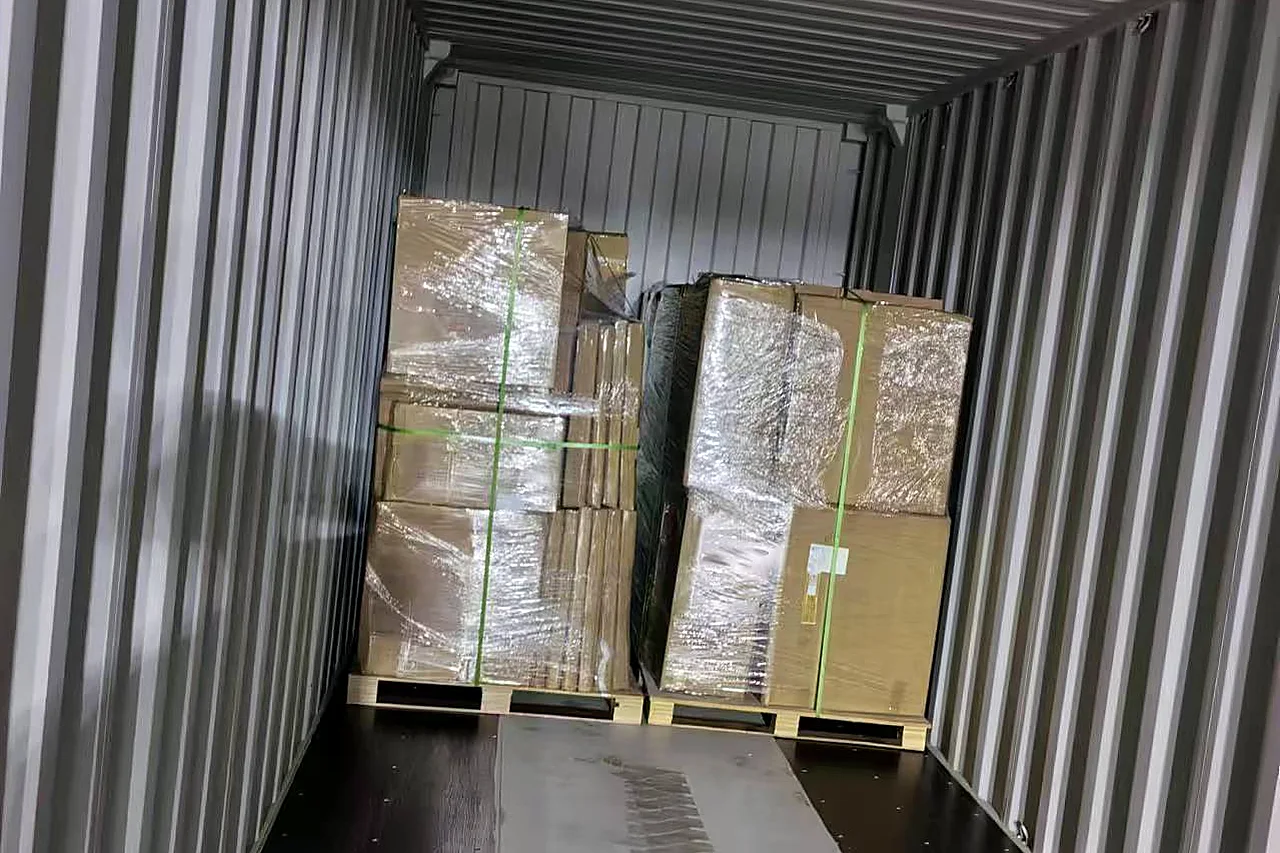
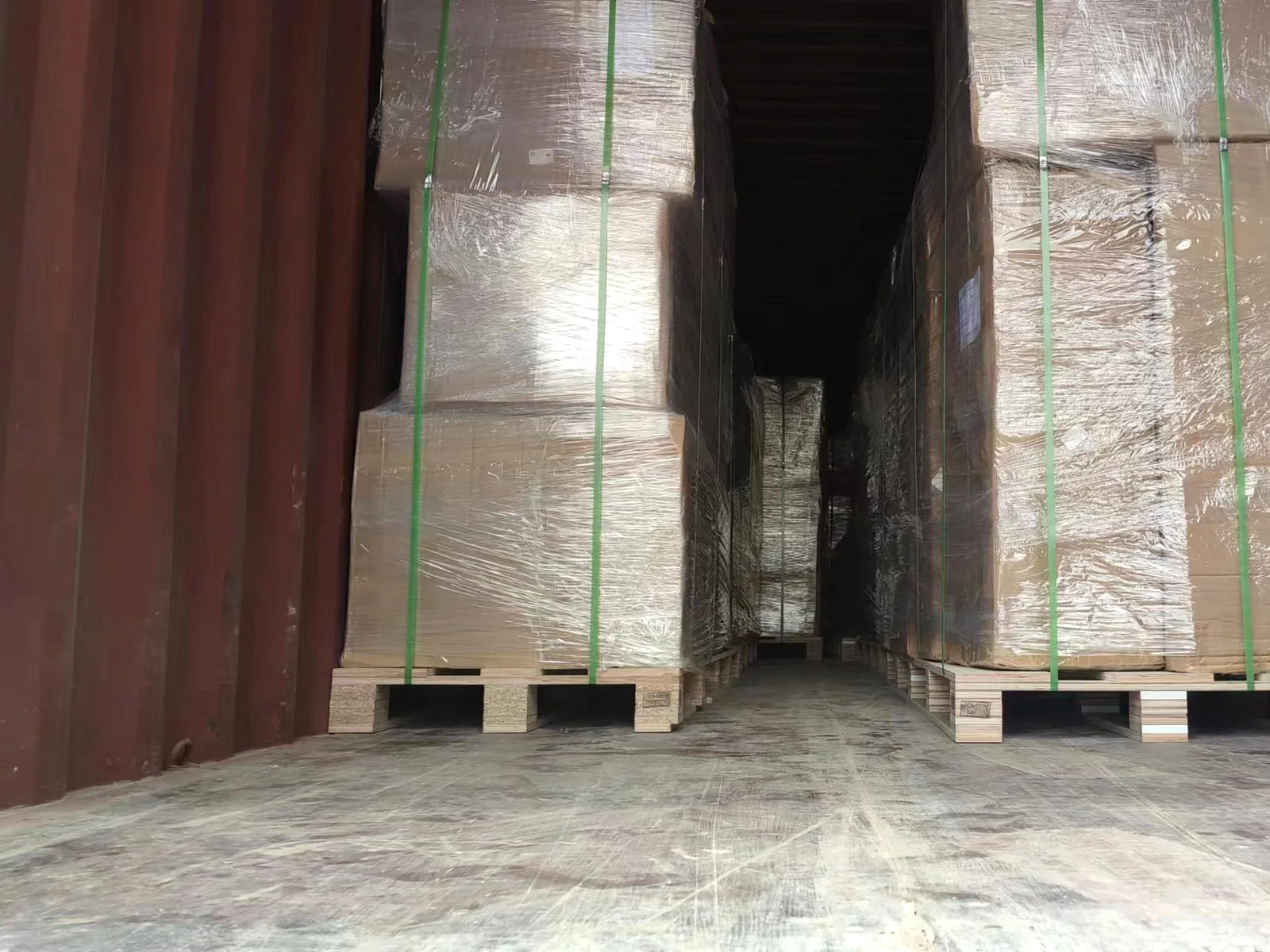
| Shipment | Numbered crates, staged where the program requires |
| Declaration | Duty on the CIF at the CBN rate |
| Release | Dwell, delivery - and the 48-hour damage-claim window that starts at delivery, covered in the damaged-in-transit guide |
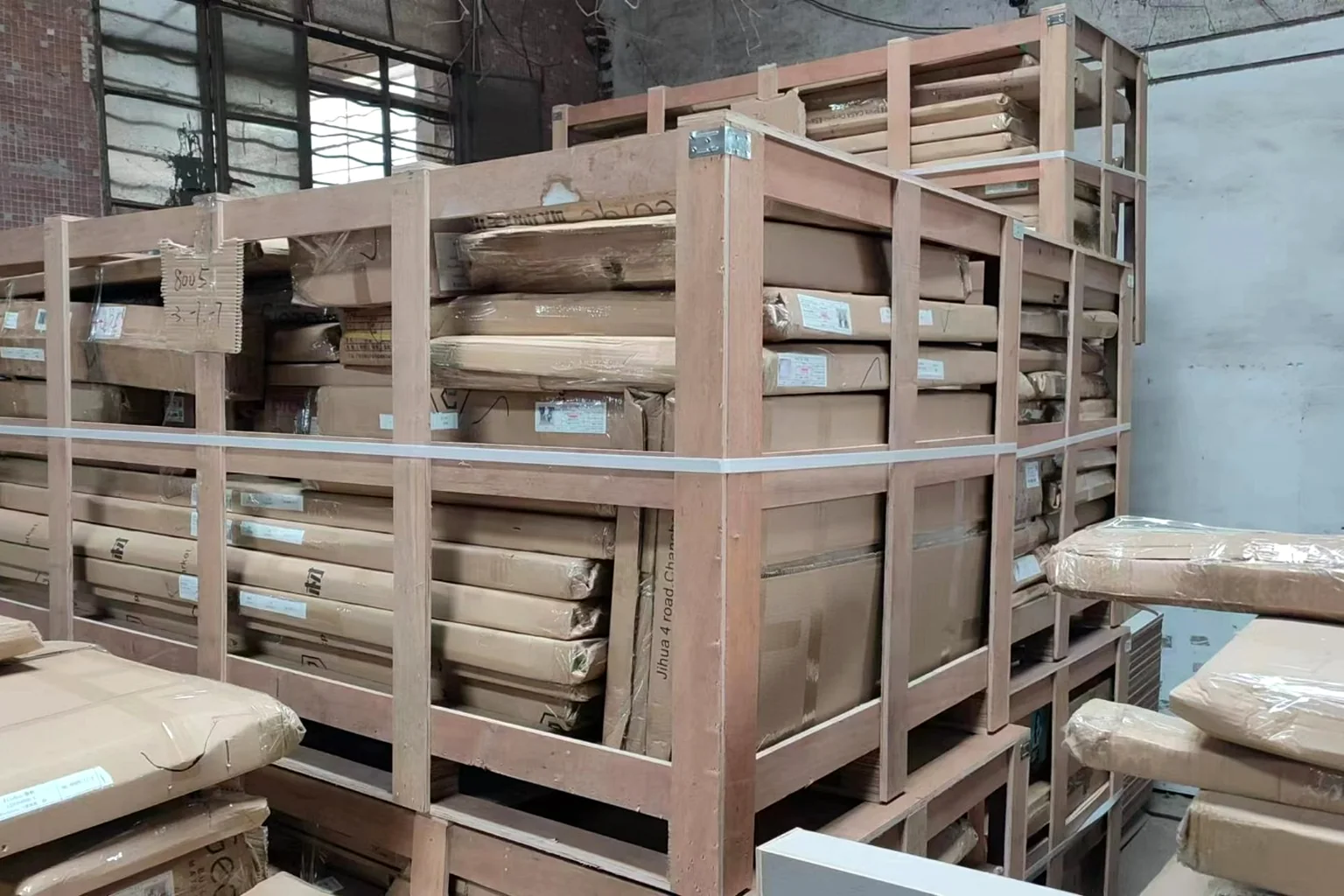
The crating is a compliance object, not just protection. Wood packaging material is ISPM 15-regulated, and the mixed crate - a plywood skin on a solid timber frame - is regulated because the frame is raw wood. The ISPM 15 guide walks the treatment, the mark and the exemptions in detail, and the flat-pack versus assembled guide covers how the two shipping states change the load.
The 2024 resort, as the reference run
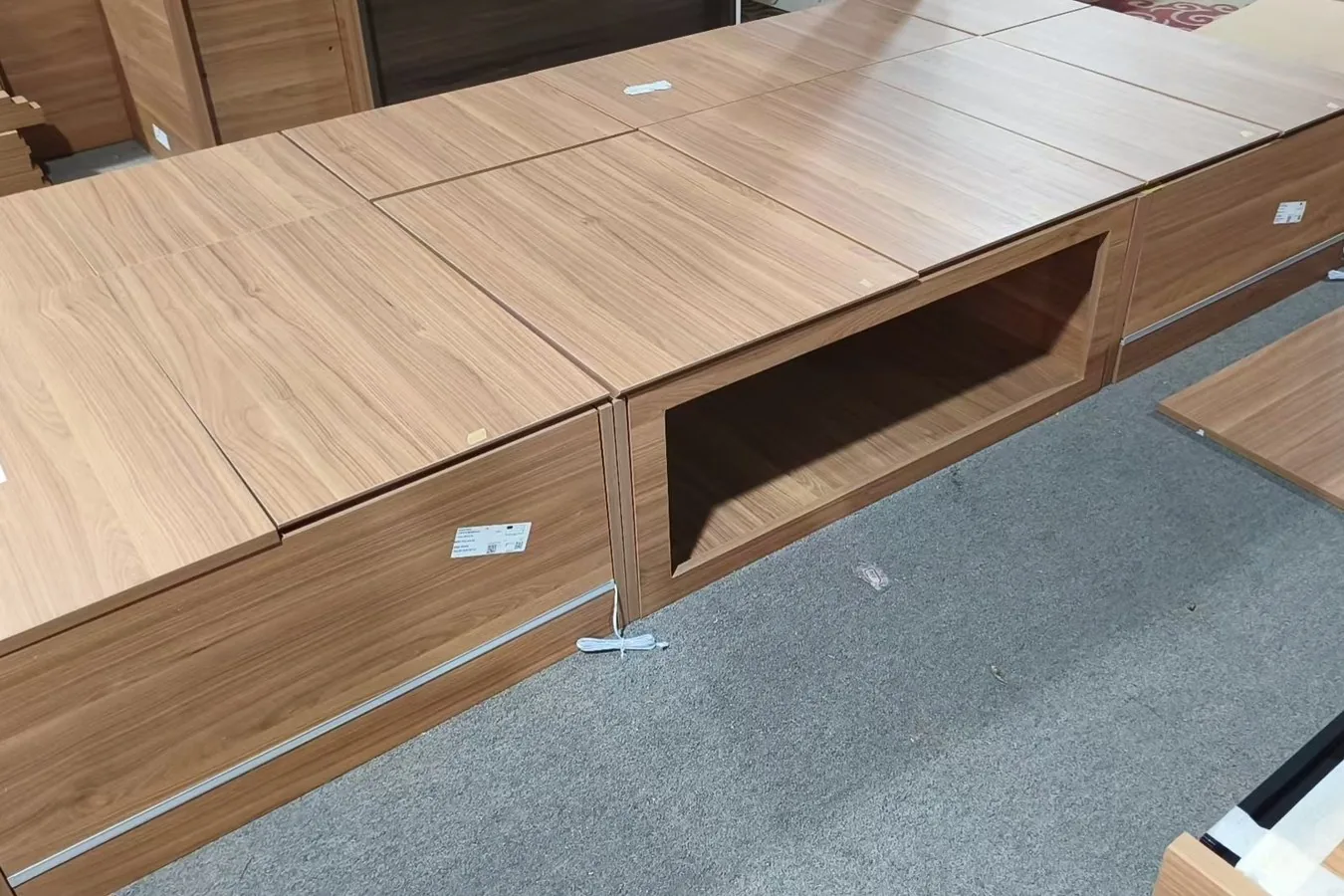
The Nigerian resort program ran this exact sequence at scale: units 201 to 551, sixty guest rooms on one wooden standard, wet areas kit-built and test-fitted in the factory, five public areas on the same material language, delivered in 2024. The room groups shipped as staged ocean freight while the building's floors came ready, and the program ran duty-paid to Nigeria - the one delivered program on this site where the whole border file was carried from the factory side. New markets are quoted FOB or DAP per port, with the term, the port and the document pack named in writing before the deposit; the Africa market page holds the record and the terms.
What the factory hands over at the door
The export standard is the same on every program that leaves the factory, and it is what the file to import kitchen cabinets to Nigeria runs against:
- The commercial invoice, mirroring the Form M - same value, same HS code, per line
- The crate-by-crate packing list, numbered to install order - the installer's first-morning document and the clearing agent's reference
- ISPM 15-compliant crating, marked, with panels nested and numbered to the layout
- The certificate of origin for the entry file
- The 24/48/72-hour QC gates at production, and the 48-hour damage-claim window written into the contract
The measuring and loading numbers behind that file - container capacities, the densities, the delivered programs crate by crate - sit on one page: the cabinet spec sheet.
Sources, as of November 2026
- Form M and PAAR procedure: Nigeria Trade Portal, procedure 617 (Federal Ministry of Finance / Central Bank of Nigeria)
- The 2026 tariff amendments: USDA FAS GAIN NI2026-0010, 22 May 2026 and HKTDC Regulatory Alert, 27 Aug 2026, with the Nigeria Customs Service circular on the Variation Order (2026)
- The charge stack - surcharge, CISS, ETLS, VAT: DHL Nigeria duty calculation guide, 25 Jun 2026
- SONCAP mechanics and scope: soleyb2b SONCAP guide, 14 Oct 2026; the current regulated list is on son.gov.ng
- The Nigeria rates, the FX ceiling and the port figures: the Nigeria market page on this site
From Form M to release, that is the full sequence to import kitchen cabinets to Nigeria. This guide is a framework for the conversation with your agent, not a legal or customs opinion. The final scope reading on your exact goods, the HS classification of each line, and the rate in force on your entry date stay with a licensed broker - and the current official regulations govern over anything published here.
FAQ
Do I need SONCAP for kitchen cabinets imported into Nigeria?
Usually not. Furniture sits outside the Standards Organisation of Nigeria's regulated list in most cases - the list covers roughly 40 to 50 percent of typical consumer-goods imports, and it is updated periodically, so the check is your exact HS line against the current list on son.gov.ng before loading. Customs can still request a SONCAP exemption certificate for non-regulated goods. Where a product is regulated, the Product Certificate and the per-shipment SONCAP Certificate must be in hand before the vessel arrives - the program cannot be fixed at the port.
When does the Form M have to exist?
Before the goods leave China. Form M is the electronic import declaration opened through your Authorised Dealer bank on the CBN Trade Portal, and it is valid only once Nigeria Customs has registered it. It is required for commercial imports above the Form M threshold, runs for 180 days and is extendable, and retroactive filings are not accepted. The Form M number has to appear on the shipping documents, and the bank that opens it also issues the PAAR, which has to be out before the vessel arrives.
What duty does Nigeria charge on wooden cabinets in 2026?
Commercial furniture under HS 9401 and 9403 sits in the 20 percent band of the ECOWAS Common External Tariff, charged on the CIF value. Stacked on top: a 7 percent surcharge of the duty, the CISS levy at 1 percent of FOB value, the ETLS levy at 0.5 percent of CIF, and VAT at 7.5 percent. The 2026 tariff amendments took effect 1 May 2026 and put an import adjustment tax on 192 HS lines that phases out by 2036; the published 2026 annexes do not list wooden cabinet lines, so your broker confirms the exact rate in force on your entry date.
Why does the invoice have to match the Form M exactly?
Because since 2026 the CBN cross-checks Form M data against customs declarations in real time and compares invoice prices against benchmark data. A value or HS-code mismatch is flagged before the vessel arrives, and a mismatch is one of the leading causes of a cargo hold at Lagos. The factory's commercial invoice is therefore built to mirror the Form M line for line - the same value, the same HS code - and the packing list carries the crate numbering your agent clears against.
Which port does a cabinet container land at, and how long is the dwell?
Lagos runs the program. Apapa carries the worst access congestion of the Lagos ports, with Tin Can Island and Onne as the alternatives. Ocean transit from South China runs roughly 35 to 45 days direct, 45 to 60 days with transshipment, and reported cargo dwell at Nigerian seaports sits around 21 days. The dwell belongs in the installation date, not in the supplier's lead time.
What does the factory hand over at the door for a Nigerian entry?
The commercial invoice mirroring the Form M, the crate-by-crate packing list numbered to install order, ISPM 15-compliant marked crating, the certificate of origin, the 24/48/72-hour QC gates at production and the 48-hour damage-claim window written into the contract. The 2024 Nigerian resort program - units 201 to 551 - ran that file staged and duty-paid; new markets are quoted FOB or DAP per port, with the term, the port and the document pack named in writing before the deposit.