What cabinet OEM ODM China actually covers at container level
Cabinet OEM ODM in China covers three different depths of "custom", and most confusion starts when a buyer quotes one level and is sold another. At the shallow end you pick a finish from the standard line and put your label on the carton. At the deep end our engineering draws a new door die from your sketch, your palette is mixed to your RAL number, and every carton, manual and barcode carries your brand instead of ours. What stays constant is the container: one 20GP or 40HQ per program, the same 53-check production line, and the same duty-paid delivery to the US, Canada and Australia that a direct order runs on.
This guide walks the three levels in the order the money moves: what changes on the door, what changes on the finish, and what changes on the box - then what needs new tooling, and what to have ready before you ask for a program price. The commercial terms behind it (pricing tiers, deposits, the six-step sequence) are laid out on the OEM / ODM page; this piece stays on the product side.
Three levels of custom, one container
| Standard line, your label | Private label | Full OEM / ODM | |
|---|---|---|---|
| Door | Our profiles, our finishes | Our profiles, your palette | New profile drawn from your sketch or reference |
| Minimum | Container per order | Container per program | Container per program; 500 door panels per custom colour |
| Sample stage | Not required | Finish sample | 1:1 door sample + box section, 7-10 days |
| Packaging | Our carton | Your carton graphics | Cartons, barcodes, manuals, stickers - full set |
| Paperwork | Our spec sheets | Spec sheet in your brand voice | Install manual, care card, spec sheet in your voice |
| NDA | Not needed | Recommended | Signed before any file transfer |
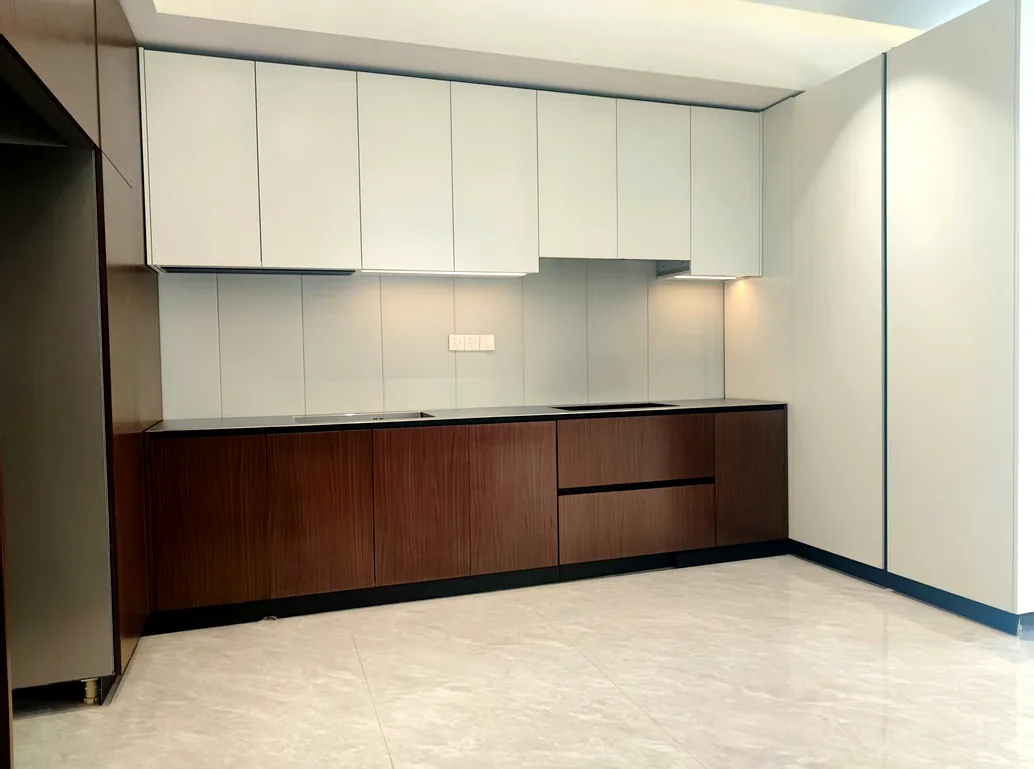
The rows are cumulative, not exclusive - a private-label run can add a branded handle without becoming a full ODM program, and a full ODM door can ship in standard cartons if the branding is only on the paperwork. What does not flex is the container rule: a mixed program (kitchen plus vanities plus closets) still counts as one program against one container, which is why most brands launch with a mixed first order rather than a single-room line.
Door profiles: from a photo to a die in 7-10 days
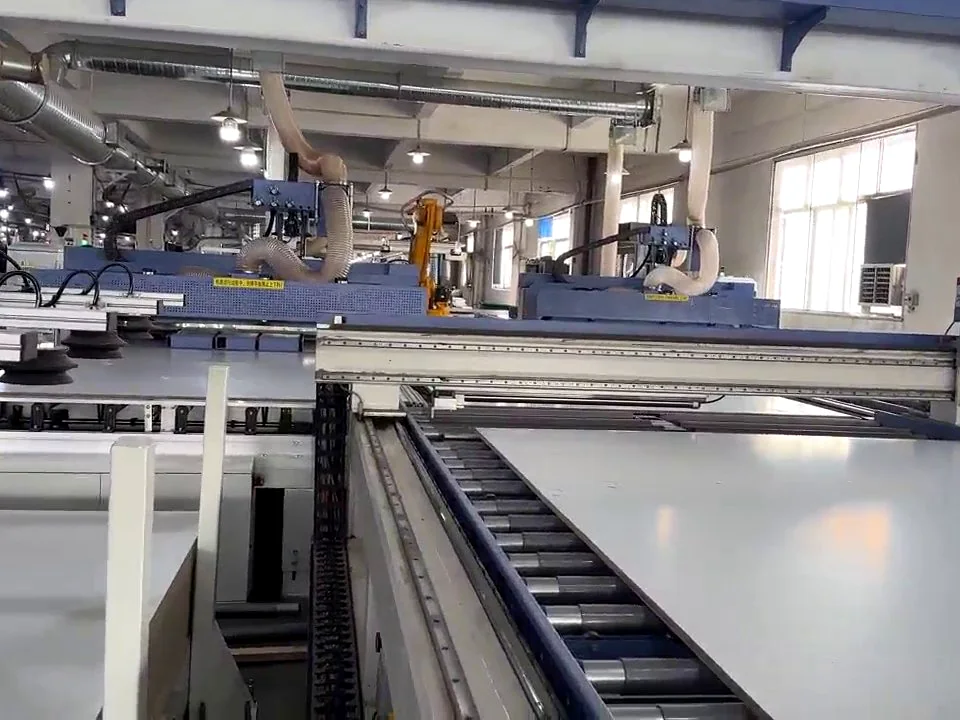
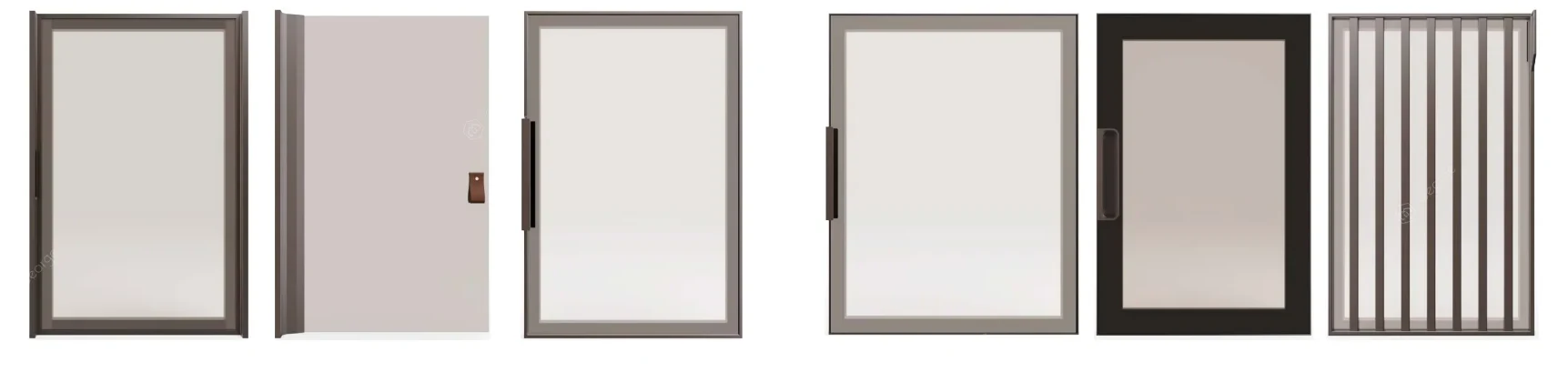
The profile is where OEM starts, because the door is what your customer sees and what your competitors price against. New shaker, slab and fluted profiles are the standard requests, and the input can be as thin as a sketch, a reference door, or a photo of a door you want to beat. Engineering converts it to a die drawing, you approve the drawing, and a 1:1 sample of the door plus a box section ships in 7-10 days.
Two things are worth knowing before you send the reference. First, the sample is a real production sample, not a hand-made mock-up - it comes off the same line the container will, so the edge, the finish and the hardware fit you approve are the ones that ship. Second, the die is yours: design ownership stays with you, and the dies and drawings can be archived to you at the end of the program. What we keep in the public catalog is only the non-OEM line, never a client's unlaunched door.
Colours and finishes: your RAL, mixed to number
Finish customization is the half of cabinet OEM ODM China your showroom customers actually touch, and it covers veneer selection as well as the full painted system. The painted route is specified on the lacquered doors page: any RAL number mixed to order, matte at 5% gloss through gloss at 90%, three colour coats and two clear coats, oven-cured at 60°C for 45 minutes. A painted sample of your actual colour ships with the first quote, so the colour is approved on a panel, not on a screen.
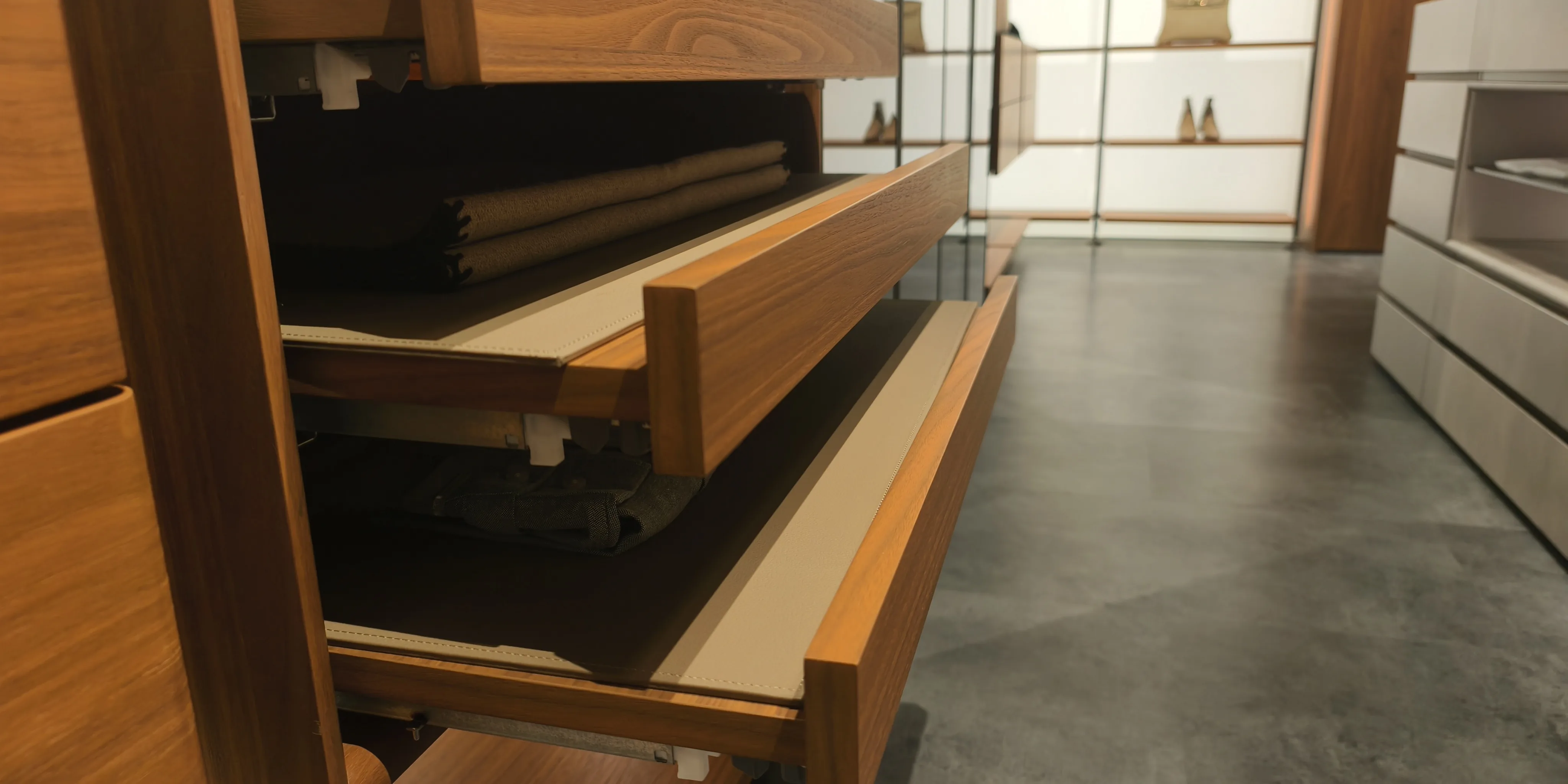
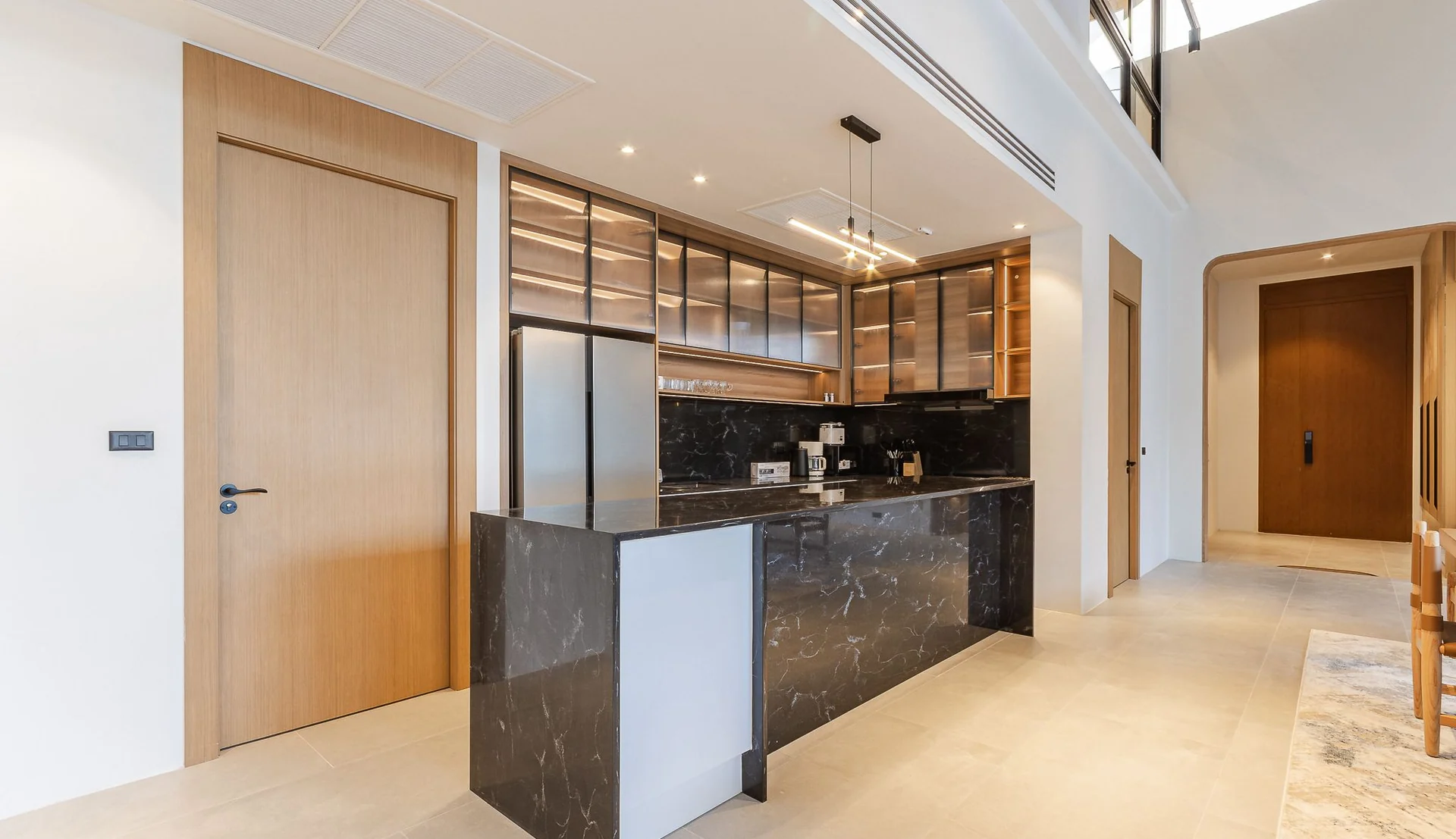
The 500 door panels per colour minimum is not a paint-booth limitation - it is the quantity at which a custom colour stops costing you a setup premium per door. Within one run, finishes can mix: a painted perimeter with a veneer island, or a two-tone program with a white wall run and a dark island, is normal work. Matte hides handling marks and flat-spotting better in daily use; gloss at 90% reads as the feature finish and shows more. Both cure on the same line.
Packaging and labelling under your brand
Packaging is the part of a cabinet OEM ODM China program buyers underestimate until the first container lands. The standard program covers your carton graphics, barcodes, manual inserts and brand stickers on the doors - artwork in 3 business days once the files are final. But the part that decides whether installation day goes smoothly is the labelling system inside the cartons.
Every unit is labelled by space: the carton label carries the order number, country, project, space name, product type, case number and a QR code tied to the packing list. Cartons sort first by space name, then by unit cabinet number, so a crew on site works through the pile in order instead of opening boxes to find out what is inside. The packing list mirrors it line by line - product, material, size, quantity, packing method, package dimensions, gross weight, CBM per line - so your installer and your customs broker read the same document.
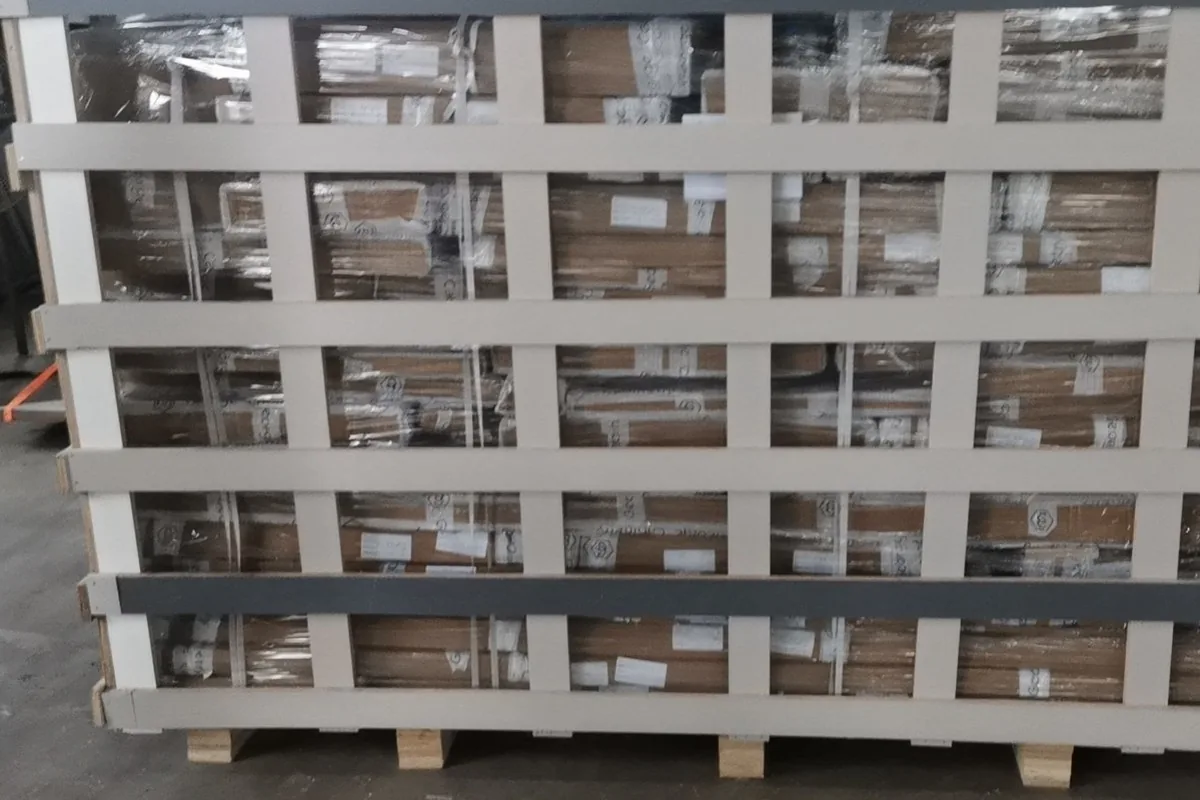
On the container side, units ship floor-loaded on palletized bases or crated where the run needs it, wrapped and corner-protected, and the loading plan is calculated against the actual carton sizes - loose-loaded palletized loads run about 15% more volume than loose, which is priced into the program rather than discovered at the port. Spare parts and touch-up hardware travel with the shipment as standard, and the opening a supply line guide covers how the first container differs from the reorders.
What needs new tooling, and what does not
The sample stage exists to price tooling honestly. A genuinely new door profile needs tooling - the die, the 7-10 day sample, the works. So does a custom handle shape with your logo where the tooling allows, and integrated door-wall systems engineered as one product. Everything else - existing profiles in your RAL, box construction changes, carton artwork, manual inserts, barcode sets - is setup work rather than tooling. It moves in days, and it should not carry a tooling charge.
If a supplier quotes a new-profile program with no sample stage, the die is being skipped, and the difference shows up on the container. That is the fastest way to tell a cabinet OEM ODM China offer built around your product from one built around your deposit. Every run ships with the material schedules behind the 53-check line - the E0 report, CARB P2 certification and the ISO 9001 / 14001 certificates, report number on every sheet - so your inspection team audits against a document, not a promise.
A program kick-off checklist
Everything on this list fits in one email, and each item maps to a step on the OEM page:
- The door reference: sketch, photo or competitor door - plus where it will sell and at what price point.
- Your palette: RAL numbers or physical references, and which surfaces are matte versus gloss.
- The room list: kitchen, vanities, closets, wall panels - the mix that counts toward one container.
- Box spec: plywood grade, back-panel type, joinery, or "yours or ours" and we default to the published E0 spec, held to the CARB Phase 2 limits (the frozen-spec guide explains why the box freezes first).
- Brand assets: logo files, carton graphics, the manual voice, and any barcode or compliance marks the cartons must carry.
- The NDA, signed before the proprietary files move.
Send that set and the program comes back priced per linear foot by quantity tier, with packaging and labelling inside the line items, within the response window published on the contact page.
FAQ
What is the MOQ for a cabinet OEM ODM program in China?
One container - 20GP or 40HQ - per program, written into the terms. Custom finishes start at 500 door panels per colour. The sample stage has no minimum, and a mixed program (kitchen plus vanities plus closets) counts toward the same container.
Can you reproduce a door from a photo?
Yes. Engineering draws the die from your sketch, a reference door, or a photo of a competitor's door, and a 1:1 sample of the door plus a box section ships in 7-10 days - off the same line the container will run on.
Which colours can you match, and how is the paint cured?
Any RAL number, mixed to order, matte at 5% gloss through gloss at 90%: three colour coats, two clear coats, oven-cured at 60°C for 45 minutes. A painted sample of your actual colour ships with the first quote.
What gets printed under my brand?
Carton graphics, barcodes, manual inserts and brand stickers on the doors - artwork in 3 business days once files are final. Install manuals, spec sheets and care cards are written in your brand voice: English standard, Spanish and French available.
How are the cartons labelled so installation day goes smoothly?
Every carton carries the order number, country, project, space name, product type, case number and a QR code tied to the packing list. Crews sort by space name first, then by unit cabinet number, so boxes open in order instead of in guesswork.
How is my design protected?
Your NDA is signed before any file transfer, design ownership stays yours, and dies and drawings can be archived to you. OEM projects run on a segregated line where volume allows, and an unlaunched door is never shown to another client or published without written consent.