Two quotes are not comparable until the spec matches
A quotation is a price against a scope, not a price against a kitchen. When one supplier prices a run measured base-plus-wall and delivered duty-paid, and another prices a list of boxes ex-works with freight left to you, the two numbers describe two different products that happen to be installed in the same room. Comparing the headlines is not a comparison; it is a coincidence of two totals.
Normalising is not a negotiation tactic. It is the only way to see which quote is actually cheaper on the same job - and it regularly changes the ranking, because three things move a cabinet number far more than labour or margin do: the counted run, the board and door system, and the delivery term. Everything else in the quote is secondary.
A useful way to picture it: a quotation is a jacket size. Two jackets can both be labelled large and fit differently, because the label is a class and the pattern is a decision. Cabinets work the same way, except that one of the two labels is usually written by whoever is selling, not by the person cutting the parts.
The six-line table below is the money-carrying part of a frozen spec in miniature. If you are still working through a single quote, the line-by-line walkthrough is in how to read a cabinet quotation; this page assumes you have two quotes and a decision to make.
The six-line normalisation table
Fill both columns from written answers before you look at either total. Each line names a brand, a grade or a model number - a class or a feature is not an answer, because two different products can satisfy it.
| Line | Write this in both columns | The substitution it stops |
|---|---|---|
| Carcase board | 18mm E0 plywood, formaldehyde at or under 0.05 mg/m³ per GB/T 39600, report no. SQ2405393 attached | A class both mills meet at different densities, screw-holding and swelling |
| Door substrate and finish | Substrate + finish system (3 colour coats + 2 clear, 60 °C × 45 min bake) + colour approved on a physical sample | "Matte white" matched to a screen image that never existed in paint |
| Hinges and slides | Brand + model number + rating: Blum soft-close rated to 50,000 cycles; full-extension slides rated 35-45 kg per pair | "Blum" or "heavy-duty" - a product family, not a part |
| Edge banding | 2mm PVB hot-melt, all four edges of every cut panel, glue type stated | 1mm banding on the back edges nobody inspects, with no glue named |
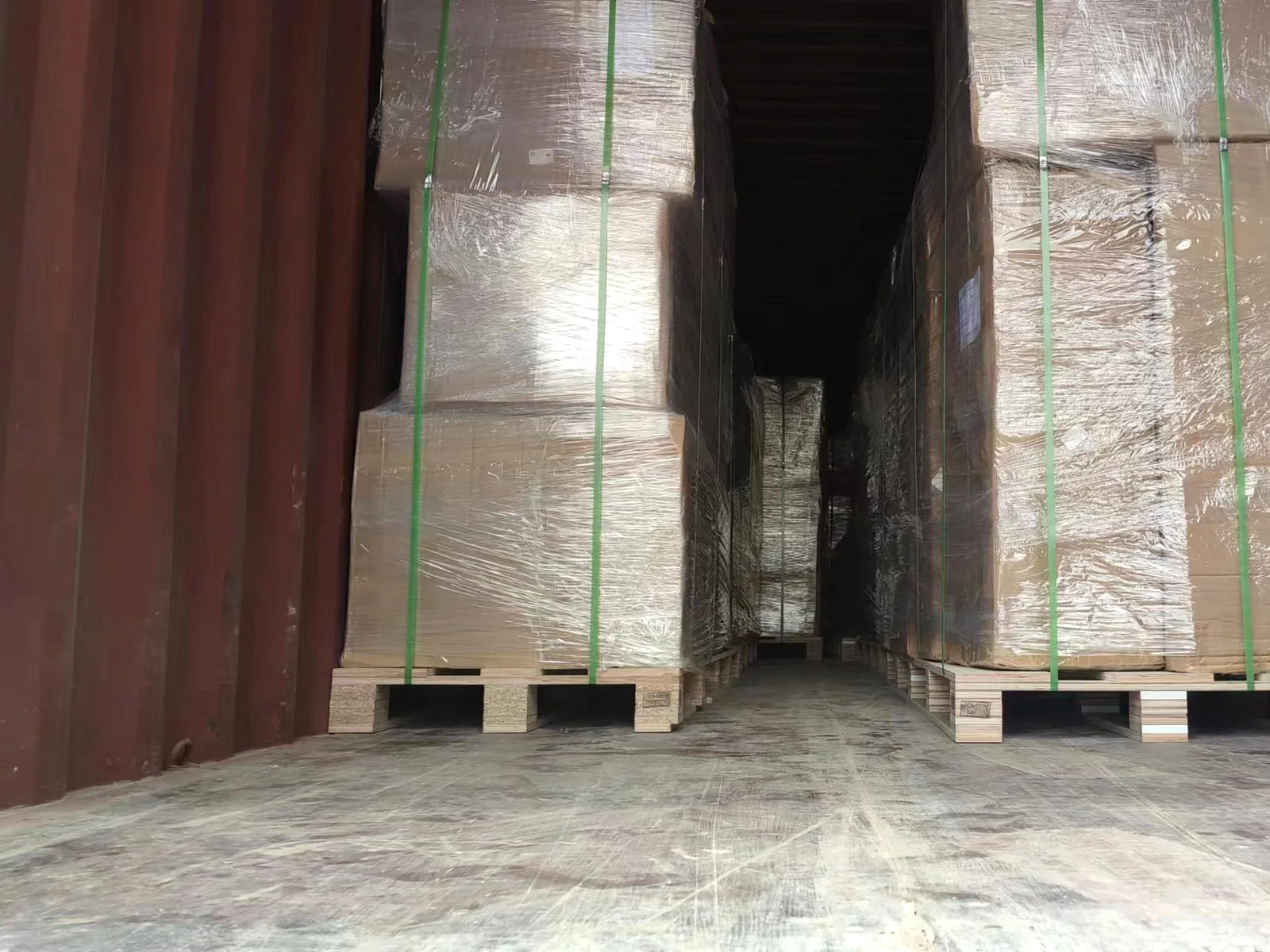
| Packing and crating | Crate per bay, panel protection, label content, loading plan | "Export packing" - the line that decides how the crate actually arrives |
| Delivery terms | DDP to a named address, or FOB named port - and who pays freight, duty, insurance and the last mile | Two totals compared across two Incoterms that were never the same deal |
Six lines, one page. It is not a design document - the drawings do that job. This is the sheet two quotes can be laid on top of, and the reason a factory quote and a dealer quote can be compared at all.
Where "per linear foot" hides cost
Per linear foot is a useful unit because it survives a redesign: change the wall and the number scales with it. It is also the unit that hides the most, because a linear foot is a convention before it is a measurement. Two suppliers can walk the same room and come back with runs that differ by several feet without either of them being dishonest.
The convention gap: base and wall only
On the convention we work to, the anchor rate - $249 per linear foot DDP, standard matte in this example - covers the base and wall run measured along the wall. Talls, islands and vanities are itemised separately, because they cost differently: an island is two finished faces, a tall is a full-height box with more material per foot of wall, and a vanity carries a wet-area build. A quote that quietly folds those into one rate is not cheaper. It is less detailed, and the difference reappears at the invoice.
Talls, corners and filler strips
A tall unit is one cabinet and up to three feet of wall, depending on where the counting stops. A blind corner is the classic double count: one supplier counts it once as the corner box, another counts both sides of the L. Fillers and end panels are per strip on one quote and absorbed on the other. None of these is a rounding error on a full kitchen - together they are often the whole gap between two quotes that look a fifth apart.
Worktops, plinths and lighting: where the boundary sits
Stone or sintered worktops, plinth and kickboard, LED strip, bin pull-outs, cutlery trays and handle hardware are the items most often present in one quote and absent from the other. Some of that is legitimate - worktops are usually a different trade on both sides - but it has to be stated, not discovered. Ask each supplier for the counted run and the excluded list, in writing, against the same drawing. That single email does more for the comparison than any amount of negotiating on the headline.
Worked example: the same kitchen, two unit conventions
Take a 10-foot straight kitchen - base and wall cabinets, standard matte finish, delivered duty-paid to a US address. At a sample rate of $249 per linear foot, the counted run is 10 × $249 = $2,490 at the door. That figure covers the base-and-wall run, and it is the figure to compare against.
The same kitchen quoted by the box arrives as a list of widths and a total. Lay the two next to each other and every difference sits in a definition, not in the price:
| Question to ask both quotes | Per-linear-foot quote (worked example) | Per-cabinet quote (typical form) |
|---|---|---|
| What is being counted? | The wall line: base and wall run, measured along the wall | Every box width, added up |
| Where do talls and islands sit? | Itemised separately - a different cost per foot of wall | Usually inside the count, at one blended rate |
| How is a blind corner counted? | Once, as the corner | Often on both sides of the L |
| Fillers and end panels? | Priced per strip | Absorbed - or not mentioned at all |
| Worktop, plinth, lighting? | Excluded - separate trade, separate quote | Sometimes included, sometimes not |
| Delivery | DDP to a named address | Depends entirely on the Incoterm |
| The one thing to request | The excluded list | The counted run |
Neither column is a trick. They are two ways of measuring one room, and they converge the moment both suppliers write the counted run and the excluded list on the same drawing. Until then, a lower headline is a smaller number, not a saving.

Five questions that expose the cheaper-looking quote
Ask these in order, in writing, and keep the replies with the quote. Each one turns an impression into a line you can put in a column.
- Is that delivered duty-paid to my address, or FOB to a port? DDP and FOB are not two prices for one thing - one carries freight, insurance, duty and the last mile, the other stops at the port. On a US entry the duty layers alone decide whether the number is a budget or a surprise, which is why the landed-cost guide is worth reading before you compare totals.
- Which board, at what thickness, with which report number? "E0 plywood" is a class, not a source. Ask for the mill or brand, the grade, the thickness, and the formaldehyde report number with its expiry - ours is 18mm E0 plywood at or under 0.05 mg/m³ per GB/T 39600, report no. SQ2405393.
- Which hinge and slide model, and what are they rated to? A family name is not a commitment. Our hinges are Blum soft-close rated to 50,000 cycles, and slides are full-extension rated 35-45 kg per pair; both are written into the order, with DTC available on request.
- How do you count a tall unit, a blind corner and a filler strip? The answer tells you the counting convention, and the convention is where the two totals separate. Ask for the counted run and the excluded list in the same reply.
- What is excluded that I will end up buying locally? Worktop, plinth, LED strip, handles, installation labour. The excluded list is the real shape of the quote - and it is usually longer on the cheaper one.
Five answers, one page, and the comparison becomes arithmetic instead of instinct. If the project repeats - apartments, hotels, staged handovers - normalise once and reuse the sheet: the US apartment program is the same idea at building scale, and the Texas whole-house build is the same idea across rooms.
FAQ
Can I compare a per-linear-foot quote with a per-cabinet quote?
Not until you convert one of them. Pick the spec as the base, list the six lines, and re-state the per-cabinet quote as a scope: which boards, which door system, which hardware model numbers, which packing, which delivery term. Then either convert the per-cabinet figure to a per-linear-foot rate on the same measured run, or convert the per-linear-foot quote to a bill of boxes. We quote per linear foot of a base-and-wall run on the same unit - worked below at $249 DDP, standard matte - with talls, islands and vanities itemised separately - so the conversion is transparent in both directions.
What is the fastest way to normalise two quotations?
The six-line table: carcase board, door substrate and finish, hardware model numbers, edge banding and glue, packing and crating, and delivery terms. Fill both columns from written answers rather than from memory or a brochure. Any line where one column says a class and the other names a brand, a grade or a model number is a line you have not finished comparing yet.
Why do two suppliers measure the same kitchen differently?
Because the unit is a convention, not a constant. One supplier counts the base and wall run only; another counts every box width including talls and islands; a blind corner is sometimes counted once and sometimes twice; fillers and end panels are sometimes per strip and sometimes absorbed. The kitchen has not changed - the definition of a linear foot has. Ask for the counted run and the excluded list in writing, then compare like with like.
Is the cheaper quotation always the thinner specification?
No - and that is exactly why you normalise before you decide. The gap is usually scope: a smaller counted run, crating excluded, or a delivery term that leaves duty and the last mile with you. Where the gap is specification, it shows up as a class instead of a source, a product family instead of a model number, or a thickness that quietly drops - 1mm banding where the quotation said 2mm is the classic one.
What should be in writing before I pay a deposit?
Five things: the six-line spec, the counted run and the excluded list, the delivery term, the crating plan, and the inspection gates with their timings. On our line that means 18mm E0 plywood at or under 0.05 mg per cubic metre with report no. SQ2405393 attached, 2mm PVB hot-melt banding on all four edges, Blum soft-close hinges rated to 50,000 cycles and 35 to 45 kg full-extension slides, and photo reports at 24, 48 and 72 hours.
Do you quote DDP or FOB?
DDP is the standard route to the US, Canada and Australia, and it is the term the sample $249 per linear foot figure above is worked on. FOB is available when you buy on your own freight account, and it is quoted with the same spec so the two terms can be compared line by line rather than at the headline.
How long does a quotation take?
The 3D layout and the number come back within one business day of a usable floor plan. The quote is written against the spec, so the second quote - a revision, a different finish or a different unit mix - is usually same-day, because the spec is already frozen in the file.