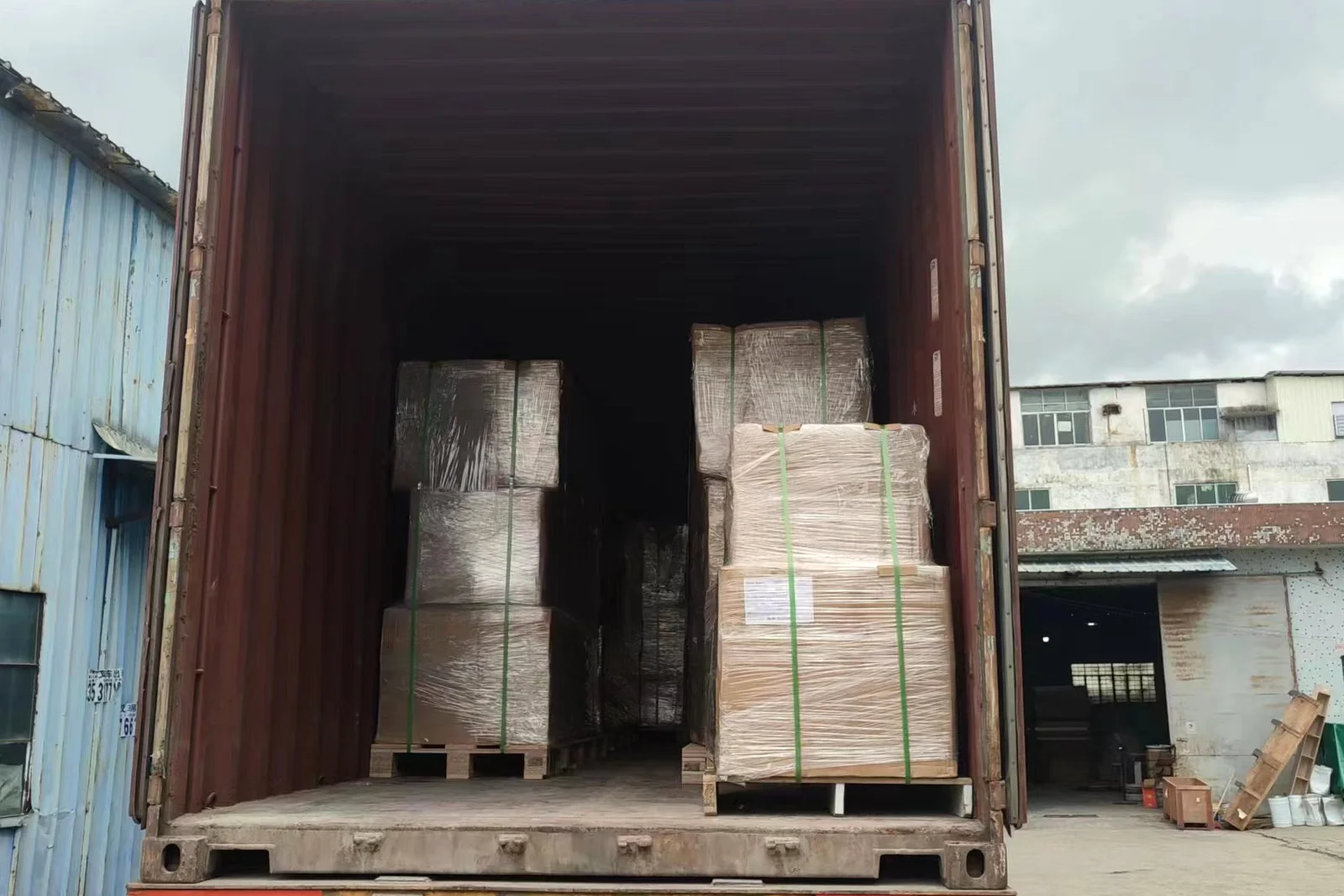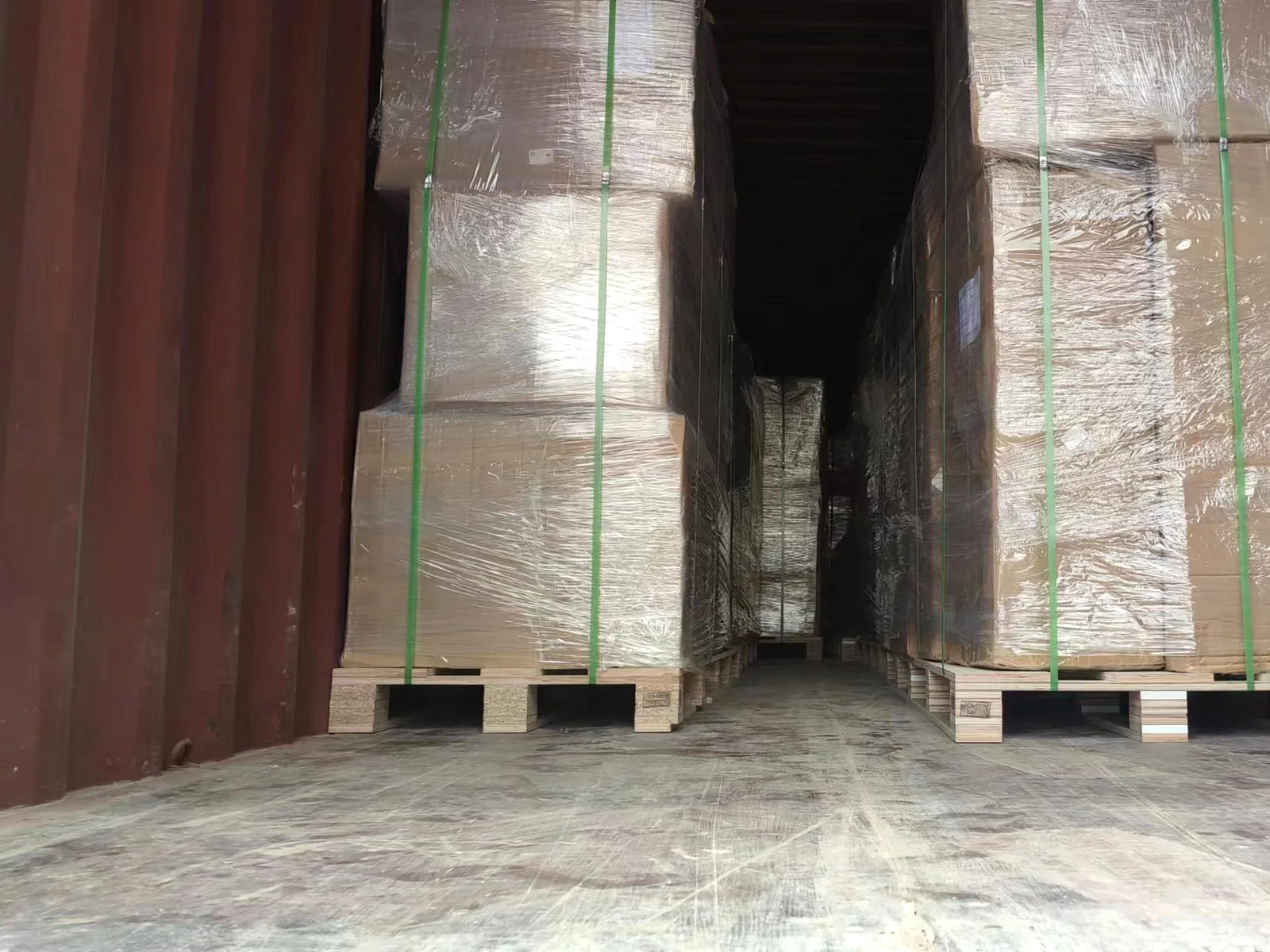
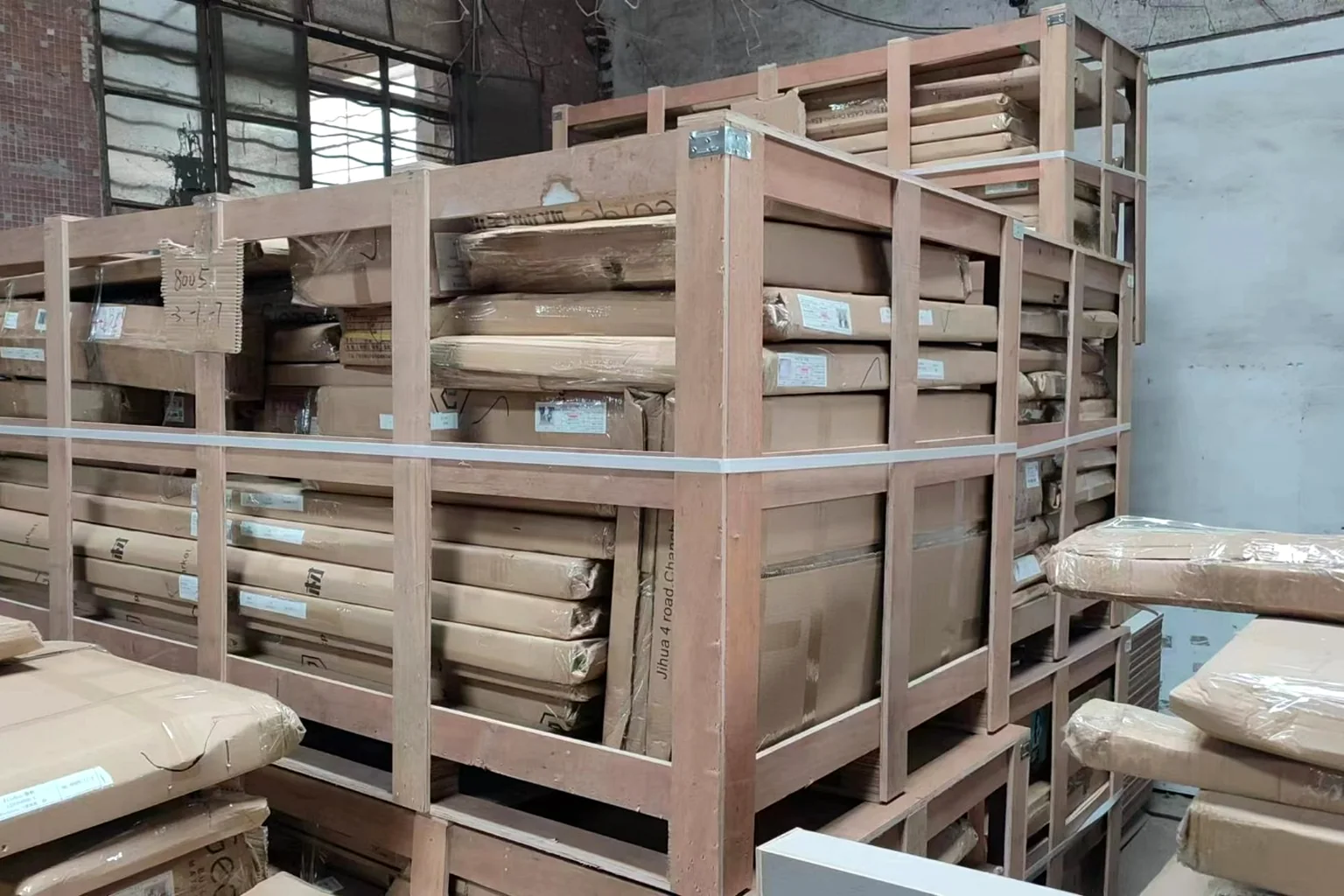
Every box that leaves our factory can travel two ways: flat-packed - boards, doors and hardware as numbered kits in palletized crates - or fully assembled - the cabinet pre-drilled, hinged and boxed as a finished piece. Both are made on the same line with the same spec. The difference shows up on the invoice, in the container, and on install day.
The side-by-side
| Flat-pack | Fully assembled | |
|---|---|---|
| Cabins per container (typical kitchen) | 2-3× more linear footage | Space hogs - big assembled boxes |
| Damage risk in transit | Low: boards stacked, corners taped, doors boxed separately | Higher: a 900 mm assembled box has less give in the pallet |
| What arrives at site | Numbered kits, per-room pallets | Finished cabinets, lift and level |
| Install labor | Crew assembles on site - a two-person crew takes 1.5-2 days on a standard 20-foot kitchen | Minimal - placement, leveling, door check |
| Best for | Full kitchens, multi-room orders, multi-unit projects | Small orders, single vanities, tight-labor markets |
Why flat-pack is the default for imports
Two reasons, both arithmetic. Cube: an assembled cabinet ships its own empty space - the interior of a 600 mm base is mostly air. Flat-packed, the same boards stack. On a 40 ft container, that difference is often a second kitchen's worth of space, which on a duty-paid quote is the difference between one container and one-and-a-half.
Damage: the biggest cost in imported cabinetry isn't freight - it's a smashed corner on a door that's now a one-off repaint. Boards in a crate, separated from doors, tolerate container handling far better than a finished box with a lacquered corner. Industry-typical flat-pack claim rates sit under 1% of units shipped, while assembled boxes generally claim two to three times higher - and the warranty process is simpler: a board is a board, it gets replaced as a part, not a cabinet.

The one scenario where assembled wins
Small orders in high-labor markets. A single vanity, or a 10-foot base run into a job where your GC charges a full day for install, is often cheaper door-to-door assembled: you save the on-site assembly hour and the risk of a crew working from a manual with no local supervisor to check them. When the order is under roughly 15 linear feet, ask us to price both ways - the answer flips more often than buyers expect.
What to check on a flat-pack order
- Numbering. Every box should carry a kit number and a room label. If the pallets arrive unnumbered, the install day becomes a puzzle.
- Pre-drilling. Boards arrive drilled and edge-banded at the factory; only doors, hardware and final alignment happen on site.
- Hardware bag. Hinges, runners and catchers are bagged per cabinet, counted against the packing list before the box closes.
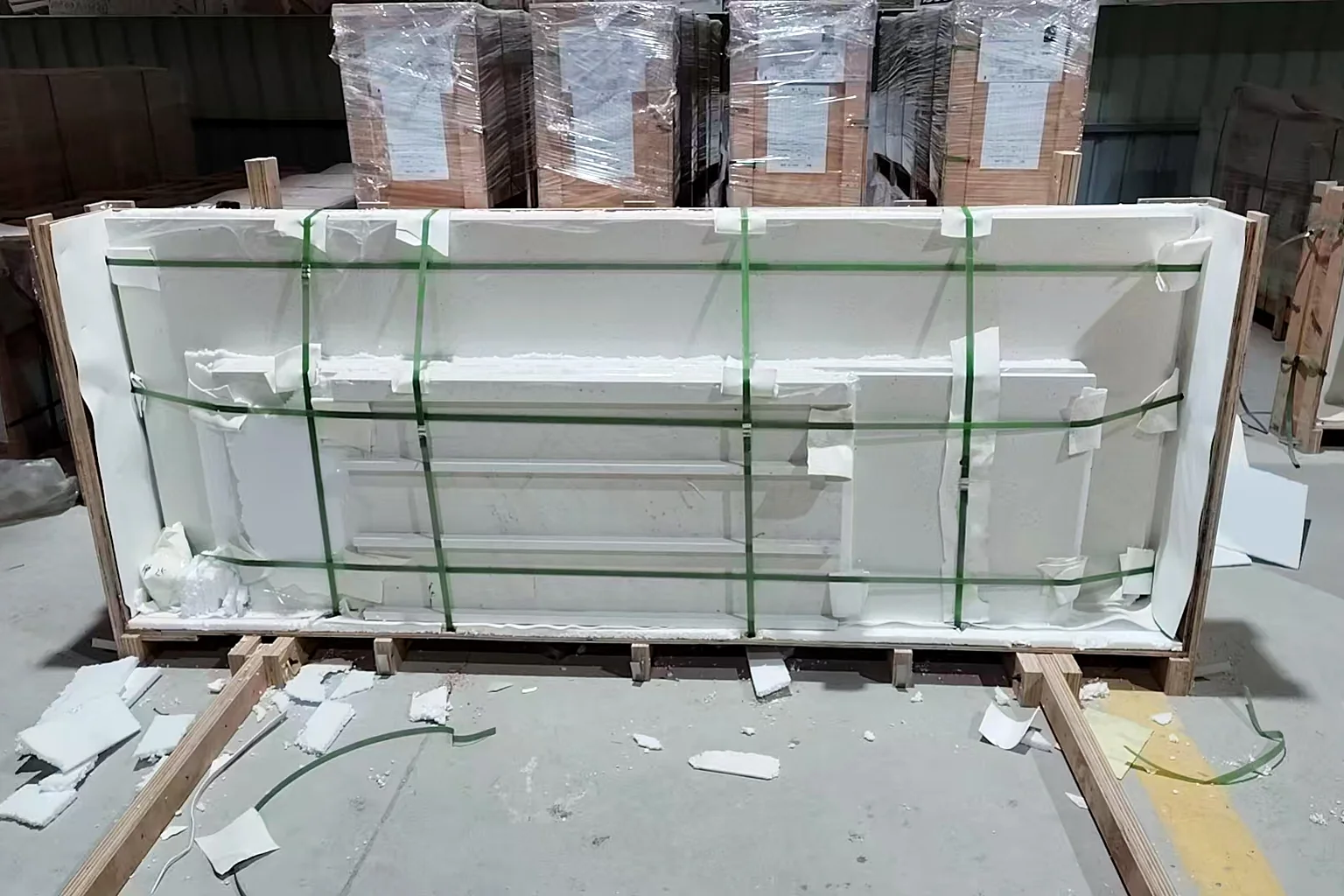
- The QC photo set. Before the container loads, we shoot the full run - check the set against your layout before you sign the release.
Whichever method your order ends up as, the spec is identical: same boxes, same edge banding, same hardware, same warranty. The choice is about logistics, not quality - a supplier who can't say that is telling you flat-pack is a cheaper product. It isn't.
What flat-pack changes at the container
Flat-pack is the default for imports for one reason that has nothing to do with quality: volume. Assembled boxes are mostly air, and air is what you pay for on a container - so the same 40-foot high cube carries more kitchens flat, which lowers the freight and duty carried by each one. That is the arithmetic behind the price difference.
The full container maths - how many units actually fit, and what the two formats do to freight per linear foot - is worked through on the container yield comparison. What follows here is what flat-pack changes on your invoice and your install day.
What a real packing list says about flat-pack
Numbers below come from one 2026 Australian order's packing list - 17 sheets, one per unit and room group. This is the document that settles a flat-pack argument before a container is booked, because it records pieces, packing method and cubic metres per room:
| Room group | Packed pieces | Volume |
|---|---|---|
| Kitchen, Unit 1 | 34 | 1.54 CBM |
| Kitchen, Unit 2 | 52 | 2.67 CBM |
| Master-bedroom walk-in robe, Unit 1 | 35 | 2.25 CBM |
| Master bedroom, Unit 2 | 44 | 2.87 CBM |
| Timber crates and framing, whole order | - | 17.24 CBM |
Every cabinet line is packed in cardboard wrap; timber crates appear only where stone tops or formed frames need them - 17.24 CBM of the order's cube, which is the number most quotes leave out.
FAQ
Is flat-pack harder to install than assembled?
It is more hours, not more skill. A flat-pack cabinet arrives as panels: the carcase is assembled on site, the hardware is fitted and the doors are hung and adjusted. A competent installer who fits assembled boxes can fit flat-pack, but the labour estimate should include the assembly time rather than assuming a drop-in day.
Does flat-pack arrive damaged more often?
The risk moves to the edges rather than disappearing. An assembled unit fails as a whole cabinet, which is obvious and expensive. A flat-pack panel fails at a cut edge or a corner, which is cheap to replace when the crating standard is right. That is why the packing line matters more on a flat-pack order, and why it belongs in the spec.
Can I order fully assembled cabinets from China?
Yes, and it is the right call in one situation: a small order where the install window is more valuable than the freight. What changes is the volume, which raises the freight cost per cabinet, and the crating, which has to protect a finished face with the doors hung. Ask for that crating standard in writing before you compare the two prices.
How much more does assembled shipping cost?
It depends on how the volume breaks down, so any percentage quoted before a drawing is a guess. What you can measure is the cube: several flat-pack kitchens fit in the volume one assembled kitchen occupies, and the container, the ocean freight and the duty are paid once per container, not per cabinet. Compare the two options on cost per installed kitchen rather than cost per box.
What tools do installers need for flat-pack?
Normal cabinet installation tools plus a driver for the confirmat or cam fittings, and the space to lay panels flat. Nothing exotic, but the sequence matters: assemble the carcase square, fit the hardware, then hang and adjust the doors after the run is level, because adjusting doors on an unlevelled run wastes the adjustment range.
Do doors and finishes arrive separately?
Doors normally arrive in the same crate, wrapped and stacked separately from the carcase panels, and they should be labelled by bay. Ask for the label content in the crating line: panel name, bay number and part number. An unlabelled crate turns a two-day install into a sorting exercise, which is the hidden cost of a cheap packing standard.