The questions that come to us most often about how to import kitchen cabinets to Saudi Arabia are not really about the cabinets. Buyers are asking whether the delivery will land in Jeddah without a problem, whether the boxes will survive the trip, and what happens if the temperature on the way is not what the paperwork says it was. Those are the questions that decide whether a kitchen order is a good order.
This is what we tell buyers planning a Saudi or GCC kitchen project, in the order they usually ask it.
What it costs to import kitchen cabinets to Saudi Arabia
The number buyers ask for first is usually the wrong one. What they want is a cabinet price, and what they should be comparing is a landed price.
| Cost line | What it covers | Who usually quotes it |
|---|---|---|
| Cabinet order | Carcasses, doors, hardware, internal fittings | Us, on the proforma invoice |
| Stone | Worktops, cut to the drawing, in crates or on pallets | Included in our quote if you ask for stone |
| Inland freight | Foshan to the port of loading | Included in an EXW quote |
| Marine freight | Loading port to Jeddah or Dammam | Forwarder, or we arrange it on request |
| Customs duty | Saudi tariff line for the product, plus VAT | Forwarder |
| Port handling, documentation, delivery | Terminal charges, certificate, inland to site | Forwarder |
Our standard terms are EXW Foshan with 50% deposit by T/T and the balance before loading. That means the cabinet price is the cabinet price, and everything in the freight block above is arranged separately or by a forwarder you appoint. Buyers who ask for a CIF Jeddah quote get one - it is only a different arrangement of the same goods, but the duty and port charges land on one invoice, which is easier to budget against.
The single most useful thing to settle early is who clears the customs. A GCC kitchen order is normally cleared under the importing company's registration, and whoever that is needs the commercial invoice, packing list and certificate of origin in hand before arrival. If that party is not identified at order stage, the container arrives and sits.
How long does it take, order to installation
Two numbers matter, and buyers frequently confuse them.
| Stage | Saudi and GCC projects | What it depends on |
|---|---|---|
| Production | 40 to 45 days | Confirmed drawings and the deposit |
| Marine transit | Around 15 to 40 days | Port pair and sailing schedule |
| Customs and clearance | 3 to 7 days | Documentation completeness |
| Inland delivery and install | Set by the site | Site readiness |
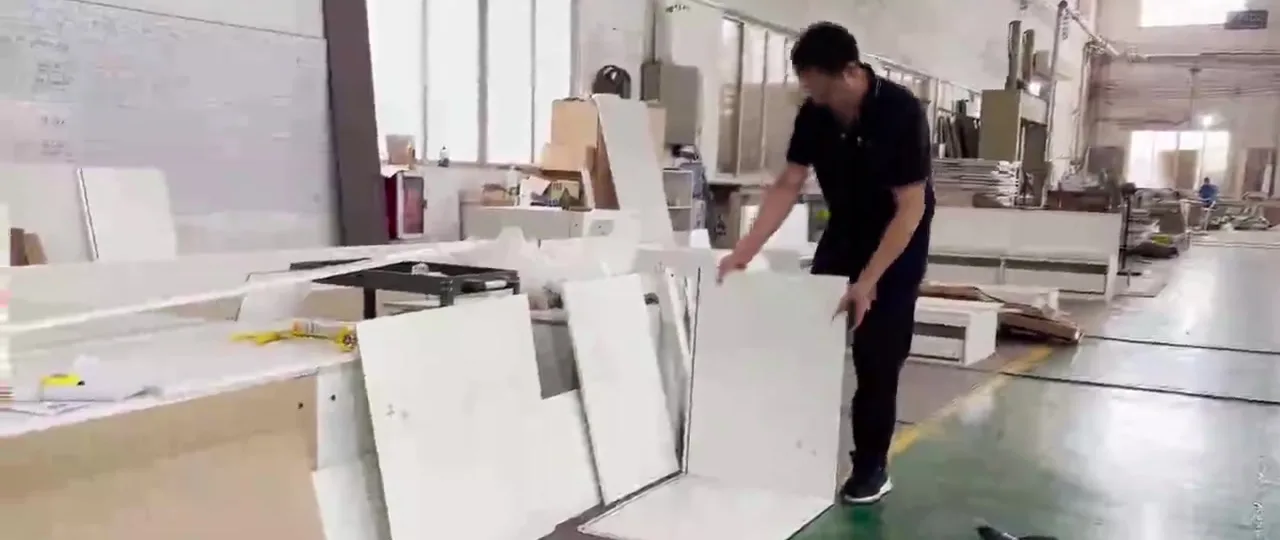
Production on a four-room Saudi villa we ran took the full 40 to 45 days, and it took that because the order had a kitchen, a master dressing room and two closets built to different footprints. The 30 to 45 day range we quote on other markets is the same production window - the spread is the room count, not the country.
Buyers planning to import kitchen cabinets to Saudi Arabia should settle these two before the drawing is signed, because both sit outside the factory timeline. Two things move the schedule more than anything else. The first is drawings: production does not start against a render or a sketch, and a drawing set that comes back for revision costs a week. The second is the balance payment, which has to clear before loading, so an approval that sits unsigned keeps the container on our side.
How the heat changes what you should specify
Anyone planning to import kitchen cabinets to Saudi Arabia should look at this section before choosing a worktop. This is where a Gulf order differs most from the same order for Europe, and it is a materials question before it is a design question.
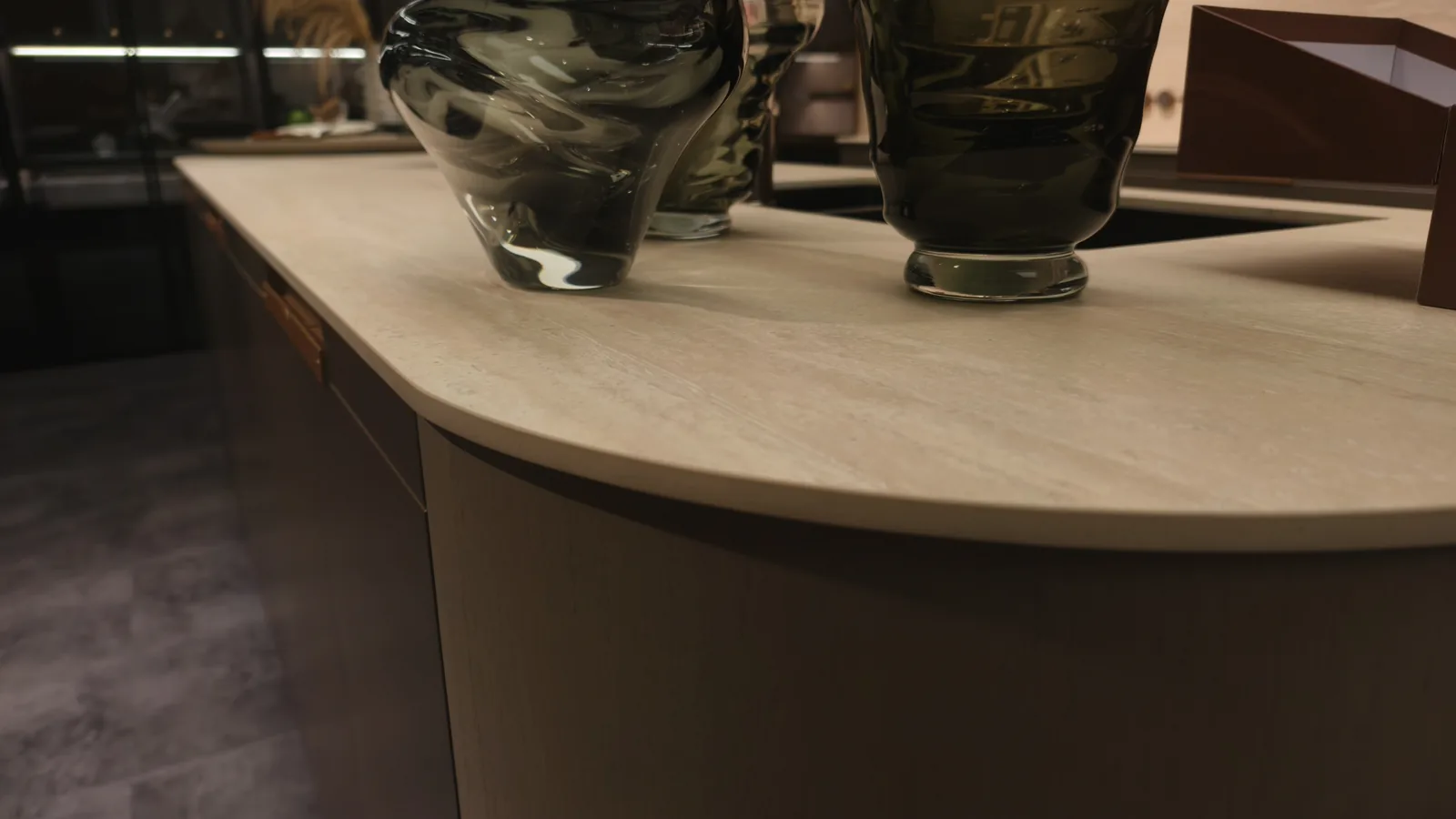
Worktops. European engineered stone and general-purpose cast acrylic and resin stone are resin-bonded, and resin softens and creeps with heat. In a kitchen that runs at 24-26C for eight months, a resin-bonded top near a sink or a hob box is where you see it first. Sintered stone is fired at 1200C and does not behave this way, which is why the Saudi villa order specified it. If your kitchen has a full-height window wall facing west, this is not a preference, it is the material decision that decides how the room looks in year three.
Carcass and edge banding. The cabinet itself is less sensitive than the top, but edges are where heat and humidity reach the panel core. Our standard is a 2mm hot-melt edge band on every cut edge, and in a humid coastal market - Jeddah, Dammam, Doha - it is worth specifying an additional sealing pass on exposed edges rather than relying on the band alone.
Doors and panels. Flat lacquer and veneer move more than solid wood in a temperature swing. A ventilated or louvered door is not only a visual choice in this market - airflow across the panel is what keeps a flat door from cupping when it faces a sunlit run.
What happens to the boxes on the way
Flat-pack cabinetry is protected in two separate systems: the internal hardware and the external packing. Both matter, and only one of them is usually discussed.
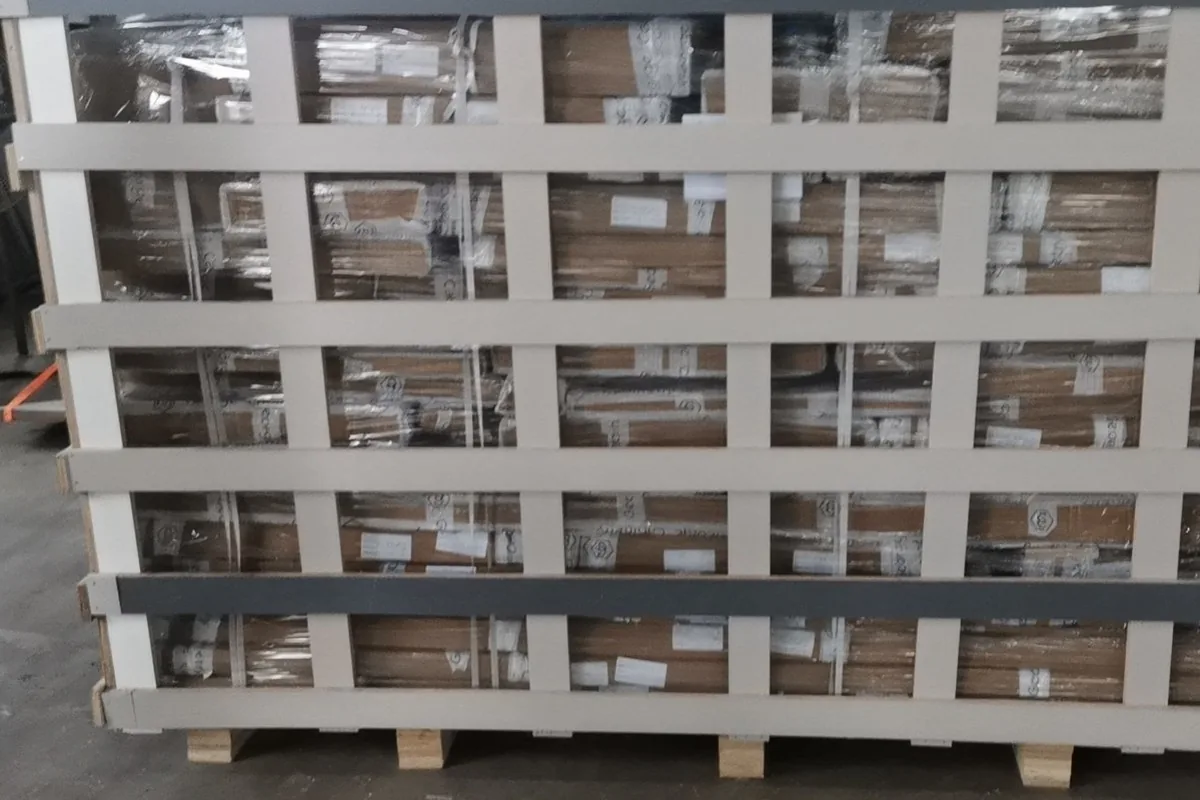
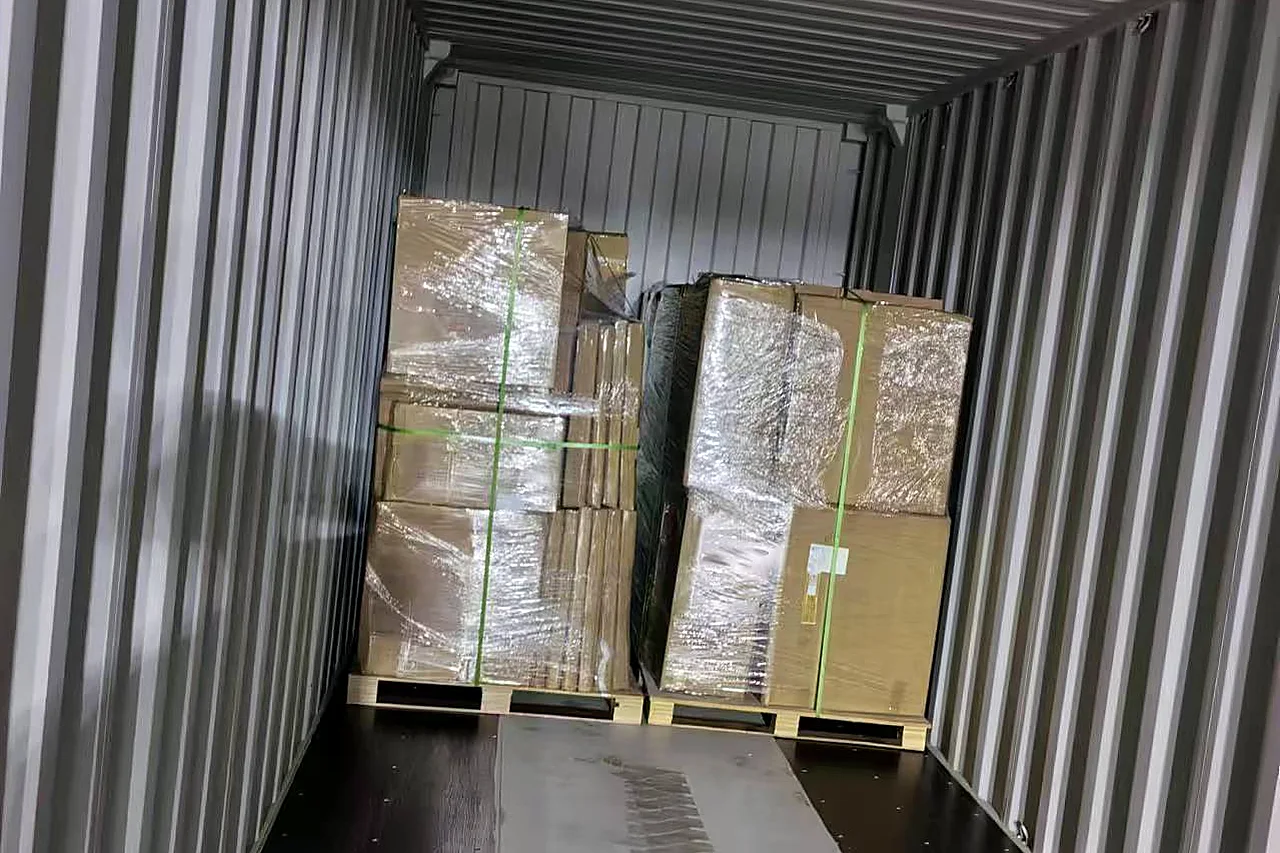
Inside the crate, panels are nested and numbered to the room, hardware is bagged and labelled to the unit it belongs to, and stone is strapped in a wooden crate rather than stacked on the panel pack. Outside, wooden boxes or cartons are racked to the container wall so the load cannot shift in transit, and the order number, country, project name, space name and case number appear on the label - which is what lets a crew sort cartons to the right room before opening one.
The 48-hour damage window matters for this. A container that arrives with a crushed corner or a broken crate is discoverable within a short period of unloading, and photos taken at that moment are what support a claim. That window is short, so the person receiving the container needs to know it exists.
What we would ask if we were ordering from Foshan
If you are comparing suppliers for a job to import kitchen cabinets to Saudi Arabia, the questions below are the ones that get asked in our own export office, and they are the ones worth putting to any supplier - including us.
1. Is the carcass board named, with its grade and thickness? European Grade E0 particleboard at 18mm is a standard we quote everywhere. "Melamine board" without a grade is not a specification.
2. What is the door substrate? Our standard is 22mm MDF faced in solid wood veneer, or lacquered MDF. The substrate is what decides whether the face stays flat.
3. Which edge is banded, and how? Every cut edge, or only the visible ones? The second option is cheaper and shows up later.
4. Is the worktop material named as a material? Sintered stone, quartz, or marble-look engineered stone are three different products with three different behaviours.
5. What does the quote include? Carcasses only, or panels, hardware, internal fittings and stone. A cabinet quote and a fitted kitchen quote are not comparable.
6. Which Incoterm, and who clears customs?
7. How is the order labelled and packed? Room numbers and case numbers on the label, or crates by weight.
8. What is the damage claim window from arrival?
Answer those eight and you can compare any two suppliers on the same page. Leave any of them unanswered and the lowest number on the quotation is not the cheapest kitchen.
Where this fits
We have delivered kitchens and full-house cabinetry into Saudi Arabia and across the Gulf, both on villa projects and on commercial fit-outs. The specification standard does not change by destination - an E0 carcass, banded edges, soft-close hinges and numbered flat-pack kits are the same standard in Riyadh as in Toronto. What changes is which options are worth paying for, and the three above are the ones that earn their place in this market.
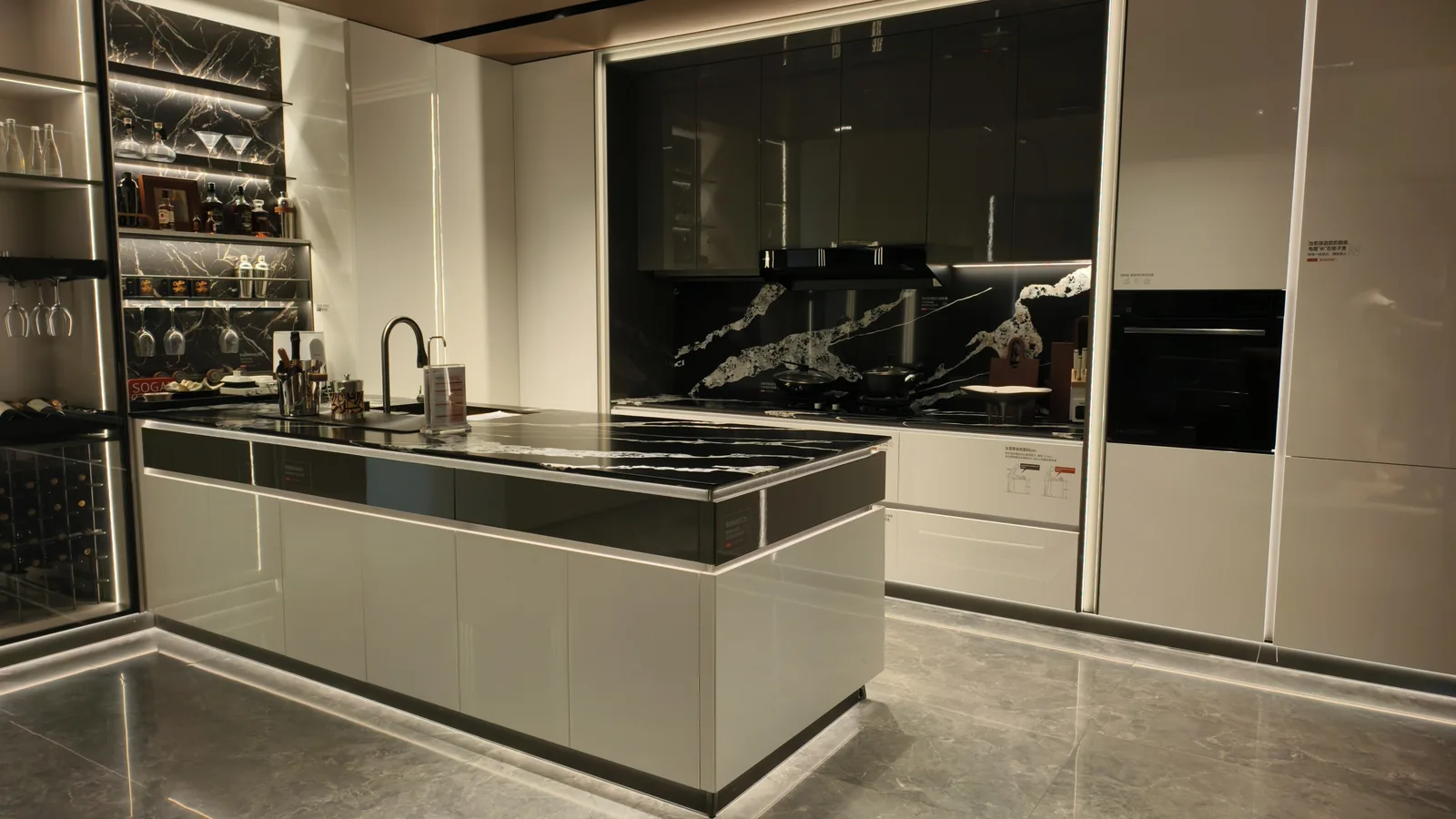
Our own Saudi villa case is the worked example behind most of this: four rooms, an E0 carcass with veneered MDF fronts and 5mm tempered glass doors, sintered stone throughout, EXW terms and a 40-45 day production window.
Send your floor plan and room list and we will draw it against your dimensions and price it per spec - or read the importing and landed-cost guide first.
FAQ
What is the shipping cost to Saudi Arabia for kitchen cabinets?
Our standard terms are EXW Foshan, so the cabinet price is separate from freight. Marine transit, customs duty, port handling and inland delivery are quoted by a forwarder, or arranged by us on request as a CIF Jeddah or Dammam quote where those charges land on one invoice.
How long does it take to import kitchen cabinets to Saudi Arabia?
Production is 40 to 45 days from the deposit and confirmed drawings. Marine transit runs around 15 to 40 days depending on the port pair, customs clearance takes 3 to 7 days, and inland delivery and install are set by site readiness. Quote to install is typically seven to eleven weeks.
Which worktop material is best for a Saudi kitchen?
Sintered stone. Engineered and cast acrylic stone are resin-bonded, and resin softens and creeps with heat - which shows first around a sink or a hob box in a kitchen running at 24-26C for eight months. Sintered stone is fired at 1200C and does not have that behaviour.
Do I need special edge banding for a humid climate?
Our standard is 2mm hot-melt edge band on every cut edge. In humid coastal markets - Jeddah, Dammam, Doha - it is worth specifying an additional sealing pass on exposed edges rather than relying on the band alone, because that is where heat and humidity reach the panel core.
What is the damage claim window on arrival?
48 hours from arrival. A container with a crushed corner or a broken crate is discoverable within a short period of unloading, and photographs taken at that moment are what support a claim. The person receiving the container needs to know the window exists.
Can a Saudi kitchen order be a full-house order rather than a kitchen only?
Yes, and most villa orders are. Our delivered Saudi villa covered a kitchen, a master dressing room and two closets on one carcass specification. The production window stretches with room count rather than with distance.