Bathroom vanity wholesale is usually sold as a price conversation: what does a unit cost, what is the minimum, what does a container hold. That is the wrong first question for anyone buying for more than one bathroom. A program is not a quantity of vanities - it is a room-type schedule, a finish code that has to hold across every room type, and a spares list that has to arrive in the same container as the units it belongs to. Get those three right and the unit price stops being the deciding number.
This is how a multi-unit vanity program actually runs, using the same schedule and finish codes we build to on apartment and hospitality work.
What a bathroom vanity wholesale program is, and is not
A wholesale order becomes a program the moment the units are not interchangeable. A distributor buying forty identical vanities for stock has a product order. A contractor fitting out sixty units across three room types has a program, and the two fail in completely different ways.
The product order fails on price and lead time. The program fails on consistency: the master vanity arrives in the wrong wood, the powder room unit does not fit the wall it was measured against, and the replacement hinge for a unit installed in month three cannot be matched because the finish code moved.
That is why the program documents matter more than the catalogue. Before a single unit is cut, a program needs three things fixed in writing: a room-type schedule, a finish and hardware code that applies across all of them, and a spares and replacement list.
The room-type schedule is the whole job
A multi-unit bathroom program is a set of room types, not a set of units. Each room type is defined once and then repeated, and the schedule is what stops the repetition from drifting.
| Room type | What it typically carries | What the schedule has to fix |
|---|---|---|
| Master bath | Wider vanity, stone top, often a double bowl, lit mirror | Overall width, bowl count, top thickness, mirror position |
| Guest bath | Standard single vanity, same box, simpler top | Width, top material, whether the mirror is lit |
| Powder room | Compact unit, often one wall carrying mirror, vanity and light | Depth, projection, door swing, and the height datum |
On an Orlando apartment fit-out the same logic ran across the unit types. The master took the dark wood code at the vanity; the guest rooms kept the same finish codes so the whole apartment read as one unit at the door; the powder room was a single wall carrying mirror, vanity and light. Three configurations, one code, repeated across the program.
The schedule is also where the door swing and the height datum get fixed, because those are the two dimensions that decide whether a unit installs in a real bathroom or has to be modified on site. A vanity that is 20 mm too deep is not a cosmetic problem - it is a door that does not close.
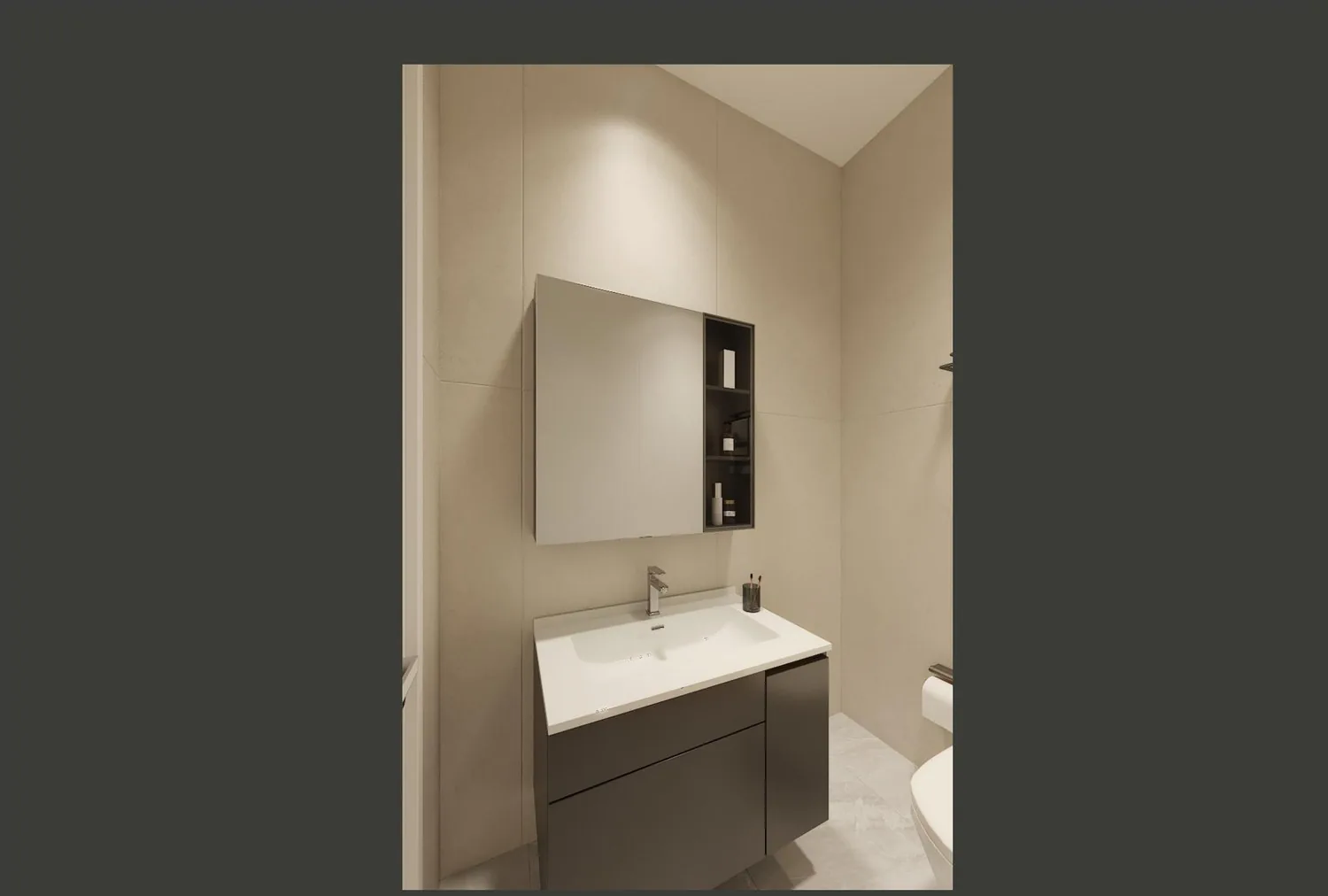
One finish code across every room type
The single most common program failure is a finish that matches on the sample and does not match on the container. Four vanities ordered in the same month from the same factory can arrive in four slightly different whites if the finish was never specified as a code.
Our vanities are built on full-RAL painted fronts, which means the finish is a number rather than a description - and the same number is what ties the master, the guest and the powder room together. On the Orlando job the dark wood at the master vanity was the apartment's hardware code, repeated in the guest bath and carried to the powder room. That is what makes a program read as one building rather than one shipment.
The practical rule for a buyer: ask for the finish code on the quotation, on the drawing, and on the crate label. If those three do not carry the same reference, the program has no single source of truth for colour, and the crew sorting cartons on site will be matching by eye.
What the box has to survive
A vanity fails in a bathroom the way a kitchen cabinet fails in a kitchen - at the edge, not the face. Our vanity carcasses are E0-grade with sealed edges, because the moisture path in a bathroom is the cut edge around the basin opening, not the painted front.
The dimensions a program needs to hold to are modest but unforgiving:
- Widths run to the room type, with compact units for narrow baths and tight walkways.
- Floating height is set at 850 mm, or 600 mm on legs, measured to finished floor - not to the slab.
- The top adds 30-40 mm, and the finished height is measured to the floor, so a top change moves the whole datum.
- Edge overhang runs 50-75 mm both sides, which is what decides whether a top looks deliberate over a narrow box.
- The top itself is 20-30 mm stone or solid surface, and it is the layer that has to match across every room type.
None of those are visible on a product photograph, and all of them are visible the moment a program is installed across forty bathrooms.
Spares ship with the container, not after it
The difference between a program and a pile of units shows up in month three, when a drawer runner fails in a unit that has been occupied for a quarter. If the spares list was part of the order, the fix is a courier. If it was not, the fix is a reorder against a finish code that has since moved, and the replacement will not match.
A program spares list is short and specific: hinges, runners, the finish code, the top material reference, and the mirror or light unit if it is part of the set. It costs almost nothing to include and it is the only thing that keeps a program serviceable after handover.
This is also why the label matters. Cartons marked by order number, country, project name, space name, product type and case number can be staged to the right unit before anything is opened - which is the difference between a crew working from a schedule and a crew working from a pile.
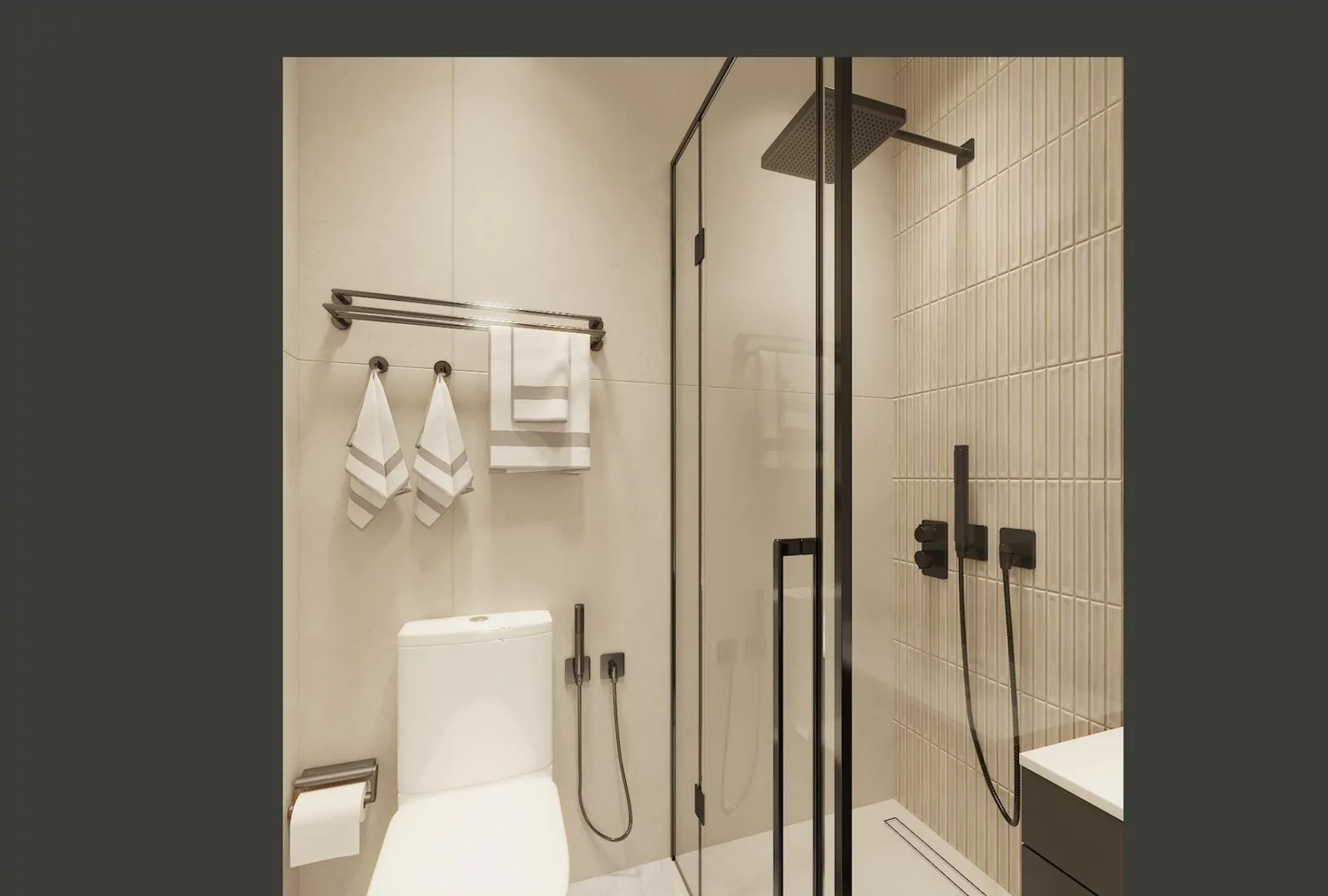
What actually decides the landed number
Unit price is the number everyone compares and the number that decides least. On a program, the landed cost is the unit plus the things that only appear when the units are not interchangeable:
| Program cost line | What it decides | Why the unit price does not cover it |
|---|---|---|
| The finish code | Whether the room types match | One code means no rework; no code means touch-ups across every room type |
| Top and bowl sourced together | Whether a unit has to be reordered | Cut-out and overhang stay under one supplier instead of being matched to someone else's dimensions |
| Packing specification | Site labour and damage rate | On multi-unit programs the packing decides as much as the product does |
| The spares list | Whether the program stays serviceable | A courier fix instead of a reorder against a finish code that has moved |
On a bathroom vanity wholesale program, the four lines above are where the money actually moves, and none of them appear on a unit-price comparison.
- The finish code, because a program built to one code has no rework; a program without one has touch-ups across every room type.
- The top and bowl match, because sourcing the box, the basin and the top together keeps the cut-out and the overhang under one supplier, and a mismatch there is a reorder of the whole unit.
- The packing specification, because for multi-unit programs the packing decides site labour and damage rate as much as the product does.
- The spares list, because it is the difference between a courier and a reorder.
On a duty-paid quote, production, crating, ocean freight, insurance, customs clearance, duty and the delivery leg are all inside the number, and the insurance is what covers the container leg. That is also why the damage-claim window matters on a program more than on a single order: a damaged unit is not a replacement, it is a room type that cannot be completed.
The short version
Buying bathroom vanity wholesale volume for more than one bathroom is a scheduling job before it is a pricing job. Fix the room types, fix one finish code across all of them, hold the box to the moisture path rather than the photograph, put the spares in the same container, and compare quotations on the landed program rather than the unit. The unit price is the last number to argue about, not the first.
FAQ
What is the minimum order for bathroom vanity wholesale?
It depends on whether you are buying stock or running a program. A stock order needs enough units to be worth producing; a program is measured in room types, and a mixed-model container usually reaches a workable quantity more easily than a single model repeated.
Why does the finish code matter more than the colour name?
Because a colour name is a description and a code is a reference. Our fronts are full-RAL painted, so the finish is a number that can appear on the quotation, the drawing and the crate label. Without that, four units ordered in the same month can arrive in four slightly different whites.
What fails first on a vanity in a humid bathroom?
The edge, not the face. The moisture path is the cut edge around the basin opening, which is why our carcasses are E0-grade with sealed edges. A painted front can look perfect while the panel edge is taking on moisture.
What dimensions should a vanity program hold to?
Floating height 850 mm, or 600 mm on legs, measured to finished floor rather than the slab. The top adds 30-40 mm, the top itself is 20-30 mm stone or solid surface, and edge overhang runs 50-75 mm both sides.
Should spares ship with the container?
Yes. Hinges, runners, the finish code and the top reference cost almost nothing to include and are the difference between a courier fix in month three and a reorder against a finish code that has since moved.
How do I compare vanity quotations fairly?
Compare the landed program, not the unit. Finish code, whether the box, basin and top are sourced together, packing specification and the spares list all move the total, and none of them appear on a unit-price comparison.