On 22 August 2026 the United States began collecting an additional 50% on a long list of Canadian-origin goods, under a statute that had sat unused since 1930. Kitchen cabinets were not among them. The Section 338 tariff skips 9403.40 for two separate reasons, and the 25% that did land on kitchen furniture in North America came from Ottawa, not Washington.
That distinction matters more than it sounds, because the summaries circulating in dealer groups have the Section 338 tariff pointed at the wrong product. The headline says Canadian furniture went up 50%. The annex says something narrower, and the counter-tariff says something else again.
Three proclamations, one misleading title
The action rests on Section 338 of the Tariff Act of 1930, which allows duties of up to 50% against a country the president finds is discriminating against US commerce. Three proclamations were signed on 20 July 2026 and published three days later: 11046 covering alcoholic beverages, 11047 covering dairy, 11048 covering motor vehicles. Each imposes the full 50% ad valorem rate on the Canadian-origin goods named in its annex.
Coverage does not sit in the title. It sits in Annex II of each proclamation, matched at eight digits of the tariff schedule. The motor-vehicle annex runs from chapter 4 to chapter 97 and carries roughly 439 lines: cement, plywood, furniture, cosmetics, textiles, jewellery, toys, wigs, fishing rods, swimming pools. If you read only the proclamation name and assumed your product was out of scope, you have not read the annex.
The effective date also moved, and that caused real damage. The duties were announced for 19 August. A proclamation on 18 August suspended them for three days while talks continued, and they took effect at 12:01 a.m. eastern time on 22 August 2026, for goods entered for consumption or withdrawn from warehouse on or after that moment. Plenty of mid-August briefings still say 19 August. If a broker filed against the earlier date, the work that follows is reconciliation, not savings.
One design choice matters for every importer who built a supply chain around preferential origin: there is no USMCA carve-out. Covered goods owe the 50% whether or not they qualify for preferential treatment under the agreement. Every earlier action against Canada trained buyers to treat a USMCA certificate as a shield. This one was built to be blind to it.
The exclusions are narrow and specific: energy products, potash, fish, critical minerals, goods covered by the WTO Agreement on Trade in Civil Aircraft, and goods already subject to Section 232 duties.
That last exclusion is where cabinets leave the room.
Why 9403.40 is not on the list
There are two independent reasons the Section 338 tariff does not reach 9403.40, and either one is enough on its own.
The first is the annex itself. The furniture lines named in the motor-vehicle proclamation are 9403.50.90 for wooden bedroom furniture and 9403.60.80 for other wooden furniture, alongside 9401.69.60 for wooden seating and selected parts entries. Kitchen cabinetry under 9403.40 does not appear. Chapter-level assumptions are what get importers into trouble here, so the honest version is: check the eight-digit line, not the chapter.
The second is the Section 232 carve-out. Wooden cabinets and vanities already sit inside the Section 232 lumber and timber action, at 25%, and the Section 338 annex exempts goods already carrying a 232 duty rather than stacking on top of them. Cabinets would be excluded even if someone read 9403.60.80 as covering them.
The Kitchen Cabinet Manufacturers Association put the conclusion plainly in its own read of the proclamations: these duties do not stack on top of current Section 232 tariffs and do not affect cabinet imports from Canada.
So the practical number for a container of Canadian cabinets entering the United States in the fourth quarter of 2026 is 25%, not 75%. The base rate on the cabinet subheadings is zero, the 232 wood-products layer is 25%, and the 50% never arrives.
Worth keeping straight for a different reason: the forced-labour Section 301 duty that took effect on 24 July 2026 does reach Canadian goods, at 10%. A shipment entered duty-free under a USMCA claim is exempt from that layer. A shipment that is not entered under USMCA pays it. That is the one place where the USMCA certificate still does something on a Canadian entry.
Section 338 tariff: what the annex lists that a cabinet factory touches
The 50% missed the finished cabinet and landed hard on the material inside it.
Heading 4412, plywood, veneered panels and laminated wood, is covered almost in its entirety. The 10, 31, 33, 34, 39, 41, 42, 49, 51, 52, 91, 92 and 99 series all appear on the annex. Also listed is 4408.10.01, coniferous veneer, which is what a softwood core stock buyer imports. Hardwood veneers are not on the list.
The Decorative Hardwoods Association, working from Census data through the April 2026 release, put Canadian-origin hardwood plywood imports into the United States at roughly 197 million US dollars of customs value in 2025, against 424 million from Indonesia and 300 million from Vietnam in the same year. That is the volume the annex reaches.
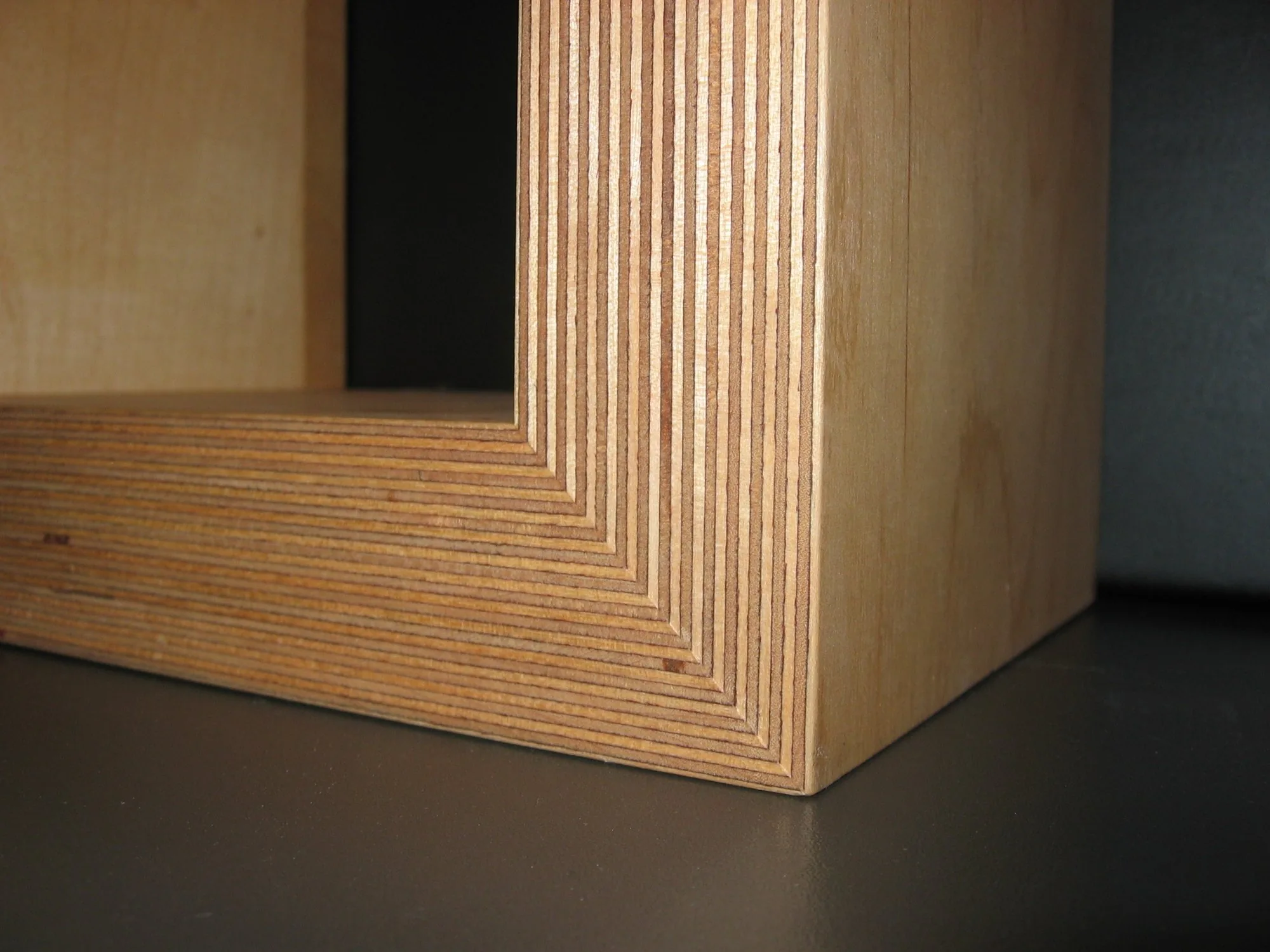
For a cabinet buyer this is only interesting because of where the panel sits in the bill of materials. A cabinet is a box made of panel, wrapped in a door, closed with hardware. The finished good can sit outside a 50% duty while the input it is built from sits inside one. A Canadian plant that buys Canadian panel for a US program now pays 50% on the panel and 25% on the cabinet, depending on which side of the border the value is added and how the entry is structured.
The rest of the wood lines follow the same logic. Wooden doors and window frames under 4418.21.80 and 4418.29.80 are in. Other wood articles under 4420.19.00 and 4421.99.70, .94 and .98 are in. None of these is a cabinet. All of them are things a cabinet project needs.
The 25% that came from Ottawa
Canada answered on 8 September 2026, dollar for dollar, rate for rate. Counter-tariffs of 15%, 25% and 50% apply to US-origin goods drawn from the lists the US itself targeted, with each rate matched to the US rate on the same goods. The published list ran to 629 tariff items: 413 at 50%, 195 at 25%, 21 at 15%.
This is where kitchen furniture actually got hit, and it is the part almost nobody quotes.
Under the 25% tier, 9403.40, kitchen furniture, is listed. Under the 50% tier, 9403.50, bedroom furniture, is listed. Wooden furniture parts under 9403.91 sit at 25%. US plywood under 4412 is at 50%, and US coniferous sawn wood under 4407 is at 25%, which is the mirror image of what Washington did to the same material coming the other way.
The tariffs apply only to goods originating in the United States. US goods already in transit to Canada on 8 September are not covered, and Finance Canada kept a remission process for cases where an input genuinely cannot be sourced domestically or from a non-US supplier.
Read the two directions together and the picture changes. A Canadian buyer sourcing cabinets now faces a US-origin cabinet at 25% where it previously entered duty-free under CUSMA, and a Chinese-origin cabinet at the 25% provisional safeguard surtax Canada imposed on 31 July 2026. On the face of the rates, that gap closed.
The safeguard is the temporary part. It runs for up to 200 days from 31 July 2026 while the Canadian International Trade Tribunal inquires into whether final measures are warranted. Counting forward, the provisional window closes in the middle of February 2027 unless something extends it. Anyone building a 2027 budget on the assumption that Chinese and US cabinets stay priced the same in Canada is building on a date that expires.
Four routes, one table
Rates below are what an importer pays, not what a factory quotes. Every percentage is ad valorem on the entered value, and the layers on a single entry are assessed on that same value rather than compounding one on another.
| Route | Base | Section 232 | Section 301 | AD/CVD | Section 338 | Effective |
|---|---|---|---|---|---|---|
| China to US, cabinet 9403.40 | 0% | 25% | 25% (List 3) | 7.67-43.92% named exporter | not applicable | 57.67-93.92% |
| Canada to US, cabinet 9403.40 | 0% | 25% | 10% unless entered under USMCA | none | carved out | 25%, or 35% without a USMCA claim |
| US to Canada, cabinet 9403.40 | varies | n/a Canada-side | n/a | none | n/a; Canada's own counter-tariff applies | 25% counter-tariff |
| China to Canada, cabinet 9403.40 | varies | n/a | n/a | none | n/a; Canada's safeguard applies | 25% provisional, up to 200 days |
Two numbers deserve a note. The China-to-US range assumes a named exporter with an assigned rate. Where no individual rate has ever been assigned, the China-wide rate of 251.64% applies, and that is not a planning number for anyone. The Canada-to-US line shows 25% because the 232 layer did not go to 50%: the step scheduled for 1 January 2026 was delayed a year by a proclamation dated 31 December 2025, which puts the next decision point at 1 January 2027.
What to check before the next entry
Five things decide whether a duty bill matches the quote, and only one of them is about the Section 338 tariff itself.
Pull the eight-digit line, not the chapter. Everything in this article turns on that. A broker who declares 9403.60.80 on a cabinet entry has classified the goods differently from a broker who declares 9403.40.90, and the difference is not cosmetic.
Decide the USMCA question on a Canadian entry. The 50% does not care about the certificate. The 10% forced-labour layer does. Filing under the agreement removes 10 points and changes nothing else.
Ask which side of the border the panel came from. A Canadian cabinet sold into the US carrying Canadian panel is two different tariff questions. The finished good is one entry, the panel is another, and the 50% applies to the second.
Check whether the safeguard on a Canadian-bound shipment is still running. It is provisional, dated, and tied to an inquiry. An entry date in February 2027 sits on the boundary.
Re-verify before an entry that lands near a scheduled step. The 232 cabinet rate has a decision point on 1 January 2027. The Canada-US negotiations broke down on 21 August and no new talks were scheduled, which means the annexes could move in either direction without a long runway.
What moves next
Three dates are worth putting in a calendar rather than an article.
1 January 2027 is the next scheduled step on the Section 232 cabinet rate, from 25% toward 50%, unless it is delayed again the way it was in December 2025.
The middle of February 2027 is the outer edge of Canada's 200-day provisional safeguard, and whatever the CITT concludes before then decides whether the 25% becomes final or disappears.
And the Section 338 action itself has thinner legal ground than the tariffs before it. It is the first significant modern use of a 1930 statute, the annexes were written in the middle of a renegotiation, and a challenge is more likely than not. A policy that reads as a bargaining position can be amended at short notice in either direction.
The working conclusion for a buyer is unglamorous. Cabinets were not swept up in the 50%, the material inside them was, the direction that actually moved kitchen furniture was Ottawa's counter-tariff, and every one of those facts is decided at the eight-digit line rather than the headline.
FAQ
Did Section 338 put a 50% tariff on Canadian kitchen cabinets?
No. Kitchen cabinetry under 9403.40 is not named in the Section 338 annexes, and goods already subject to Section 232 duties are excluded from the 50% regardless. Wooden cabinets and vanities already carry a 25% Section 232 layer, so the rate on a Canadian cabinet entering the United States is 25%, not 75%. The Kitchen Cabinet Manufacturers Association's own reading of the proclamations reached the same conclusion.
What is the Section 338 tariff rate and when did it take effect?
50% ad valorem, on covered Canadian-origin goods, for entries on or after 12:01 a.m. eastern time on 22 August 2026. It was announced for 19 August and suspended for three days by a proclamation dated 18 August. The duty applies regardless of whether the goods qualify for USMCA preferential treatment, and it stacks on the ordinary duty rate and on any antidumping or countervailing duty already owed.
Which wood products did Section 338 actually hit?
Plywood under heading 4412 is covered almost in its entirety across the 10, 31, 33, 34, 39, 41, 42, 49, 51, 52, 91, 92 and 99 series, as is coniferous veneer under 4408.10.01. Wooden doors and window frames under 4418.21.80 and 4418.29.80 are listed, along with other wood articles under 4420.19.00 and 4421.99.70, .94 and .98. Hardwood veneers are not on the list.
Why did kitchen furniture get 25% from Canada in September 2026?
Canada's counter-tariffs took effect on 8 September 2026 at 15%, 25% and 50%, matching the US rate on goods drawn from the same lists. Kitchen furniture under 9403.40 sits in the 25% tier, bedroom furniture under 9403.50 in the 50% tier, and wooden furniture parts under 9403.91 at 25%. The measures apply only to goods originating in the United States.
Does a USMCA certificate of origin help with Section 338?
Not with the 50%. This is the first major US action built to be blind to the agreement: covered goods owe the duty whether or not they qualify. The certificate still matters for one interaction. The Section 301 forced-labour duty of 10% applies to Canadian goods generally, but a shipment entered duty-free under a USMCA claim is exempt from that layer.
Is it cheaper to buy cabinets from Canada or China for a US project in 2026?
At the duty line alone, Canada is cheaper. A Canadian cabinet enters at 25% under Section 232. A Chinese cabinet enters at 25% Section 232 plus 25% Section 301 List 3 plus an exporter-specific antidumping rate, which lands between roughly 57.67% and 93.92% for named exporters, and far higher where no individual rate exists. That comparison covers duty only. Freight, lead time, change order cost and the rest of the landed-cost stack sit outside it, and they are what usually decide the order.