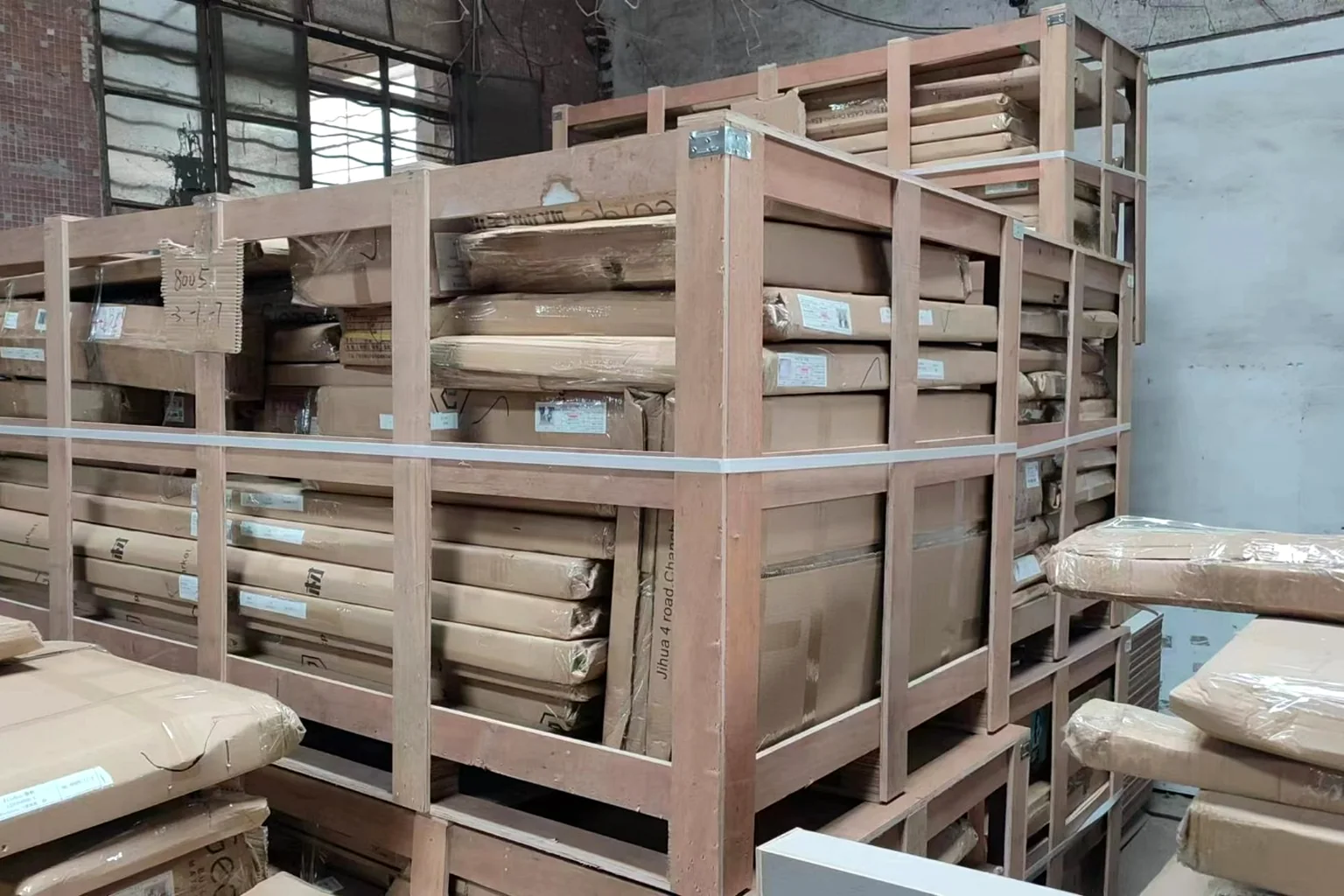
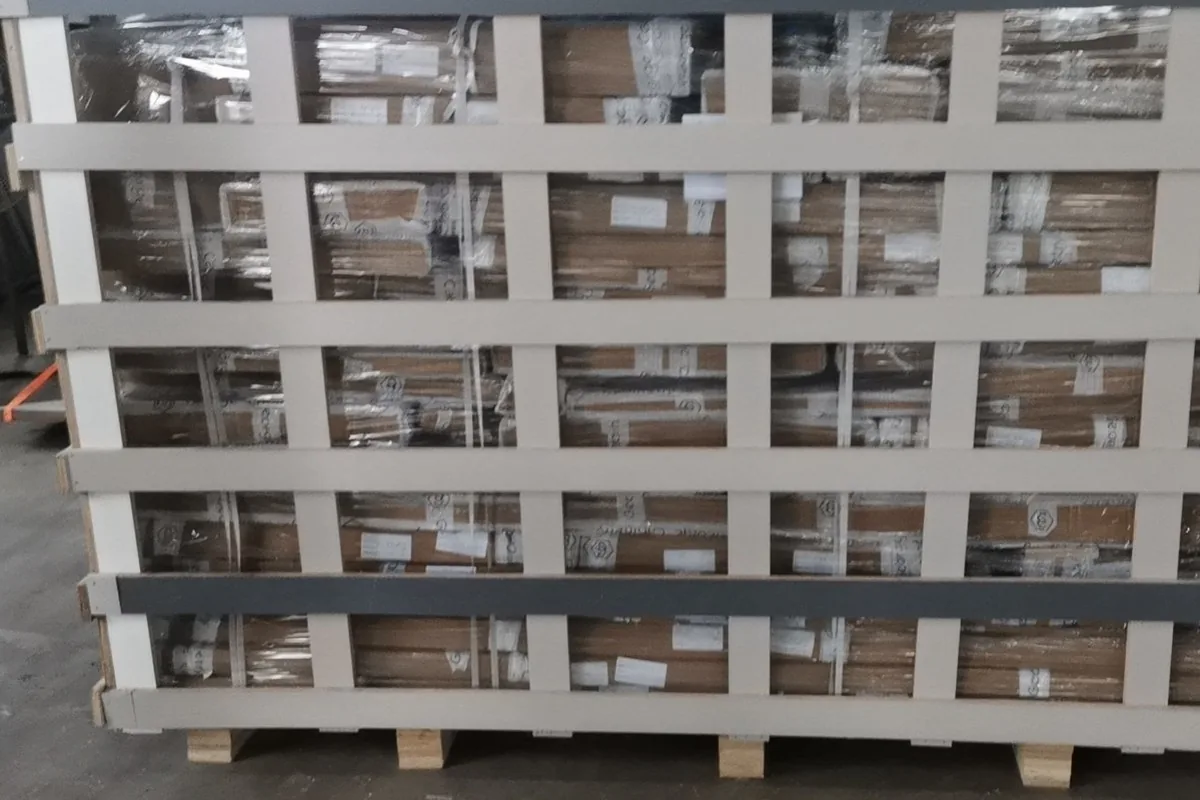
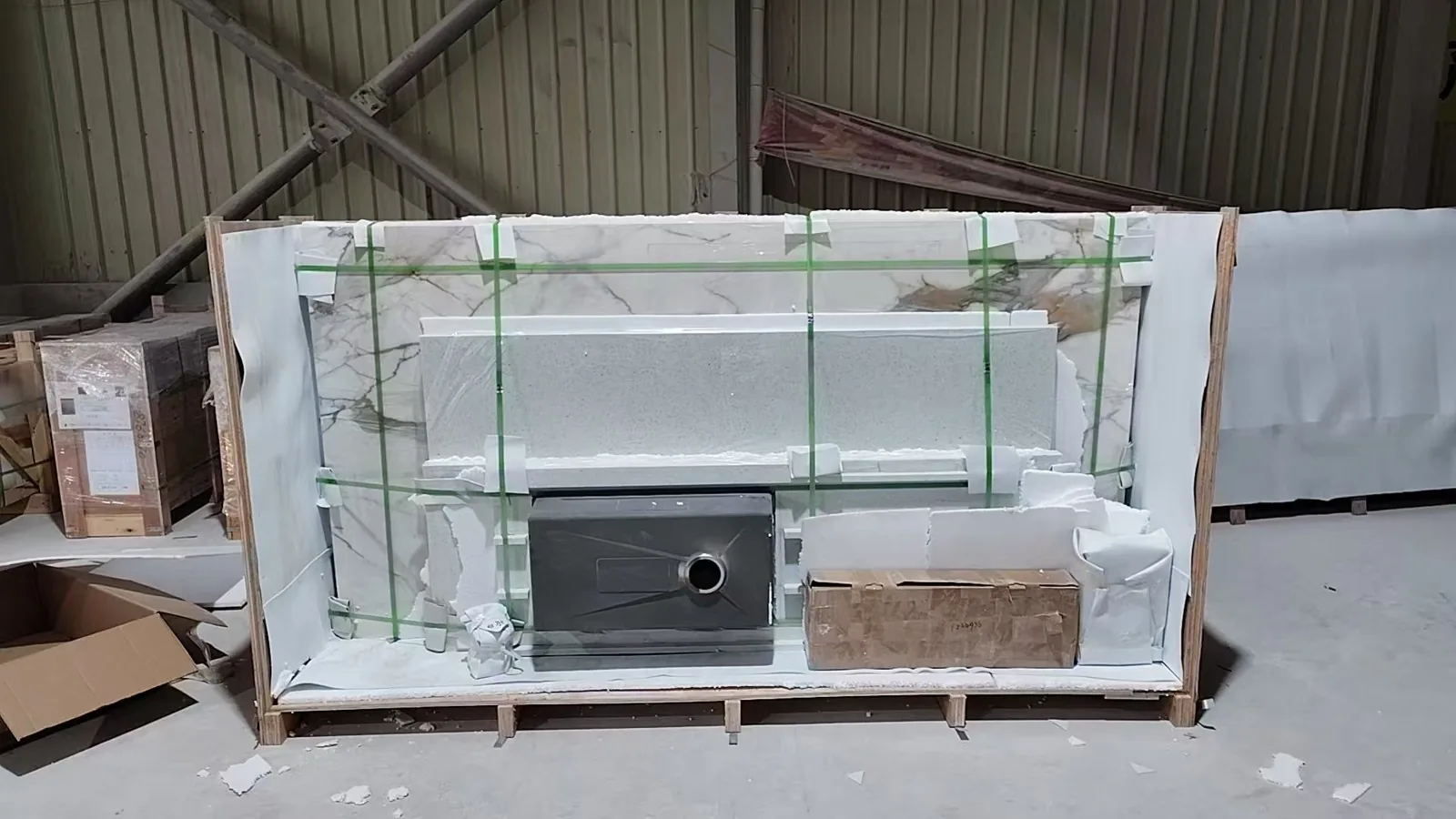
Packaging EPR has gone from one state to seven in eighteen months, and the part that matters to a cabinet factory is not the headline rate. It is that the seven states give four different answers about whether the crate, the pallet wrap and the master carton under your cabinets are covered material at all. In Oregon the tertiary carton is zero-rated and still reportable. In Colorado it is out of scope entirely. Both states run the same producer responsibility organisation.
That split is the whole problem for anyone shipping nationally, and it lands squarely on export packaging.
What packaging EPR is
Extended producer responsibility moves the cost of collecting and recycling packaging off municipalities and onto the company that puts the packaged product on the market. A producer registers with a state-approved organisation, reports what it supplied by material and by weight, and pays a fee against that tonnage. In most states the fee is three terms multiplied together: the tonnage supplied into the state, the published rate for each material category, and an eco-modulation adjustment.
Seven states have enacted packaging EPR laws: California under SB 54, Oregon under SB 582, Colorado under HB 22-1355, Maine under LD 1541, Minnesota under HF 3911, Maryland under SB 901 and Washington under SB 5284. New Jersey, New York, Illinois and Massachusetts have bills in various stages and none has passed.
Circular Action Alliance is the approved organisation in six of the seven. Maine has not signed one, and its September 2026 request for proposals drew no bids.
Packaging EPR: seven states, four answers
Every enacted program covers consumer-facing shipping packaging. The box the customer opens is covered material everywhere. The fight is over tertiary packaging, the material that moves product between businesses: master cartons, pallet wrap, crates, dunnage.
| State | B2B / tertiary transport packaging | Basis |
|---|---|---|
| California | Covered. No general B2B exemption; primary, secondary and tertiary are all covered material | PRC 42041 |
| Oregon | Covered, with carve-outs. Rigid pallets excluded, industrial-process packaging excluded, pallet wrap added by anyone other than the pallet producer excluded, privately recycled material excludable | ORS 459A.863 |
| Colorado | Excluded. Packaging used solely in B2B transport, or in B2B transactions where the material never reaches a consumer | C.R.S. 25-17-703 |
| Minnesota | Excluded. Narrow B2B production-loop exemption | 115A.1441 subd. 16(14) |
| Maryland | Excluded. Triangular B2B exemption | SB 901 exempt (13) |
| Washington | Excluded. Packaging supplied for personal, noncommercial use, plus a B2B clause | RCW 70A.208 |
| Maine | Excluded. Packaging used solely for transport to non-consumers | 38 MRS 2146(1-C) |
Two of those need reading twice. California has no importer tier at all, and defines a consumer broadly enough that a retailer taking delivery in a master case counts as the consumer of that case. Oregon sits in between: commercial packaging is covered, but the rigid pallet under it is not, and neither is pallet wrap added by anyone other than the producer of the palletised load.
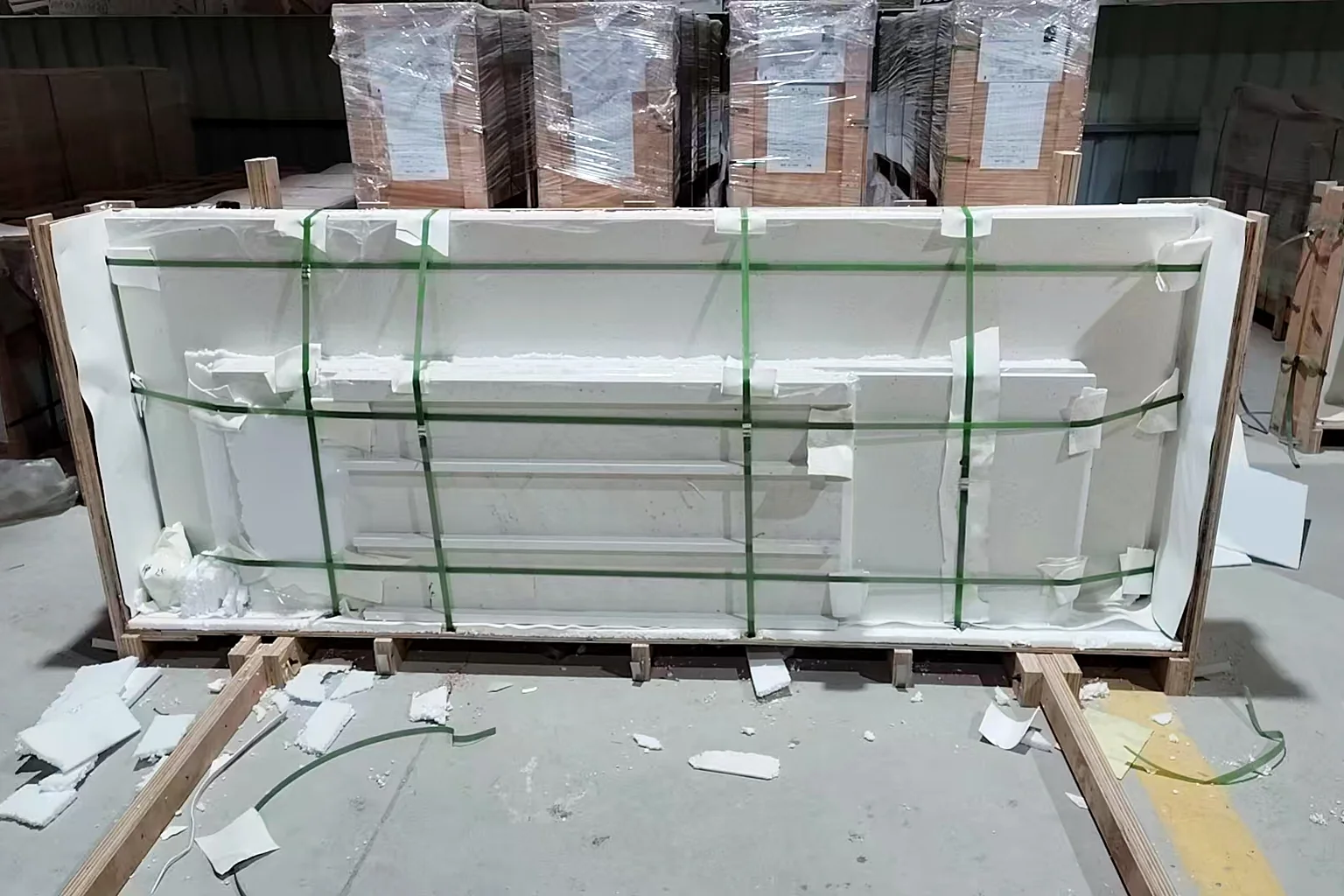
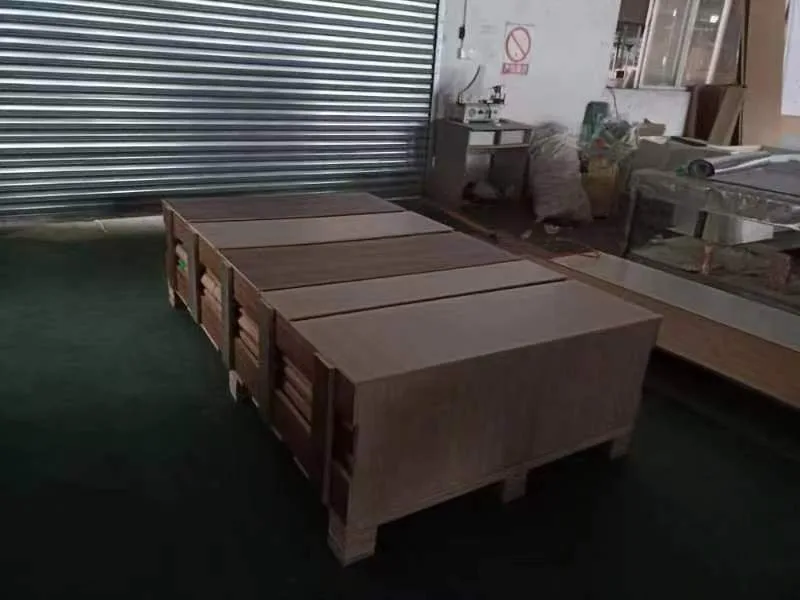
So the same container of cabinets, crated and wrapped in Foshan, is a reportable line item in California, a partially exempt one in Oregon, and out of scope in Colorado, Minnesota, Maryland, Washington and Maine.
The zero-rated line that still has to be reported
This is the part most easily misread, and the part a supplier should get right before a client asks.
Oregon's schedule sets non-consumer tertiary corrugated at zero cents per pound, against 8.0 cents per pound for consumer corrugated. The figure comes from pooled 2026 volumes of roughly 215,872 tons of tertiary corrugated in the programme, priced at nothing.
Zero-rated does not mean out of scope. The tonnage is still reportable, and reporting is what builds the data set the rate is eventually priced from. The Oregon life cycle disclosure due from large producers on 31 December 2026 is the clearest example of an obligation with no fee attached to it.
The exemption that does carry money in Oregon is non-consumer pallet wrap, priced at 34.0 cents per pound in 2026. That is the line that catches a shipment: not the carton, the film.
Colorado does the opposite and cleaner. Its statute removes shipping boxes, pallet wrap and transit corrugated from scope entirely, so there is nothing to report and nothing to pay on the B2B layer. California has no such carve-out, and its non-curbside recycling exemption only applies where a 65 percent recycling rate is achieved until 2027 and 70 percent after it, thresholds that many commercial streams do not reach.
What the crate, the wrap and the carton actually cost
Where packaging is covered, the rate depends entirely on the material category, and the spread is wide enough to change a packaging decision. The figures below are from Circular Action Alliance's published Oregon schedule, in US dollars per tonne.
| Material category | Rate per tonne | On the collection list? |
|---|---|---|
| Wood and other organic materials | 2,314.85 | Not accepted |
| Polystyrene, expanded | 3,042.38 | Not accepted |
| Plastic laminates and other flexibles | 2,248.72 | Not accepted |
| Polypropylene flexible and film | 2,248.72 | Not accepted |
| Polycoated paperboard | 1,058.22 | Not accepted |
| PET clear bottles, jugs and jars | 551.16 | Statewide collection list |
| Corrugated cardboard | 176.37 | Statewide collection list |
| Paperboard | 176.37 | Statewide collection list |
| Aluminium containers | 132.28 | Statewide collection list |
Two rows decide a cabinet shipment. Wood sits in the not-accepted tier at 2,314.85 a tonne, roughly thirteen times the corrugated rate. Stretch film sits at 2,248.72, and the pallet wrap line specifically is priced separately at 34.0 cents per pound. Corrugated, the material most people assume is the expensive one, is the cheap tier at 176.37.
California's 2027 schedule, published on 1 October 2026 and still preliminary pending CalRecycle approval, runs from 0.01 a pound for aluminium non-aerosol containers to 0.30 for PVC and flexible film. The base fee is not the whole bill: any category with a plastic component adds 0.03 a pound for reuse investment, 0.26 a pound in Plastic Pollution Mitigation Fund weight fees, and 0.001 per unit in component fees. Greenberg Glusker's read of the schedule is that only 29 percent of producer fees fund the core programme while 59 percent fund regulatory costs, and producers should not assume a lower listed base rate means a lower overall cost.
Who the producer is, and why it is usually not the factory
This is where most suppliers, including us, need to be precise rather than helpful.
The obligation generally lands on the brand owner, the trademark licensee, or the importer of record for sale into the state. The order of tiers differs: Washington, Maryland, Minnesota and Maine run a five-tier shape of manufacturer, licensee, brand owner, importer, first distributor. Colorado and Oregon run three tiers with the importer last and reach the brand owner by rule. California has no importer tier and puts a manufacturer that owns or licenses the brand at tier one.
For an export cabinet order, the producer is normally the client. They own the brand, they import, they place the product on the market. Our job is to supply the data their report depends on, and to make sure the packaging we build can be described accurately by material and by weight.
Two situations do move the obligation onto a factory. If the goods ship under our own brand, we are the brand owner. And if the packaging carries no brand at all, the manufacturer of the item can be reached at tier one under the Oregon, Washington, Minnesota, Maine and Maryland definitions and Colorado's statute.
There is also a clean line in the other direction. Selling empty packaging to someone who fills it and sells it on does not make you a producer. Circular Action Alliance's California guidance and Maryland's regulation both say empty packaging materials not yet used by a good are not covered material, and that a person is not a producer merely because they make or sell them.
What to put in the purchase order
Four items, and they cost nothing to add.
A packaging bill of materials. Every component in the crate, by material and by weight: panel, film, corner protectors, strapping, pallet, carton. A package with five materials is five reportable line items, and the client cannot report what they were not told.
A statement of which packaging is tertiary. If the pallet wrap was added by the pallet supplier rather than by the load producer, that is an Oregon exemption worth naming in writing.
A material call on the wood. Wood sits in the not-accepted tier where it is covered. If the crate could be corrugated, the rate difference is a factor of thirteen in Oregon and the client's fee moves with it.
Confirmation of who declares the brand. One line in the order about whether the goods ship branded, unbranded or private-label settles which side of the producer hierarchy the order sits on.
What moves next
California's programme formally begins on 1 January 2027, with producer fees starting and two invoices following, half in January and half in July, plus a Plastic Pollution Mitigation Fund invoice in January. Reporting for the 2026 data year is expected across the active states by 31 May 2027.
Colorado's 2027 dues schedule, also published on 1 October 2026, raises 44 of 61 material categories with a median increase around 14 percent, and expanded polystyrene reaches roughly 2.09 a pound. Washington's early fees for 2027 are low and fund programme development only, ranging from 0.2 to 2.5 cents per pound, and the state restricts market access for producers outside a programme from 1 March 2029.
The legal ground is unsettled in two places worth watching. NAW v. Feldon, the challenge to Oregon's programme on dormant commerce clause and due process grounds, went to a five-day bench trial in Portland in July 2026 with no ruling issued, and the injunction that came out of it shields only NAW's own members. A coalition of states filed against California's SB 54 regulations on 20 August 2026.
Neither stops an obligation that is already in force, and neither changes the answer to the question a client will actually ask, which is: what is in this crate, how much does it weigh, and what is it made of.
FAQ
What is packaging EPR in plain terms?
It is a law that makes the company putting packaged goods on the market pay for collecting and recycling that packaging, instead of leaving the cost with local government. The producer registers with an approved organisation, reports the material and weight of packaging supplied into the state, and pays an annual fee against it. Seven US states have enacted packaging EPR laws: California, Oregon, Colorado, Maine, Minnesota, Maryland and Washington.
Is the wooden crate our cabinets ship in covered by packaging EPR?
It depends on the state, and the answers genuinely differ. Colorado, Minnesota, Maryland, Washington and Maine exclude packaging used solely in B2B transport. California has no general B2B exemption, so the crate is covered material there. Oregon covers commercial packaging but excludes rigid pallets, industrial-process packaging and pallet wrap added by anyone other than the pallet producer. Where it is covered, wood falls in the not-accepted tier at USD 2,314.85 per tonne on the Oregon schedule.
What does the zero rate on tertiary cardboard actually mean?
Oregon prices non-consumer tertiary corrugated at zero cents per pound against 8.0 cents for consumer corrugated. Zero-rated is not out of scope. The tonnage is still reportable, the data still feeds the programme, and Oregon separately requires life cycle disclosures from large producers by 31 December 2026. Treating a zero rate as no obligation is the most common mistake on this line.
Who is the obligated producer on an imported cabinet order?
Usually the client, not the factory. The obligation generally falls on the brand owner, the trademark licensee, or the importer of record for sale into the state. It moves onto the factory only where the goods ship under our own brand, or where the packaging carries no brand and the manufacturer is reached at tier one. Selling empty packaging to a filler does not make you a producer under Circular Action Alliance's California guidance or Maryland's regulation.
How much can packaging choice change the fee?
By a factor of thirteen in Oregon, where wood sits at USD 2,314.85 per tonne in the not-accepted tier against USD 176.37 for corrugated cardboard. Stretch film sits at USD 2,248.72, and non-consumer pallet wrap is priced separately at 34.0 cents per pound. California adds a plastic-component surcharge of 0.03 a pound for reuse investment, 0.26 a pound in mitigation fund weight fees and 0.001 per unit in component fees, so a lower base rate does not mean a lower total.
When do these obligations start biting?
California's programme begins on 1 January 2027, with fees invoiced half in January and half in July. Oregon has charged fees since 1 July 2025 and Colorado since January 2026. Washington's producers were required to join a programme by 1 July 2026, with market access restrictions from 1 March 2029. Minnesota's stewardship plan is not due until 1 October 2028 and Maryland's first plan until 1 July 2028. Maine has no stewardship organisation under contract, so its first payment dates are not set.