Are China cabinets outdated? "Dated" is a design problem, not an origin problem
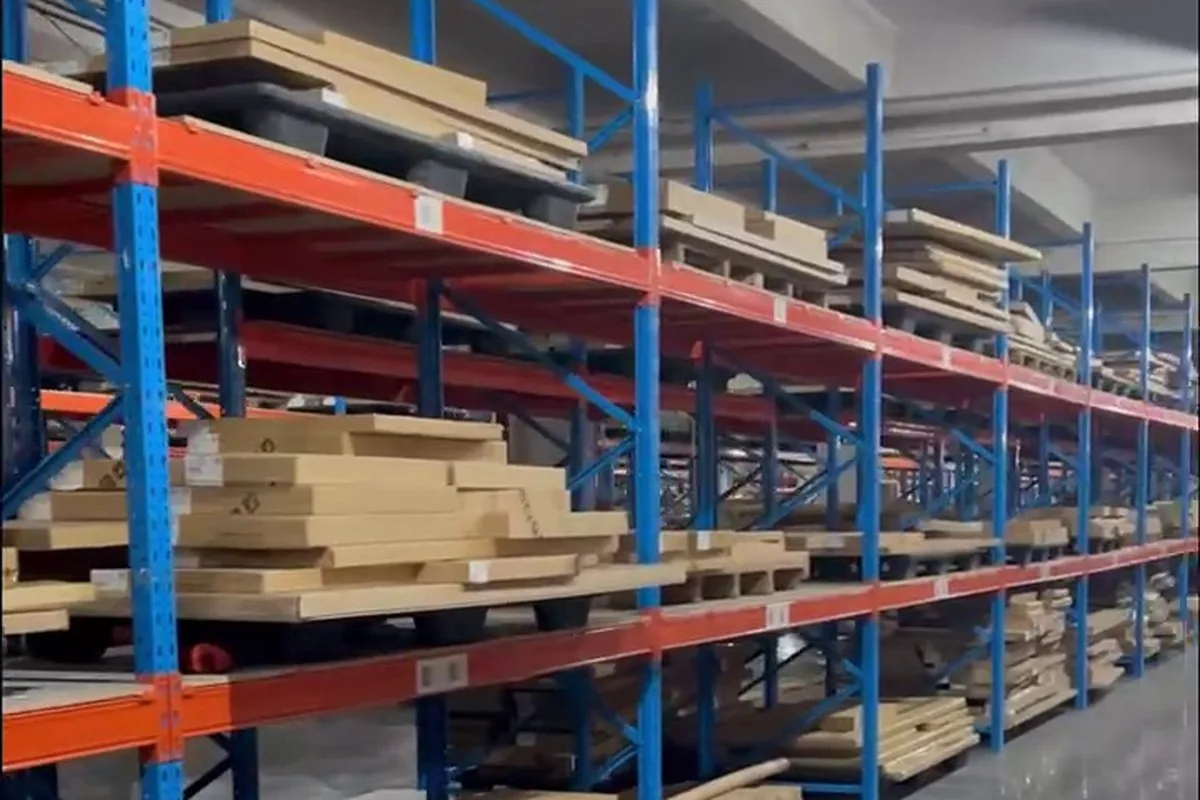
Nothing about the crate survives in the room. Once the cabinets are installed and photographed, the visible variables are the door profile, the proportions, the hardware, the colour, the light and the edges - and every cabinet-producing country ships current and dated versions of all six. A chunky raised-panel door made in Italy in 2009 reads exactly as dated as the same profile from anywhere else, and a slim-frame run built in Foshan this year reads exactly as current as the same run built anywhere else.
That is not a defence of the phrase "are China cabinets outdated" - it is what the order book shows. The scepticism about made in China cabinets is rarely about one bad kitchen someone stood in; it is about a tier of product that exists in every exporting country, where the box is thin, the banding is 1 mm and the hardware has no model number. The tier is real. It is also not what a current specification looks like, and the two are easy to tell apart once you know which six signals to read.
Our own order data for 2026 says the market already knows this. In the US import drawings we worked this year, slim-frame shaker orders - a 36-40 mm visible frame - outnumbered wide-frame orders two to one, and the chunky 50 mm framed look is the profile on its way out. The 2026 order-book trend note has the full list, written from containers rather than from render feeds.
What actually dates a kitchen
Six signals do the work. None of them is a country, and all six are visible in a single photograph - which is why a dated kitchen is so easy to spot and so hard to blame on where the boxes were cut.
| Signal | What reads dated now | What reads current |
|---|---|---|
| Door profile | Heavy raised-panel frames, deep mouldings, a visible 50 mm border | Slim shaker with a 36-40 mm visible frame, or a flat slab with a clean reveal |
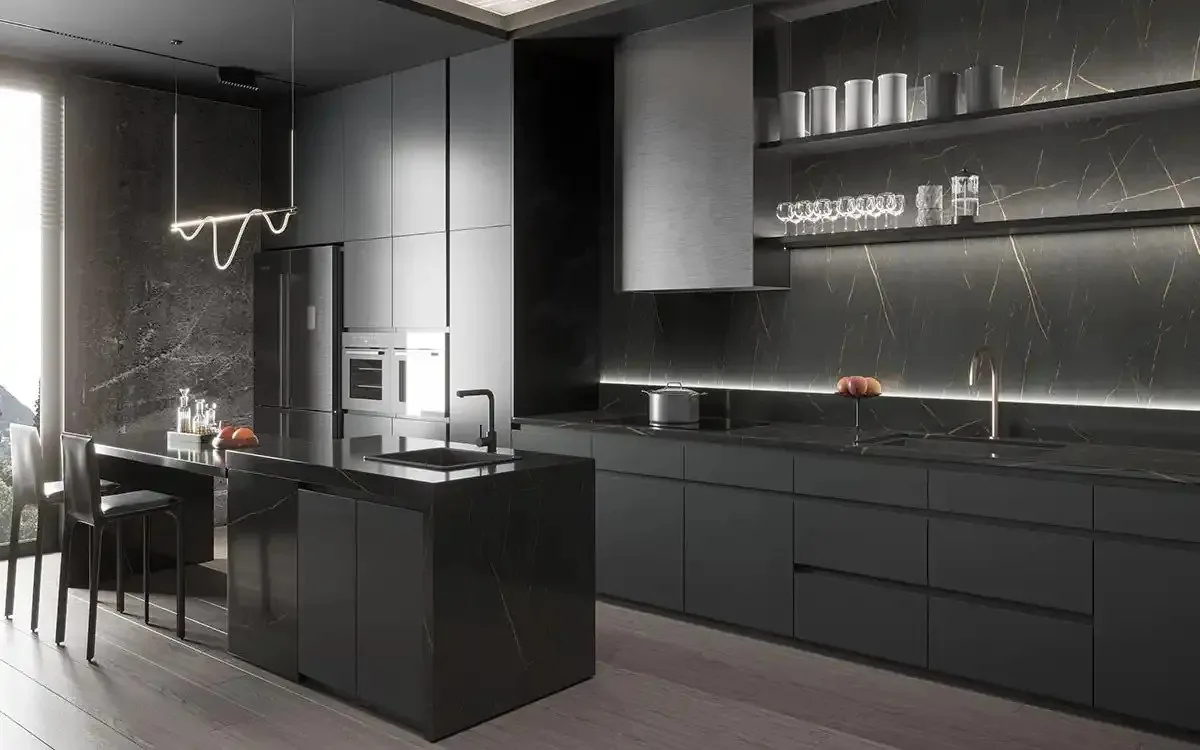
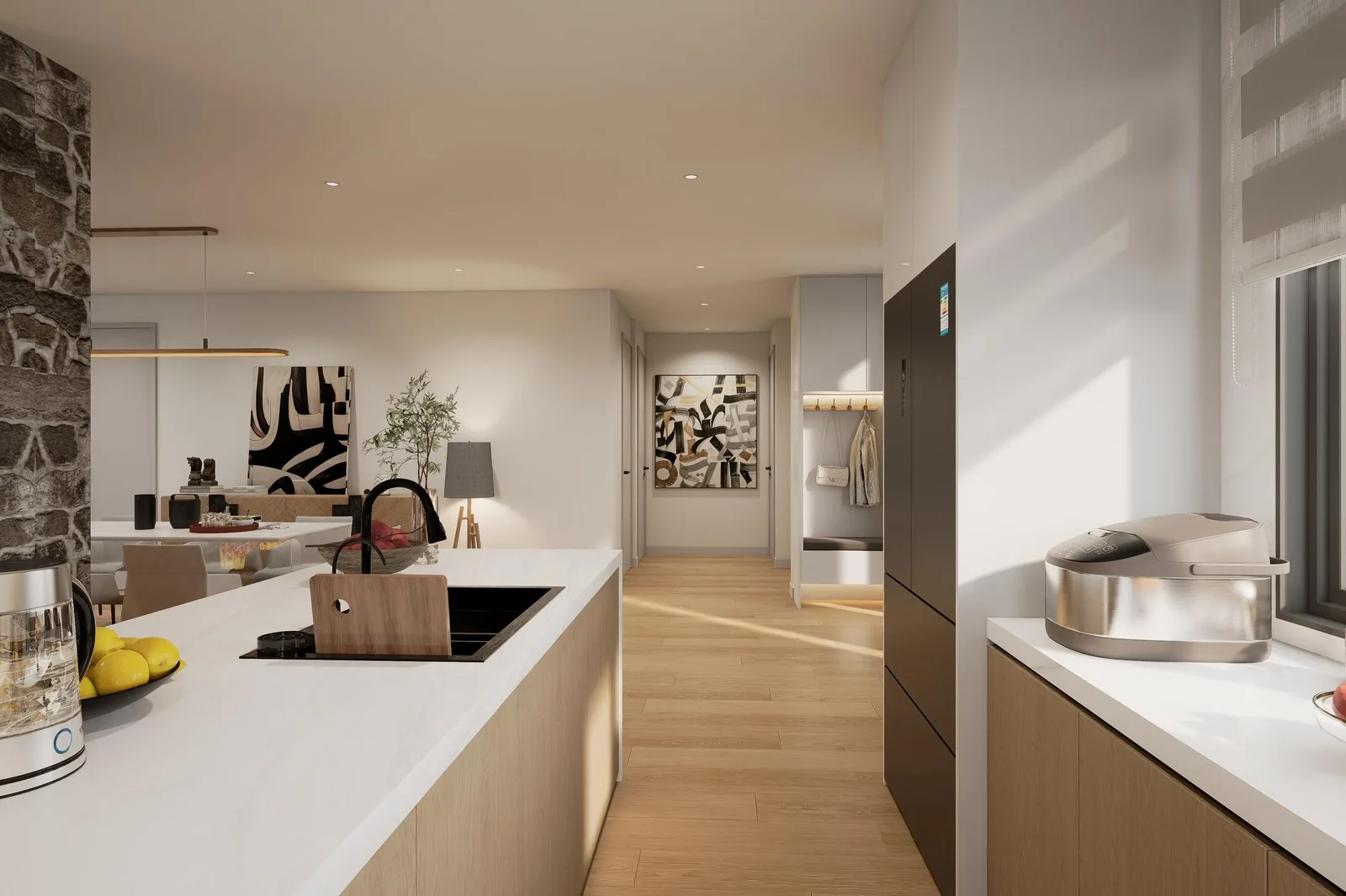
| Proportions | A run that stops short of the ceiling, mismatched tall units, freestanding appliances breaking the line | Full-height toe-kick-free talls to the ceiling, appliances hidden behind matched panels, an island sized as a room |
| Exposed hardware | Pull handles on every door, visible hinges, one finish chosen by default | Push-open and cup-hinge in matte black as the workhorse, with brushed brass as one deliberate accent |
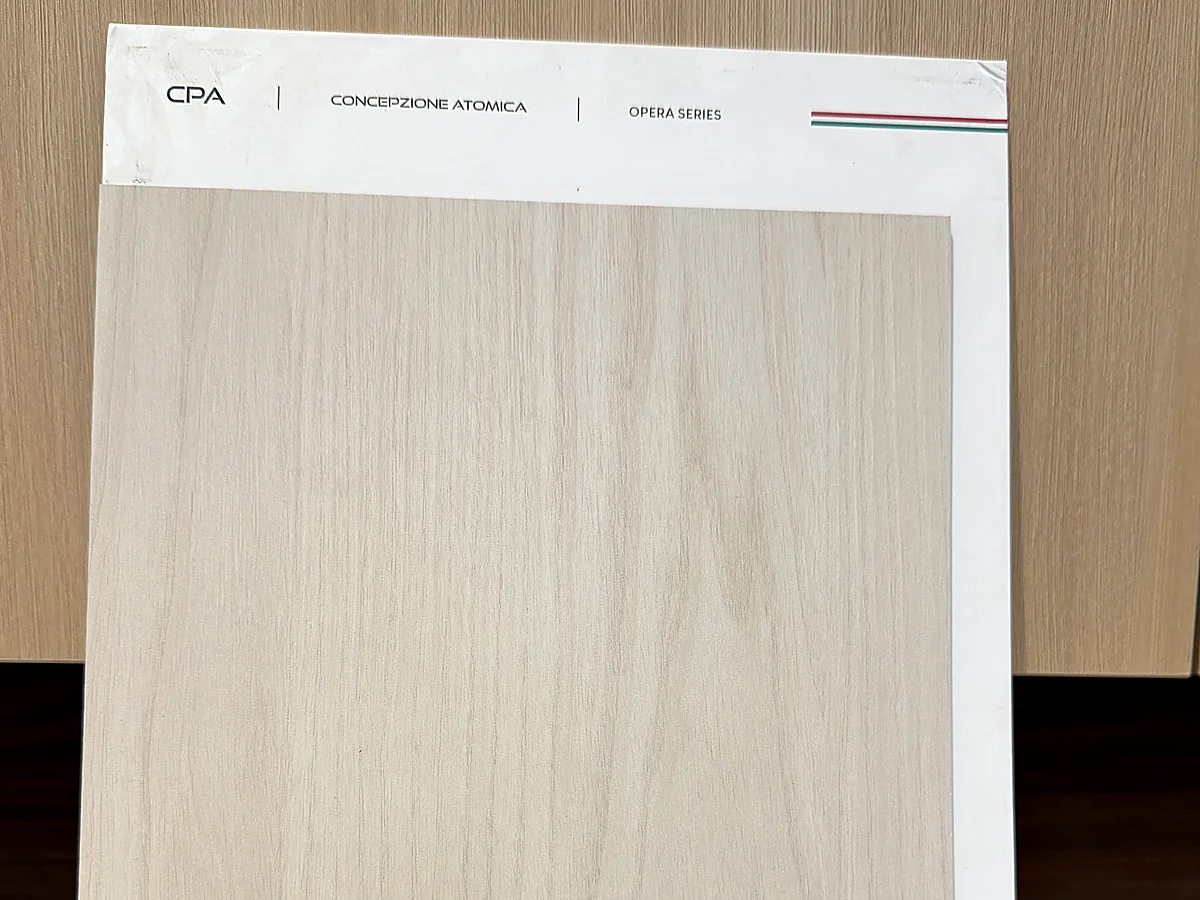
| Colour | Yellow-toned oak, and a glossy slab used as the "premium" read | Two-tone - warm oak base under white-grey uppers, or light over dark - in open-pore matte |
| Lighting | One central fixture, dark worktops, nothing under the cabinets | Layered light: under-cabinet runs, lit niches, a backlit pantry spine |
| Edge detailing | Raw cut edges, 1 mm banding, shadow lines that wander along a run | 2 mm PVB hot-melt banding on all four cut edges, and a reveal that stays even door to door |

The order book agrees on which side of each row is moving. Glossy lacquer on a slab finished its run as a premium option around 2023 and now reads dated against matte stone; heavy raised-panel framing is the profile that went slim; all-fluted kitchens and open shelving as a default have both slowed, because the accent works and the whole-room version fatigues. The through-line in 2026 is calm as the default with one deliberate accent - not more material, less.
The origin question people really mean: quality and consistency
When a buyer asks whether China-made cabinets are outdated, the question underneath is almost never about design. It is: will the fourth container match the first? That is answerable, and it is where a specification earns its keep - the same document set that the sourcing and QC guide is built around.
- Board - 18mm E0 plywood, formaldehyde at or under 0.05 mg/m³ per GB/T 39600, report no. SQ2405393 attached to the order, with ENF available on request. A class is not a source; the mill and the report number are.
- Banding - 2 mm PVB hot-melt, all four edges of every cut panel, with the glue named. Thickness alone is what the cheap tier quotes. What the box is made of decides how it behaves at the sink and under the hinge.
- Hardware - Blum soft-close rated to 50,000 cycles, and full-extension slides rated 35-45 kg per pair, written as model numbers rather than family names. DTC is available on request.
- Tolerance - ±0.5 mm on cut parts, which is what makes bay 12 interchangeable with bay 4 when the crate is opened a month later.
- Assembly - every order trial-assembled on the bench before packing, with photo gates at 24 hours (cut parts and banding), 48 hours (finishing and hardware) and 72 hours (trial assembly and packing).
- System - ISO 9001 no. 02818Q11500R2S, valid to November 2027, scope: wood processing and service. Certification is worth what the number is worth, so check it with the issuing body.
Two honest caveats belong in this section. First, lead time is a real cost of importing: our factory time is 10-14 days after drawing approval, then roughly 18-22 days to the US West Coast, 32-40 to the East Coast and 15-20 to Sydney, duty-paid. A local shop is faster because it is closer - that is the trade, and it has nothing to do with how long the cabinets last. Second, quality is not uniform across an industry. The way to tell a factory from a reseller is to ask for artifacts instead of assurances, which is exactly what the remote factory-verification checks walk through.
What changed in the last five years
The reason the phrase feels out of date is that the product changed underneath it. Five shifts moved cased goods from a carpentry trade into a systems trade, and each one is checkable on a drawing rather than arguable in a showroom.
- Frameless became the default. The frame stopped being the design element and the reveal became one - a continuous gap instead of a border, which is why proportions now read across a whole run instead of door by door. The costed comparison of frameless, face-frame and inset is worth reading before you specify a door system.
- Edge banding moved up a class. Thin PVC gave way to 2 mm PVB hot-melt on all four cut edges, with the glue named. The label never mattered much; the joint is the part that survives a wet sink base.
- Paint became a system. Instead of "matte white" as a colour request, a finish now carries a schedule: three colour coats plus two clear, baked at 60 °C for 45 minutes, with the colour approved on a physical sample rather than a screen image.
- Hardware got branded and rated. Hinges and slides moved from a category to a model number with a cycle or load rating attached - ours are Blum soft-close at 50,000 cycles and full-extension slides at 35-45 kg per pair.
- Process became visible. Photo gates at 24, 48 and 72 hours and a trial assembly of every order turned quality from a promise into a record, and multi-unit programs started shipping to one spec sheet per unit type rather than per room.

None of the five is a country of origin. All five are lines on a specification sheet - which is the practical test for any kitchen, imported or not.
How to judge a kitchen in 2031 terms
Five things you can do in a room you are standing in, without opening a single drawer front twice. They are also the five things that decide whether the kitchen still reads current in five years.
- Sight down the run and read the gaps. A reveal that stays even across every door - including the ones opened most - is the difference between a system and a set of boxes. Our reveal is 1.5 mm, on frameless boxes.
- Run a finger under a shelf. If it is raw board, the edge was never finished. Banded all four edges is the current standard, in 2 mm PVB hot-melt.
- Open a drawer and look at the slide. A model number and a load rating, or silence. Full-extension at 35-45 kg per pair is the working standard; a slide that matched a price is what sags in year two.
- Photograph the room the way a listing would. If the photograph says nothing but "glossy", the kitchen is dated. Matte, open-pore and two-tone photograph current - and that is the same instinct a future buyer brings to your resale value.
- Ask what is behind the doors. Board grade with a report number, hardware brand with a rating, and the warranty split in writing. A five-year structural term on the carcase, two years on door finishes and five on hardware is a normal split to ask for - ours is written into the order contract.
Note what none of the five asks. Not one of them mentions where the cabinets were made, because none of them can be answered by a country.
Where a factory-direct program fits
A factory-direct order is the shortest distance between the specification and the price, and it comes with two conditions the buyer has to accept. You specify rather than choose from a showroom wall, and you carry the ocean schedule. What you get in return is the spec at the source: the board with its report number, the banding and its glue, the hinge and slide model numbers, the ±0.5 mm tolerance and the trial-assembly photos.
It fits projects that repeat or that are specified rather than styled on the day: whole-house programs where every room follows one sheet, an apartment program priced per unit type, or a kitchen built around a full-height run and an island sized as a room. Two examples from our own deliveries show the shape - the illuminated island kitchen in the US, where the island carries the seating and the storage, and a whole house built to one spec, where every room follows the same document.
The base-and-wall run is quoted per linear foot, duty-paid, with talls, islands and vanities itemised separately because they cost differently. If you want to see the three current door systems before you specify one, they are on the collections page, and the process from floor plan to crate is on how we work.
FAQ
Are China cabinets outdated?
The design is not dated and the origin is not the variable. What dates a kitchen is its door profile, proportions, exposed hardware, colour, lighting and edge detailing - and every cabinet-producing country ships both current and dated versions of those six things. Where origin does matter is consistency: whether the fourth container matches the first. That is a question about a written spec, a report number, a hinge model and a trial-assembly photo, not about the crate's flag.
Does buying imported cabinets hurt resale value?
A dated kitchen hurts resale value; an imported kitchen does not, once it is installed. Appraisers, agents and listing photos respond to the door profile, the layout, the light and the finish, none of which carry a country of origin on the surface. The one resale risk specific to imports is a claim trail: keep the order contract, the spec sheet and the report numbers, so a future buyer or inspector can see what the box is made of.
What is the first sign that a kitchen has dated?
Proportions before finishes. A run that stops short of the ceiling, a tall unit that disagrees with its neighbours, or a fridge standing proud in the middle of a new run reads dated from the doorway, even with an expensive door. The second sign is a glossy slab: glossy finishes finished their run as the premium read around 2023 and now look their age against matte stone.
Can a Chinese factory match a European finish?
On systems, yes; on any single artisan finish, that is a claim to test rather than accept. What can be written down is the finish system: three colour coats plus two clear, baked at 60 °C for 45 minutes, with the colour approved on a physical sample rather than a screen. For veneer and stone, batch matching is what matters. Ask both suppliers for the same written system, and compare those - not the adjectives.
Is the quality consistent from the first container to the fourth?
It is if there is a frozen spec and photo gates; it drifts if there is not. Drift is rarely sabotage - it is substitution of what someone judged equivalent: a different mill's board in the same class, another hinge model in the same family, 1 mm banding where 2 mm was quoted. Our gates photograph cut parts and banding at 24 hours, finishing and hardware at 48, trial assembly and packing at 72, and every order is trial-assembled before it is crated.
How do I tell a good Chinese cabinet supplier from a cheap one?
Ask for artifacts, not assurances: the formaldehyde report number with its range and expiry, the edge-banding thickness and glue type on all four cut edges, hinge and slide model numbers with their cycle and load ratings, the cutting tolerance, and the QC gate photos from a recent order. A supplier who answers with documents is a factory; a supplier who answers with adjectives is a reseller.
Is lead time the real downside of importing?
Lead time is the honest trade-off, not quality. A domestic shop can be faster because it is closer. Ours is 10 to 14 days in the factory after drawing approval, then roughly 18 to 22 days to the US West Coast, 32 to 40 to the East Coast and 15 to 20 to Sydney, duty-paid. If the schedule is the constraint, that is a real answer - and it is worth more than a vague promise about quality.