Every trend list is written from the render feed. This one is written from the order book: the door styles, finishes and layouts that actually left the factory in the first half of 2026. Short version - the shaker kept its crown, the fluted door went from "accent" to "almost standard," and matte slabs quietly stopped being bold and became the neutral.
Doors: the shaker, thinner-edged
The slim shaker - narrow stiles, clean recess, 36-40 mm visible frame - is still the default US import order. What changed is the profile: buyers are moving away from the chunky 50 mm framed look toward slimmer, calmer frames - in the US import drawings we've worked this year, slim-frame orders outnumber wide-frame two to one. Our Oakline slim-shaker line is built for exactly this: the frame reads as a shadow line, not a border.
The flat slab is no longer a style statement, it's a base coat. Matte charcoal, slate and warm greys are the spec we see most on slabs - and the finish is where the statement now lives: open-pore matte rather than glossy lacquer, which is what's slowing down. Glossy finished its run as a "premium" option around 2023; it now reads dated on a slab.
The fluted door went mainstream
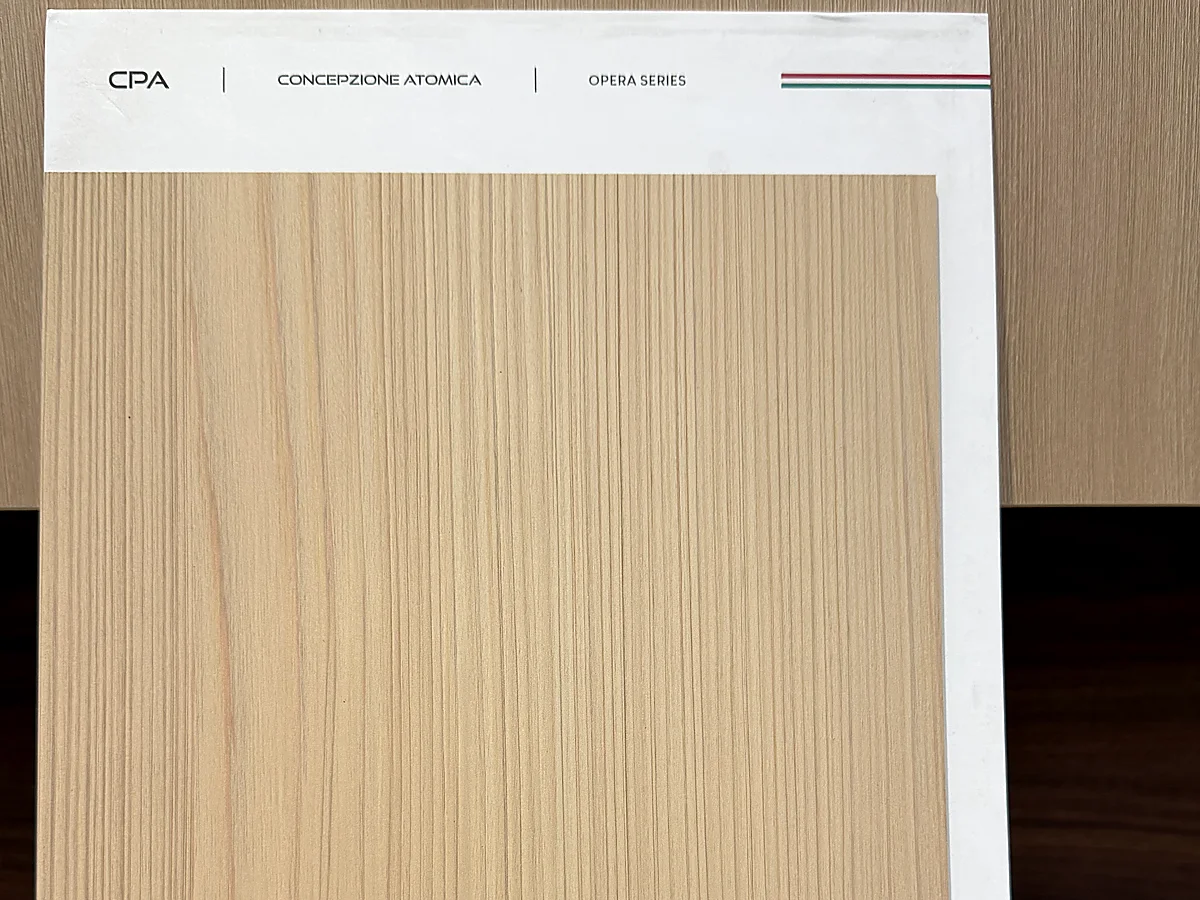
Two years ago fluting was a feature-wall trick. In 2026 orders it shows up as a deliberate accent element in the run: a fluted column between two flat bays, fluted uppers over a shaker base, a fluted pantry spine next to the island. The Fluted collection exists for these placements - the flute pitch is sized so it doesn't compete with the stone, just sits under it.
- Where it leads: appliance columns, tall pantry bays, island fronts, feature walls.
- Where it's slowing: all-fluted kitchens - the eye stops seeing it once the whole room is ribbed.

Two-tone is the new standard, not the new trend
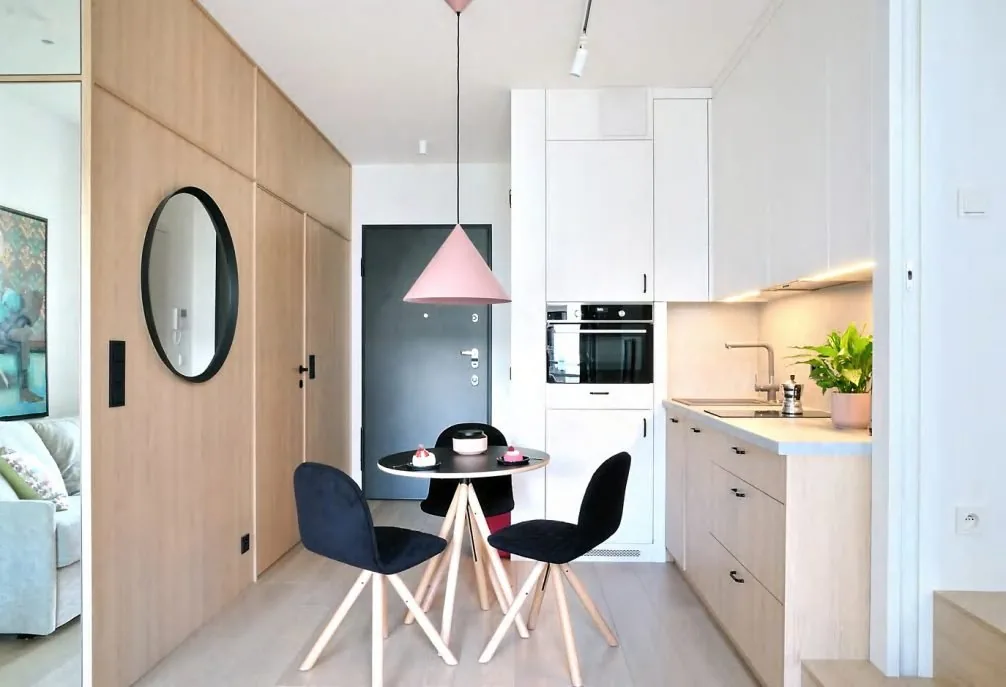
Light uppers, darker base. Warm oak base, white-grey uppers. The two-tone run has moved from "designer choice" to the single most common finish specification in import drawings. What matters now is the seam: matching the two finishes to the same box spec so the transition at the countertop line is clean. That's a factory discipline, not a paint choice - and it's why we keep the two finishes on one drawing, not two orders.
Layouts: tall, full-height, hidden
- Full-height everything. Toe-kick-free tall runs that go to the ceiling - the kitchen as a wall, not a row of boxes. This is the single biggest layout shift of the year.
- The pantry spine. A dedicated full-height pantry run adjacent to the kitchen, with pull-out shelving. Buyers treat it as part of the kitchen, not storage.
- Hidden appliances. Ovens and dishwashers behind panels that match the run. Integrated is the only option in new drawings - freestanding appliances in an imported kitchen is now an exception, not a norm.
- Island as room. The island keeps growing: 2.4 m+, seating on two sides, storage inside, stone on top with a waterfall end on one side.
Hardware: matte black held, brass came back
Matte black push-open and cup-hinge hardware remains the workhorse. Brushed brass made a real comeback on fluted and two-tone runs - it's the finish that sells the "high-end" read in photos, and buyers know it. The pattern: brass on the feature run, matte black on the utility runs, one house, no clash.
What's slowing down
- Glossy lacquer on slabs - reads dated against matte stone.
- Heavy raised-panel framed doors - the profile went slim.
- Open shelving as a default - it appears now, but as one deliberate bay, not a system.
- All-fluted kitchens - the accent did its job; the whole-room version fatigued.
The through-line for 2026: calm as the default, one deliberate accent as the story. A two-tone run with a fluted column is the shape of most orders we release - and it's the shape we'd recommend if you're designing a kitchen to sell in this market, because it photographs well, installs well and doesn't age with a single trend cycle.
Kitchen cabinet trends 2026: how to use this list
A trend note is only useful if it changes a decision. Five decisions came out of this year's kitchen cabinet trends list, and each one is a line you can write on a drawing rather than a mood you have to interpret.
- Specify the frame width, not the style name. Shaker is now a family. The orders that read current carry a 36 to 40 mm visible frame; the chunky end of the same family reads dated in the photograph. Put the millimetre on the spec sheet.
- Decide the accent before the finish. The through-line in 2026 is calm as the default with one deliberate accent - a fluted column, a brass pull on the feature run, a stone seat on the island. All-fluted and all-brass rooms are the ones slowing down.
- Decide whether the run goes to the ceiling. Full-height, toe-kick-free talls were the layout decision with the largest visual return this year, and they change the door heights, the panel list and the crating weights. It is a drawing decision, not a site decision.
- Choose matte as the default and gloss only as a statement. Glossy finished its run as the premium read around 2023; on a slab it now reads its age. Open-pore matte is the default in the drawings we cut.
- Plan the light with the cabinets. Lit niches, under-cabinet runs and a backlit pantry spine are specified on the drawing now, because the wiring and the panel cut-outs have to be decided before the boxes are made.
None of the five depends on a brand, a showroom or a country of manufacture. They are specification lines, which is exactly why they are worth reading from an order book rather than from a render.
FAQ
What door style is leading kitchen cabinet trends in 2026?
Slim shaker. In the US import drawings we cut this year, slim-frame orders with a 36 to 40 mm visible frame outnumbered wide-frame orders two to one, and the chunky 50 mm framed look is the profile on its way out. Flat slab stays the base coat of the range and takes the accent instead.
Is fluted going out of style?
The fluted door went mainstream this year, but the format changed: it works as an accent column between flat bays, on the uppers over a shaker base, or as a pantry spine. Whole-kitchen fluting is the version that is slowing down, because the texture stops reading as a feature and starts reading as a wall.
Is two-tone a trend or a standard now?
The orders say standard. Light uppers over a darker base, or a warm oak base under white-grey uppers, came through as the default rather than the exception this year. The discipline that makes it work is the seam: both finishes should sit on one box spec so the joint line is a decision rather than a result.
What are buyers ordering less of?
Four things slowed this year: glossy lacquer on slabs, heavy raised-panel framed doors, open shelving as a default, and all-fluted kitchens. Each one had a long run and each one is still available on request - the change is that they are no longer the safe default in a specification.
Are brass handles back?
Brass came back as an accent, not as a system. Matte black held its place as the workhorse finish across utility runs, and brushed brass appeared on the feature run: the island, the pantry spine, the fluted column. One deliberate finish on the run that gets noticed is the pattern in this year's orders.
How should I use this list in my own project?
As a set of lines to write on a drawing: the visible frame width in millimetres, the accent and where it sits, whether the talls run to the ceiling, matte as the default finish, and the lighting planned with the panel list. Trends are only a risk when they arrive as a mood rather than as a specification.