Guide · Importing
Imported vs domestic custom closets: the real math
The same walk-in, two quotes. Where the gap comes from, where it goes away - and the honest row most importers won't show you.
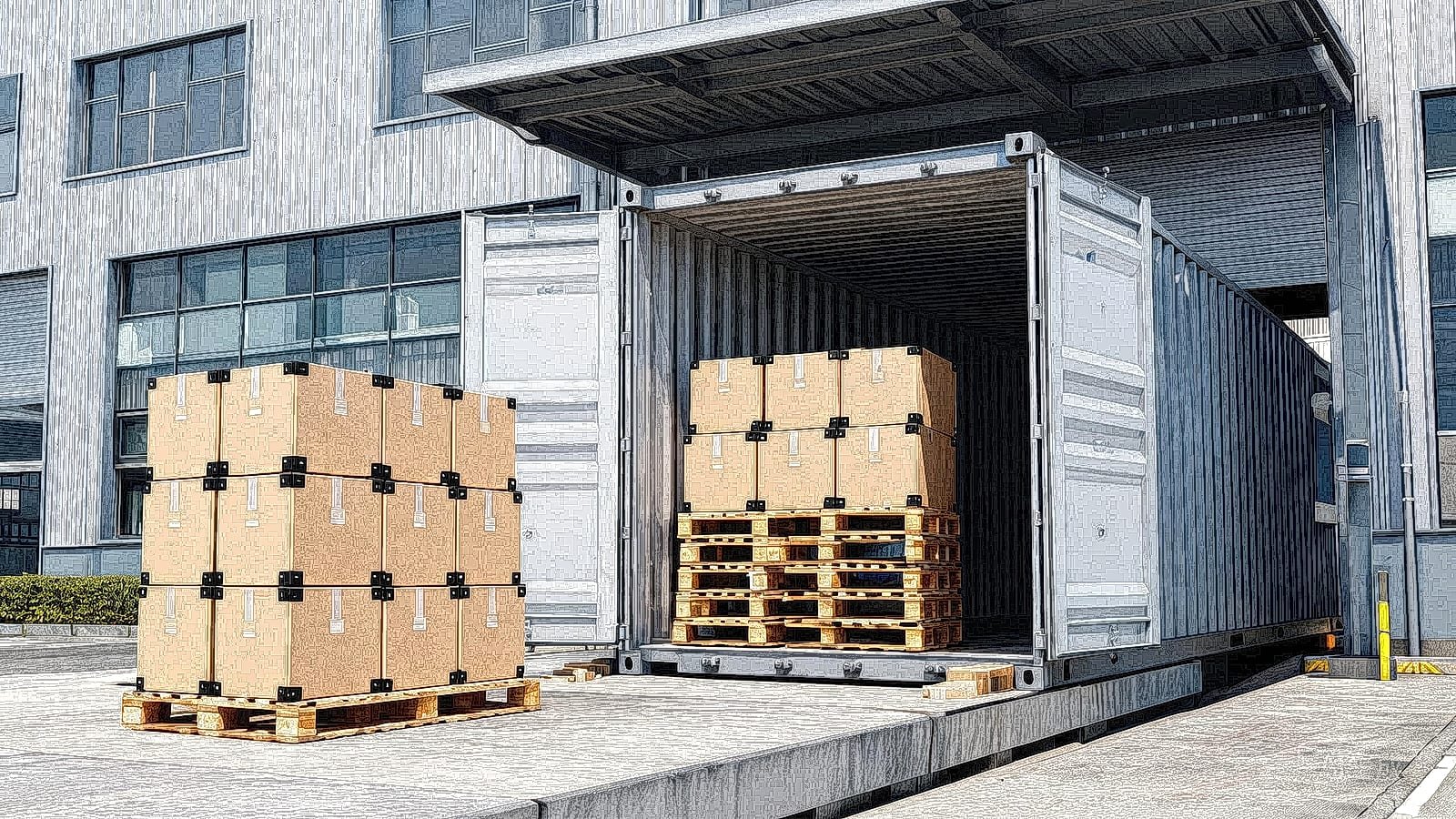
This is the question on every multi-room inquiry we get: the same walk-in, quoted by a domestic custom shop and by an import factory - which number is the real one? It depends on six rows, and the answer flips depending on your timeline and your finish list. Here are the rows, with our own factory numbers on the import side.
The two quotes, line by line
| Row | Imported factory DDP (our line) | US domestic custom shop |
|---|---|---|
| System price | Board + box + hardware in one number, from the factory | Shop by shop; the finish premium often appears late in the process |
| Lead time | 12-16 days factory + 18-40 days ocean, confirmed in writing before the deposit | Backlog dependent; the production slot usually confirmed after the deposit |
| Duty & freight | Inside the DDP number - Section 301, clearance, drayage | Not applicable - the shop's margin is |
| Finish freedom | Full RAL, veneer, steel, glass and the jewelry line in one order | Standard profiles typical; custom profiles add cost and time |
| Warranty | 5-yr carcase / 2-yr finish / 5-yr hardware, written into the contract | Shop dependent - get the split in writing before the first deposit |
| Where domestic wins | - | Rework in days, no ocean transit, local relationships |
The board underneath both numbers is the constraint, not the finish. Our box is 18 mm E0-grade plywood, edge-banded, formaldehyde at or under 0.05 mg/m³ with the test report (no. SQ2405393) on file - the same standard a domestic shop's premium line aims for. When the boxes match, the price gap is labour and margin, and the import side carries it.
Where imported wins
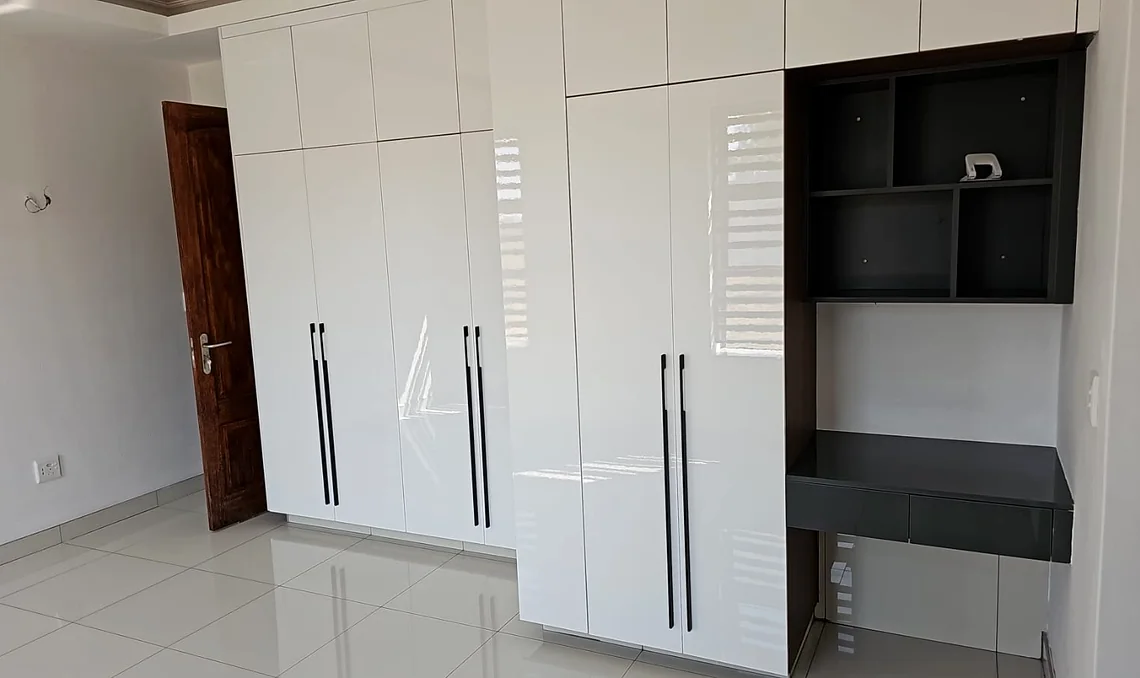
Price at the same spec. Same board standard, same Blum hardware (50,000-cycle soft-close), same finishes - the factory-direct number is lower because there's no showroom rent and no second layer of margin between the box and the buyer.
The finish freedom. Full RAL lacquer, book-matched veneer, a steel-framed display bay, a jewelry wall - on the domestic side those are "custom profile" conversations that add weeks; on our line they're rows on the same production list. If the walk-in is the lacquered-or-steel kind of room, that's not a small advantage.
Multi-room, one batch. Kitchen, bath and closet in one finish batch and one container is where the per-unit economics turn - and where colour drift between rooms becomes impossible. A domestic shop quoting three rooms from three lines will give you three finishes that almost match.
It is how the Orlando apartment fit-out was packed: kitchen, baths and closets in one finish batch, one container, one delivery date.
Where domestic wins
Be the person who says this out loud: if the walk-in needs to exist in under six weeks, or the room is one walk-in in a house that's already done, the domestic shop's speed and local rework win. Import is a six-to-ten-week commitment, and the flat-pack model trades speed for price and finish freedom. The math only works when you have the timeline and you want the finishes.
The honest row
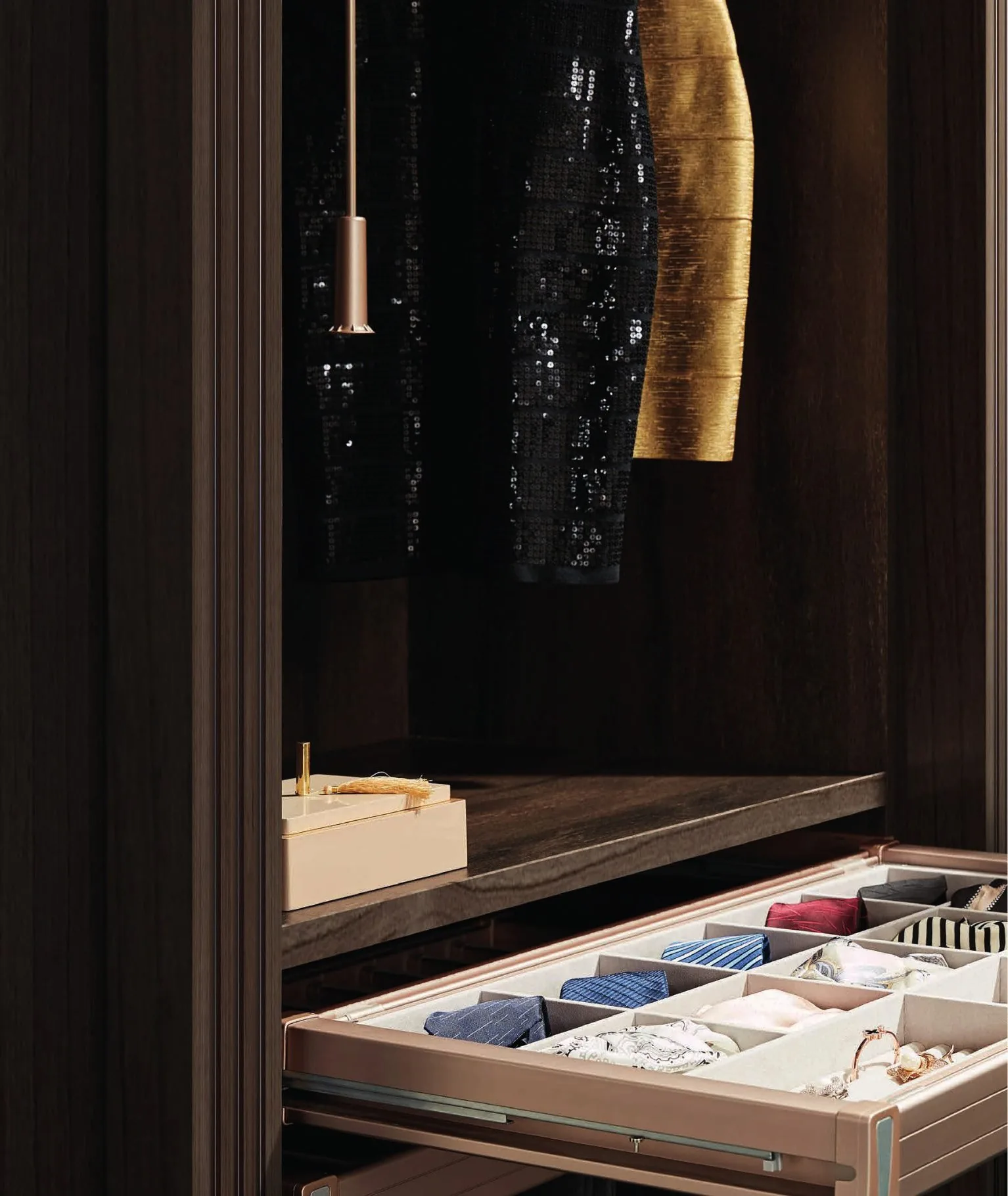
Transit is the row importers wave away and domestic shops attack. So here it is, with our numbers: the system ships flat-pack and numbered, per-unit crating for multi-unit programs, corner-protected, insured. Damage claims under 1% of units, a 48-hour report window written into the contract, and replacements by courier from US stock where available or with the next container. The factory page shows the QC photos at 24, 48 and 72 hours - that's how you watch the build happen before it's on a ship.
Send the walk-in's dimensions and both quotes, if you have them. We'll mark up where the domestic number is right, where it's wrong, and what the import number is for the same spec. The same math runs for kitchens - the closet is just the smaller version of the same decision.
Imported vs domestic, once the volume changes
The imported vs domestic decision is usually framed as a quality question, and it is not: it is a question about fixed and variable cost. The line-by-line table above is one room. Change the volume and the same two columns move, because the two quotes are built from different kinds of cost.
A domestic quote is mostly variable: labour and material, priced per cabinet, so it scales smoothly, room by room, without a step. An imported quote carries fixed costs that do not care how many rooms you are fitting - the container, the ocean leg, the clearance, the crating standard - and those fixed costs are divided across whatever is inside it. One walk-in carries them alone; a whole house spreads them across every room.
That is the whole shape of the decision. On a single room, the imported number can look close to domestic once you add the honest row, because the fixed cost sits on one wardrobe. On a program - four bedrooms, a mudroom, a pantry and a laundry - the same fixed cost is spread across the whole order and the gap settles where the volume is.
Three conditions decide it, and none is about quality. Does the schedule allow an ocean leg rather than a local lead time. Does the project have somewhere to stage crates and an installer for knock-down panels. And does the specification hold still long enough to freeze a drawing - because a project that changes room by room, week by week, is a project a local workshop will always serve faster, since it can re-cut on Tuesday.