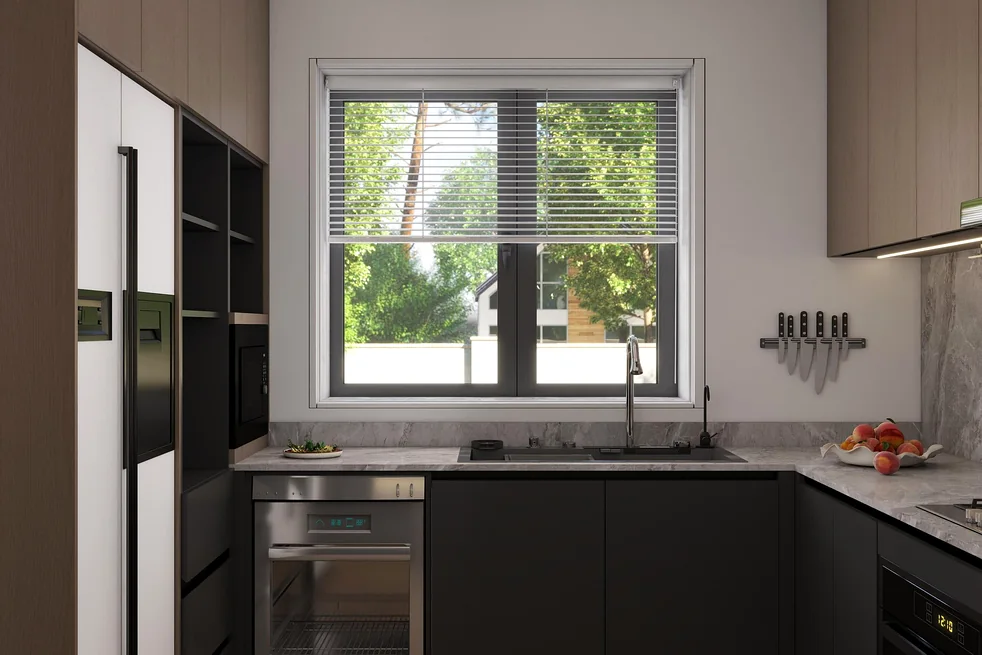
A 10x10 kitchen cabinet package is about 20 linear feet of cabinetry and, in practice, ten to twelve cabinet pieces across base, wall, sink and corner positions, plus fillers and toe kicks. There is no official list behind the label, which is exactly why two suppliers can quote the same 10x10 and hand you different piece counts. This is the list we build, what actually leaves the factory in the cartons, and the five checks that tell you whether a package list is complete before you compare a single price.
We do not publish prices here. Every figure on this site is worked on a sample rate so we are not quoting you a number that means nothing against your own drawing. What this page does is put the list itself on the table, because the list is the part of a 10x10 kitchen cabinet package that nobody publishes and everybody assumes.
What a 10x10 kitchen cabinet package actually is
A 10x10 is not a room. It is an L-shaped sample: ten feet of cabinetry along one wall and ten feet along the next, which lands at roughly 20 linear feet of base and wall units combined. The trade adopted it because it is the smallest footprint that still contains every cabinet type a working kitchen needs - a sink base, a corner, straight runs, uppers and a bridge - so one list can be priced against every door style and tier a supplier offers.
That is the whole point of it, and it is also where it breaks down. Because 10x10 is a sample rather than a specification, the list behind it is set by whoever is selling. Get that list in writing and the number becomes comparable. Accept the label and you are comparing two totals that describe different rooms.
The list a 10x10 package usually contains
| Position | Typical piece | Qty | Why it is on the list |
|---|---|---|---|
| Base run | Sink base, 36 in | 1 | Takes the plumbing |
| Base run | Door-and-drawer bases, 24-30 in | 2-3 | The working storage line |
| Corner | Corner base at the L turn | 1 | Recovers the dead corner |
| Wall run | Wall cabinets, 24-36 in wide, 30 in tall | 4-5 | Matches the base run |
| Wall run | Bridge cabinet over range or fridge | 1 | Fills the gap over a tall appliance |
| Finishing | Toe kick and filler strips | set | Makes the runs meet the walls |
Built this way, a 10x10 is ten to twelve cabinet pieces, which is the range quoted across the trade. A package advertised at eight or nine pieces is not a 10x10 - it is a shortened run priced against the same label, and the per-linear-foot arithmetic will not survive contact with a real kitchen.

Why two suppliers hand you different piece counts
This is the question we are asked most often, and the honest answer is that the label does not fix the list. Four lines are where the counts diverge, and every one of them is a real decision rather than a trick:
- The corner base. Some lists include a corner cabinet where the L turns; others price two straight runs that stop short of it and leave the corner to be dealt with on site. Same 20 linear feet, different piece count.
- Fillers and toe kick. Sometimes inside the package, sometimes a separate line. Fillers are cut to the inch on site, so a supplier who does not have your wall lengths either prices them separately or prices them approximately.
- Tall and oven cabinets. A tall oven housing or a pantry unit can sit inside the 10x10 or entirely outside it. Both are defensible positions; only one matches the kitchen in front of you.
- The bridge cabinet. The short wall unit over a range or refrigerator exists because the appliance does. Some lists count it and some do not, and it is a real cabinet with a real price.
None of that is a reason to distrust a supplier. It is a reason to ask for the list, because once you have the piece counts and the cabinet codes, two quotes stop being totals and start being scopes.
What actually leaves the factory
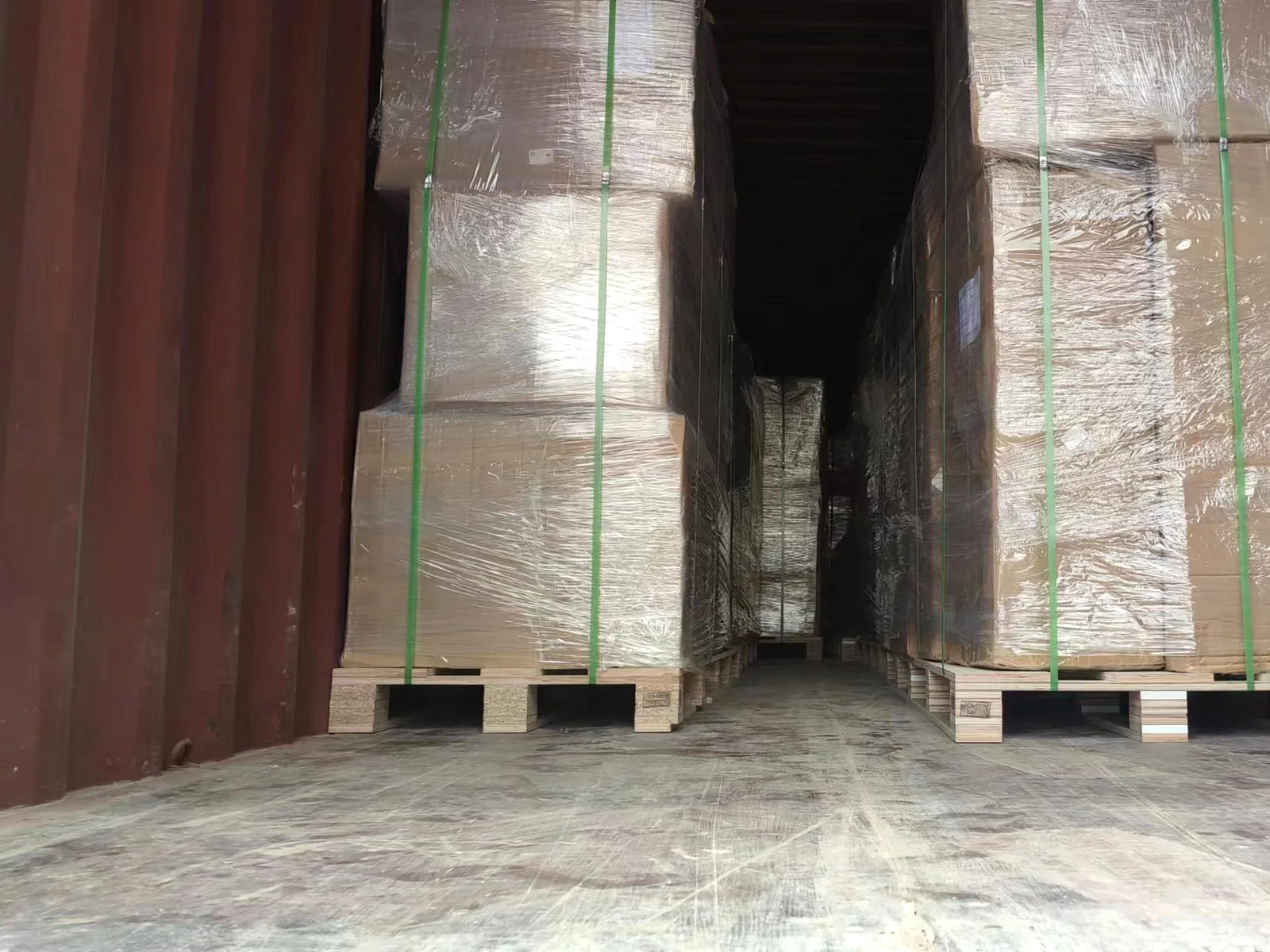
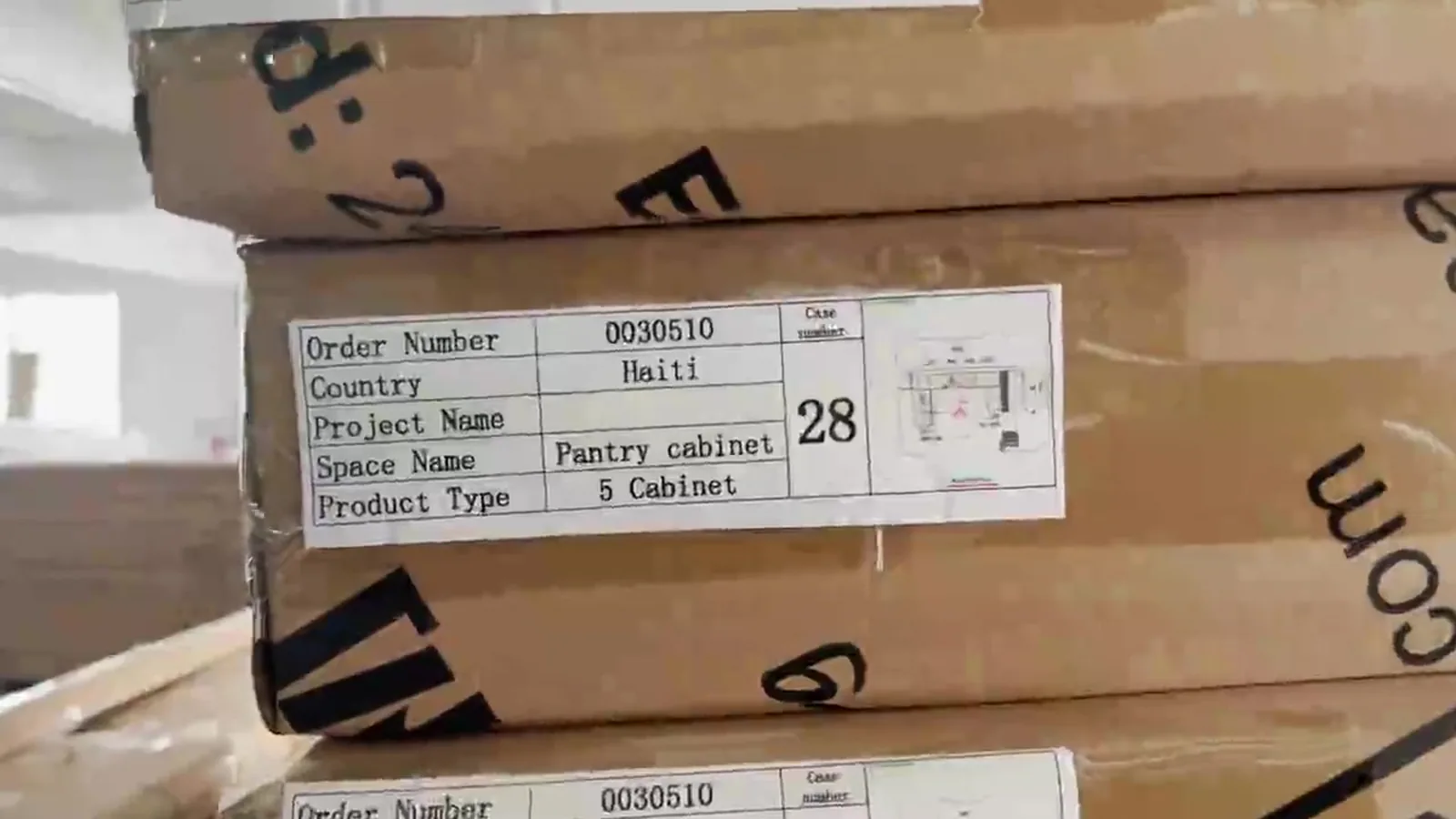
Here is the part no catalogue shows. A 10x10 kitchen cabinet package does not ship as twelve cabinets. It ships as separated packs, and the split matters when something arrives damaged:
- Board packs - carcass panels, cut and edge-banded, with the system holes already drilled.
- Door and drawer-front packs - the finished faces, packed separately so a scuffed door does not take a whole cabinet with it.
- Hardware packs - hinges, runners, connectors and the fixings for that order, counted against the packing list.
- Toe kick and trim - long lengths cut to the order rather than shipped as standard 96 in sticks.
On a flat-pack order the system holes are drilled at the factory and the boxes go together with cam and dowel fixings. On an assembled order the cabinets arrive built and take several times the volume for the same 20 linear feet. That volume difference is the single biggest lever on freight, which is why the flat-pack against assembled comparison is worth settling before you ask for a shipping number rather than after.
The five lines that are not on any list
These are the lines that quietly decide whether two 10x10 quotes describe the same product. Ask for each one in writing:
1. Carcass board and thickness. An 18 mm E0-grade plywood box and a particleboard box are both "a cabinet" on a quote, and they are not the same product at the sink or on a wet floor.
2. Edge banding on every cut edge. 2 mm PVB hot-melt on all edges is a different product from tape on the visible ones. The difference shows up at the dishwasher and the sink first.
3. Hardware model and rating. Soft-close hinges rated at 50,000 cycles and full-extension runners rated to load are the lines that survive a rental turnover. Unbranded soft-close is not the same product.
4. Interiors. Shelves only, or drawer boxes, pull-outs and a cutlery insert. The fitting count inside a run moves the number further than the door does.
5. Finishing pieces and delivery term. Toe kick, fillers, end panels and crown moulding in or out - and whether the number is ex-works or duty-paid at your door.

What a 10x10 package never includes
A 10x10 is cabinets. It is not a kitchen. Countertops, sink, faucet, appliances and backsplash all sit outside it, and so do plumbing, electrical, demolition, permits and sales tax. Installation labour is a separate line in most markets.
If you are budgeting the whole room rather than the cabinets, the 10x10 cost breakdown works the number per linear foot and per tier, and the quotation comparison guide normalises six specification lines so two quotes can be read side by side.
Where this fits
Send us the drawing and you get back a piece-by-piece list with cabinet codes and dimensions, not a headline. That is the only way to know whether a 10x10 kitchen cabinet package you have been quoted is actually complete - and if you already hold two lists, we will tell you which lines differ before you commit to either.
FAQ
How many cabinets are in a 10x10 kitchen cabinet package?
Ten to twelve cabinet pieces, covering base cabinets, wall cabinets, a sink base, a corner base and a bridge cabinet, plus toe kick and filler strips. A list of eight or nine pieces is a shortened run priced against the 10x10 label, not a 10x10.
What does 10x10 mean in kitchens?
It is a pricing benchmark, not a room measurement: an L-shaped sample with ten feet of cabinetry along one wall and ten feet along the next, which comes to roughly 20 linear feet of base and wall units. It is used because it is the smallest footprint that still contains every cabinet type a working kitchen needs.
Why do two suppliers quote different cabinet counts for a 10x10?
Because the label does not fix the list. The corner base, fillers and toe kick, tall or oven cabinets and the bridge cabinet are all lines a supplier may include in the package or price separately. Same 20 linear feet, different piece count - which is why the written list matters more than the total.
What is not included in a 10x10 kitchen cabinet package?
Countertops, sink, faucet, appliances and backsplash, plus plumbing, electrical, demolition, permits and sales tax. Installation labour is a separate line in most markets, and an island or a tall pantry sits outside the sample altogether.
Are fillers and toe kicks included in a 10x10 package?
Sometimes inside the price and sometimes a separate line. Fillers are cut to the inch on site against your actual wall lengths, so a supplier pricing them without your measurements is either pricing them separately or pricing them approximately. Ask which.
Is a 10x10 package enough for a real kitchen?
It is a comparison sample, not a design. Most real kitchens run longer than 20 linear feet, and any island, tall pantry or appliance housing adds pieces beyond the sample. Use the 10x10 to compare lines, then price your own drawing.