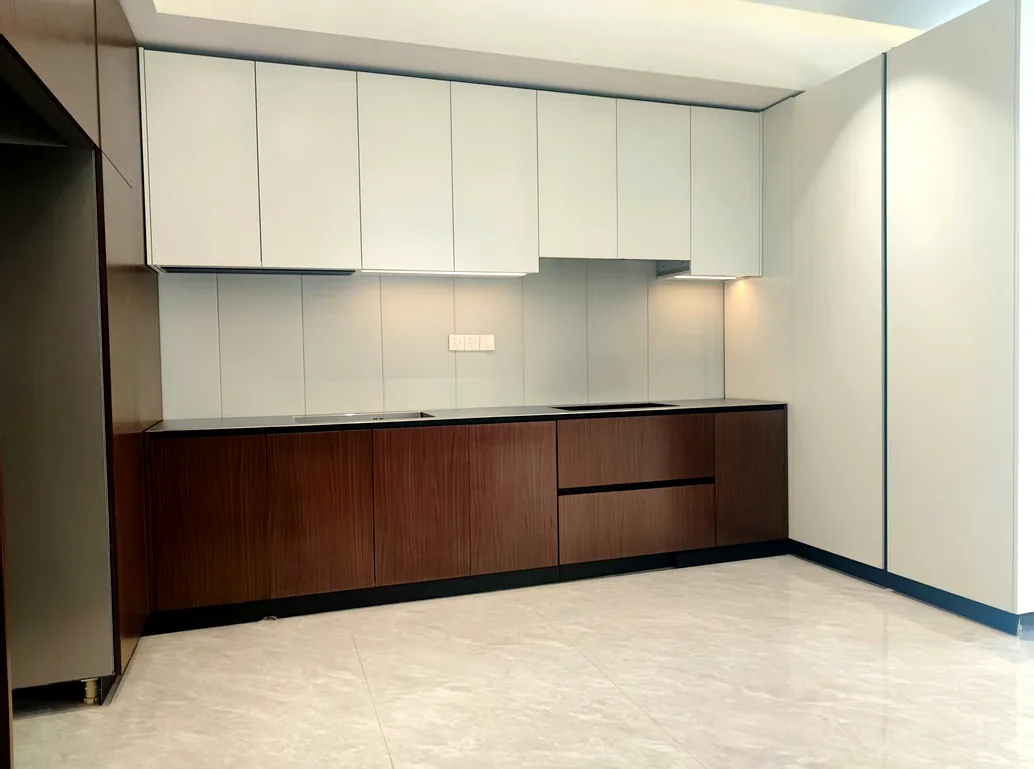
What is actually inside "custom kitchen cabinets cost"?
Every per-foot or per-project number you will be quoted compresses the same six blocks. The blocks are the useful unit of comparison - the total is not:
| # | Cost block | What decides it | What to ask for in writing |
|---|---|---|---|
| 1 | Carcase | Board type, thickness, grade, edge banding | Brand + grade (e.g. 18mm E0 plywood, report number) and edge-banding spec on every cut edge |
| 2 | Fronts | Material and profile: shaker, slab, fluted, veneer, steel | Profile name + material + finish system per door style |
| 3 | Hardware | Hinge and runner rating, soft-close or not | Brand and model, cycle rating, rated load per pair |
| 4 | Finish system | Flat-pack melamine vs lacquer vs veneer vs stainless | Coat count, cure, gloss level (5% matte to 90% gloss), RAL number |
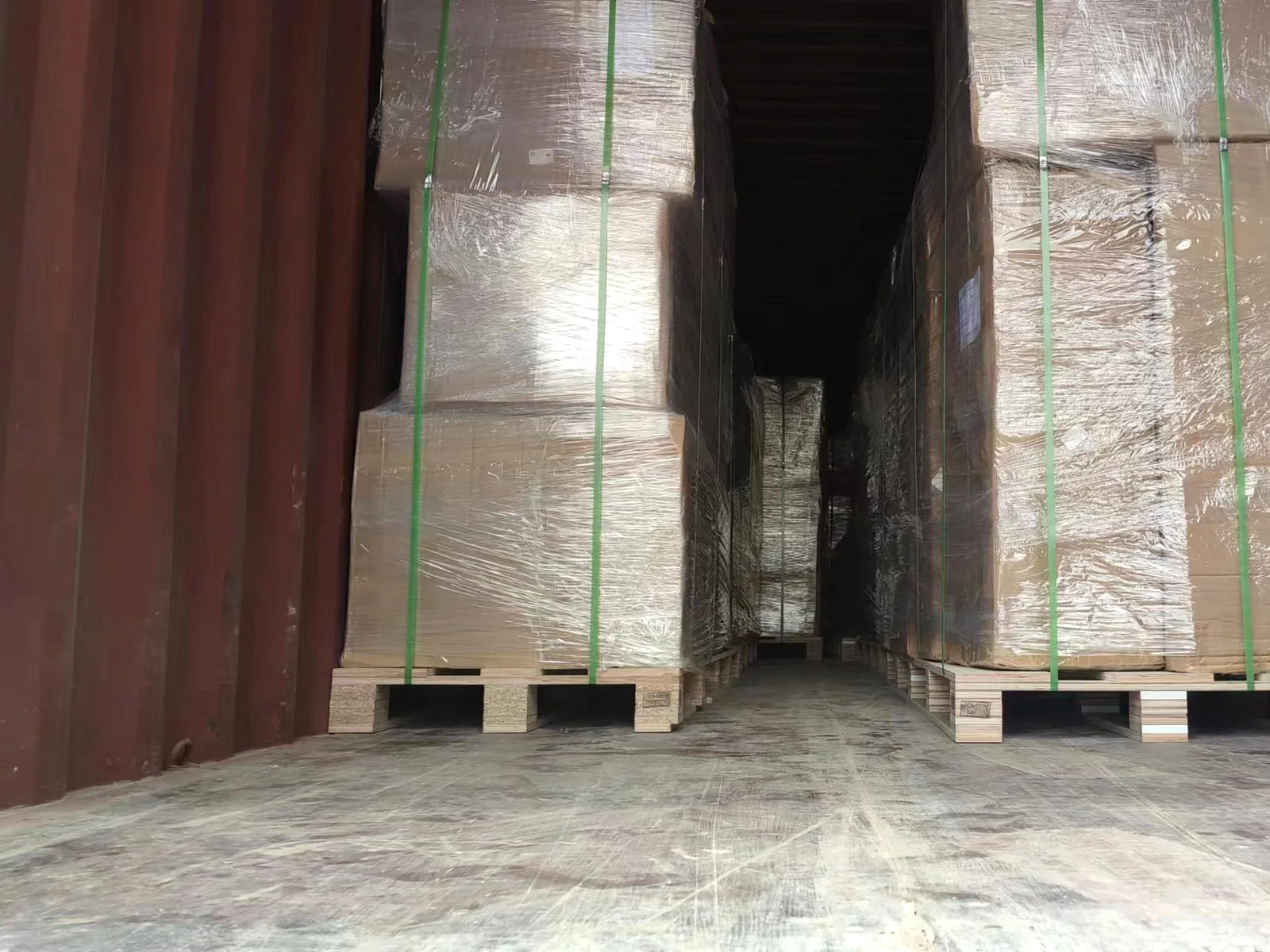
| 5 | Freight & packaging | Flat-pack vs assembled, container fill | Pack method, per-room packing lists, container type |
| 6 | Duty & clearance | HS classification, origin, current tariffs | DDP line that names what duty is included |
Two quotes with the same total can sit on completely different blocks. The block you cannot see is the block that will cost you at install or at the second order.
Where do the estimates you have seen come from?
Three units are in circulation, and each one has a blind spot. Per-cabinet pricing (a "base" here, a "wall" there) breaks at the first corner, the first tall unit, the first pantry - which is why per-cabinet quotes arrive optimistic and settle expensive. Per-project estimates - the $30k, $50k, $80k numbers that circulate in renovation coverage, from vendor-published cost trend trackers to contractor surveys - describe whole renovation budgets, not cabinets: they fold in countertops, labour, appliances and contingency, so they cannot be used to compare cabinet suppliers at all. Per-linear-foot is the only unit that follows the geometry of the order - and it is still a starting point, not a price, which is why reading the quote line by line matters.
The rule: treat any number that is not per-foot (or per measured unit, stated) as a budget, and any per-foot number that does not say what is inside as a sample.
The three levers that move the number
Once the six blocks are named, three of them do most of the moving, in order of impact on a factory-direct order:
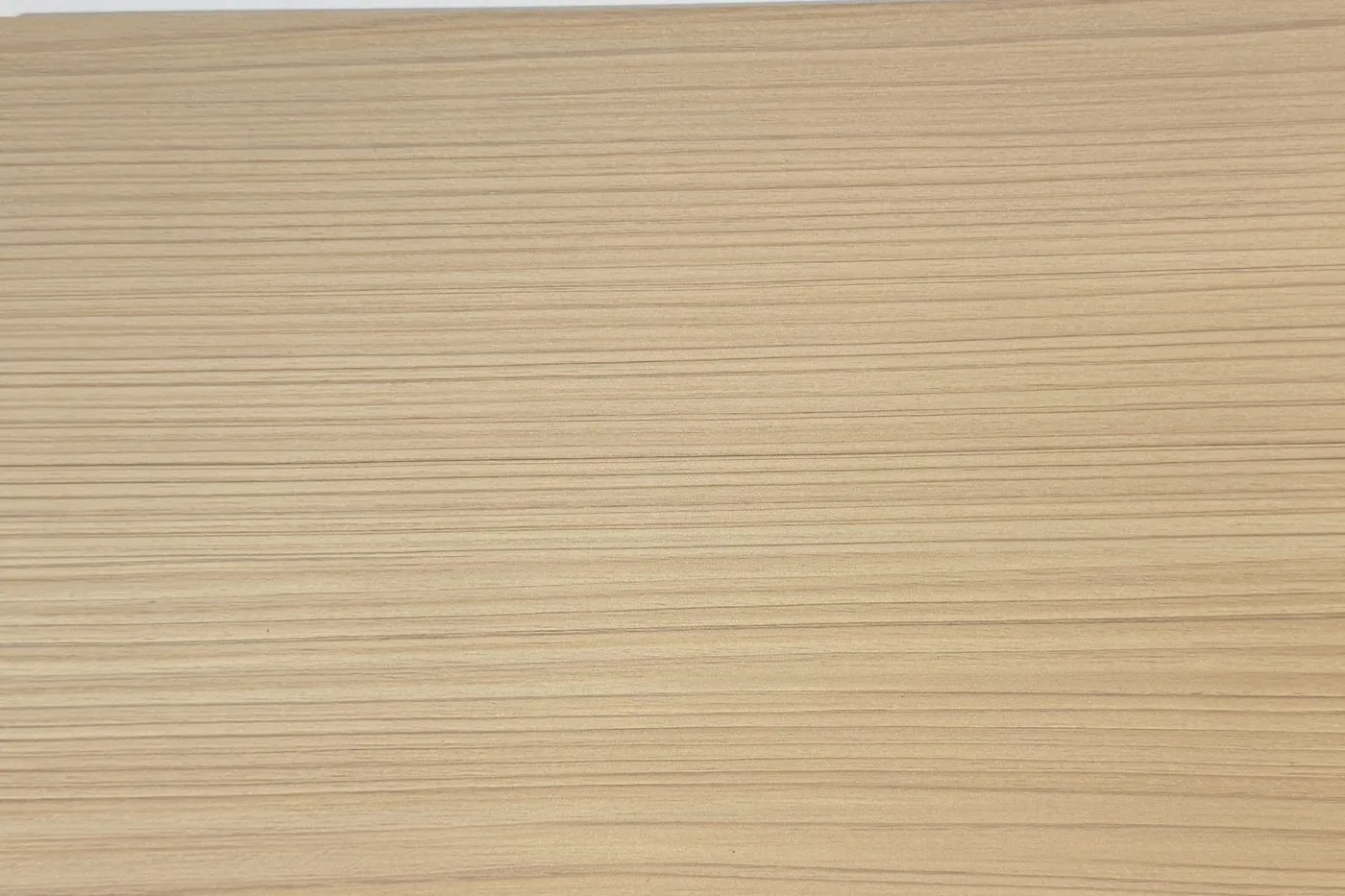
- Finish system. This is the big one. A flat-pack melamine run, a three-coat lacquer run and a stainless island are three different price regimes on the same geometry - lacquered fronts (any RAL, matte 5% to gloss 90%, three colour coats plus two clear coats, oven-cured 60°C × 45 minutes) and full-cover veneer each step up the line, and 304 stainless is its own regime entirely. Keep the finish count to one or two per container and the number stays inside one regime.
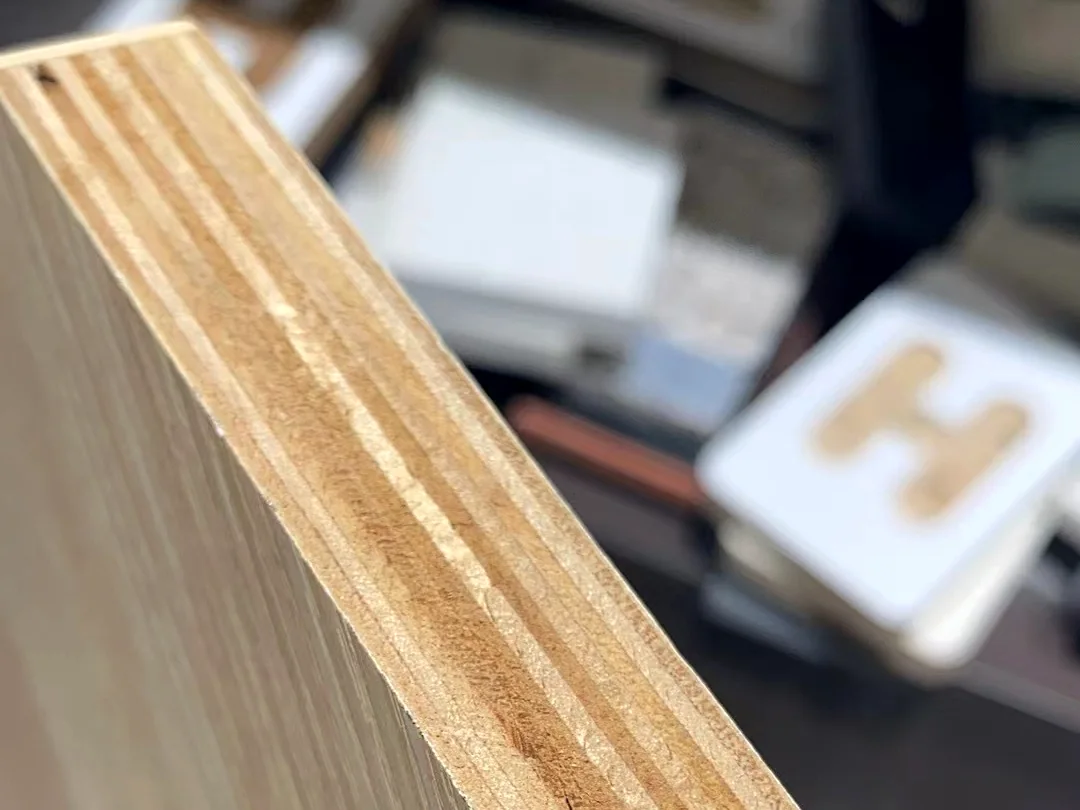
- Carcase board and edge banding. At Adam Cabinet every box is 18mm E0-grade plywood - formaldehyde at or under 0.05 mg/m³ (GB/T 39600, test report no. SQ2405393; CARB Phase 2 under TÜV Rheinland, cert on request) with 2mm PVB hot-melt edge banding on every cut edge. Cheaper boxes usually mean particle board and 1mm adhesive strip: the difference shows up as drawer sag and edge lift years later, which is why the board line is worth paying for even in a budget kitchen.
- Hardware rating. Blum soft-close hinges, 50,000-cycle rated, with 35-45 kg runners per pair and single doors up to 28 kg, is the standard line. Stepping every drawer up to the heaviest runner is the classic way to add 8-12% to a quote without the kitchen feeling different - rate hardware by the drawer that actually carries the load.
Style - shaker, slab, fluted - moves the number least of all, as long as it is one of the running profiles. A custom profile is a different conversation (tooling, a sample stage, its own OEM/ODM terms), and it should be priced as one.
What DDP adds - and why it makes quotes comparable
Cabinets are one of the few product categories where the duty line is a main cost block rather than a footnote. US rules on China-origin kitchens stack: a 25% Section 232 duty on kitchen cabinets and vanities has applied to entries since October 14, 2025 - the scheduled step-up to 50% was delayed by one year and is now set for January 1, 2027 (Proclamation 11000) - and the antidumping/countervailing duty orders in place since 2020, confirmed to remain in place by the USITC's August 2025 sunset review, add exporter-specific rates on top. The combined layer therefore depends on the supplier and the entry date, which is why it belongs inside a duty-paid quote rather than in your own spreadsheet. That means a factory price that looks 20% lower can land within a few points once duty, clearance and final mile are added - or the gap can be the opposite of what you expected.
This is exactly what a duty-paid (DDP) line is for: the per-foot number you compare already contains duty, customs clearance and delivery to your door. The example on this page uses $249 per linear foot DDP for a standard matte kitchen, base + wall runs - a sample rate so the arithmetic is traceable, not a published price list. It is a starting price for a defined standard spec - the moment you add tall units, an island, a second finish or upgraded hardware, the number is re-run, not estimated. The trade-off to accept consciously: DDP puts the tariff risk on the supplier for the duration of your transit, which is why the number should be quoted per order, not per season.
Worked example: a 24-foot standard kitchen
One kitchen, one spec, measured the way a quote measures it. The geometry below is a common L-shape plus island; only base + wall runs are in the standard per-foot price.
| Line | Measurement | Billing under the standard spec |
|---|---|---|
| Base run, wall A | 12 linear ft | Per-foot, DDP |
| Base run, wall B | 8 linear ft | Per-foot, DDP |
| Wall (upper) run, walls A + B | 20 linear ft | Per-foot, DDP |
| Tall pantry unit | 1 off | Itemised, on the quote |
| Island (with sink base) | 6 linear ft | Itemised, on the quote |
| Countertop, appliances, installation | - | Not part of the cabinet line |
Base + wall footage totals 40 linear feet; at the sample $249 DDP rate that is from roughly $9,960 landed for the base + wall runs before the itemised tall unit and island - a number that already includes ocean freight, duty, clearance and delivery to a US West Coast door (18-22 days under the DDP window; 32-40 to the East Coast). The same kitchen with a lacquered two-tone split re-runs the finish system; the same kitchen with a full-height pantry wall adds the itemised line. What does not change between any of those versions: the 18mm E0 carcase, the 2mm edge banding, the Blum-rated hardware and the 5-year written warranty. With the blocks separated, you can move the levers you want and know exactly what you are not moving.
Why the same kitchen prices differently at two factories
When two per-foot numbers disagree, the disagreement is in the blocks, not the arithmetic. Before you pick the lower number, run the same kitchen's spec through this checklist:
- Board: is the carcase 18mm plywood with a grade and a test report number, or particle board with no report at all?
- Edge: 2mm PVB hot-melt on every cut edge, or 1mm adhesive strip on "key edges"?
- Hardware: named brand and model with a cycle rating, or "soft-close" as a category?
- Finish: coat count, gloss percentage and RAL number in writing - or a paint chart photo?
- Transit: flat-pack (more footage per container, lighter per unit, assembled on site) or assembled (heavier, fewer feet per container)?
- Duty: DDP line with the duty named, or factory price plus "freight TBD"?
Each of those six answers is a place where the cheaper quote is cheaper for a reason. The question is never which number is lower - it is which blocks you are actually getting.
FAQ
What is a realistic custom kitchen cabinet cost per linear foot in 2026?
It depends on the spec, not the style. The example on this page runs at $249 per linear foot for a standard matte kitchen (base + wall runs), factory-direct and duty-paid to the US West Coast - a sample rate for the arithmetic, not a published price list. Lacquered, veneered or stainless finishes and upgraded hardware move the number; tall units and islands are itemised separately.
Why do two quotes for the same kitchen differ so much?
Because the per-foot number hides six blocks: carcase board and grade, edge banding, hardware rating, finish system, freight and duty. Two quotes are only comparable once the spec sheet matches - check the six blocks before you compare the totals.
What is included in a duty-paid (DDP) price?
The finished cabinets, ocean freight, import duty, customs clearance and final-mile delivery to your door. For China-origin cabinets, duty includes the Section 232 wood tariff and the AD/CVD orders - rates change, so your licensed broker confirms the current figure on your HS code.
How much cheaper are imported custom cabinets than US-made ones?
There is no fixed percentage - it is the difference between the six blocks on each side: board and hardware, factory labour, finish system, freight and duty. On a standard matte kitchen, factory-direct from Foshan typically undercuts comparable US showroom pricing; the gap narrows on high-labour finishes.
What moves the cost down without cutting the spec?
Three levers: one or two finish systems per container, hardware rated to the drawer that actually carries the load, and a full container - kitchens, closets and vanities mixed in one 40HQ spread freight and duty across more footage.
How fast can I get a real number, not an estimate?
Send a floor plan and the number comes back within 1 business day: a 3D layout plus a per-linear-foot quote, duty-paid. Monday to Friday, 9:00-18:00 Central Time.