Home / Collections / Display cabinets
Display cabinet manufacturer: the glass wall, the library run and the bar.
A display cabinet is the cabinet the room looks at: the glass front over the lit shelving, the decanters and the glass set for the eye, the book wall that holds the weight of the collection. This page is the display line in our Foshan showroom - the bronze-framed glass columns, the library runs and the bar walls - photographed with the light on, with the spec each unit ships under.

The line
Display walls, lit from the inside.
The lounge above is the standard display run: the bronze-framed glass columns over the black marble wall, the light running the shelving so the glass and the decanters read lit, the chair in front of it because that is where the wall is looked at from. It is the unit photographed the way it is lived with - the collection in the bays, the light on, the room reading the wall the way a guest reads it - which is the point of the line. A display cabinet that only looks right empty is not a display cabinet.
The wall runs on the tall-cabinet standard: 84 to 96 inches high, the glass bays in the widths the room allows, the lighting and the shelving itemised per unit the way the fittings are. The frame is bronze or black, the glass is frameless or framed, and the shelving is rated for what it holds - the glass, the decanter, the book - with the rating on the spec sheet. The tall line carries the family; this page is the display half of it, and the office page shows the run in the room it ends up in.
- Heights84" / 90" / 96" - to ceiling or to the soffit
- Widths12"-36" in the tall-line steps
- Depth24" standard; 12" for the glass bays
- FrameBronze or black, frameless or framed glass
- LightingLED inside the bay, itemised per unit
- Board18 mm E0 plywood, ≤0.05 mg/m³ (GB/T 39600, report SQ2405393) - certificates
- GlassCrated separately, staged to the bay number
- Lead10-14 days factory; DDP 18-22 US West, 32-40 US East, 15-20 Sydney
Glass fronts
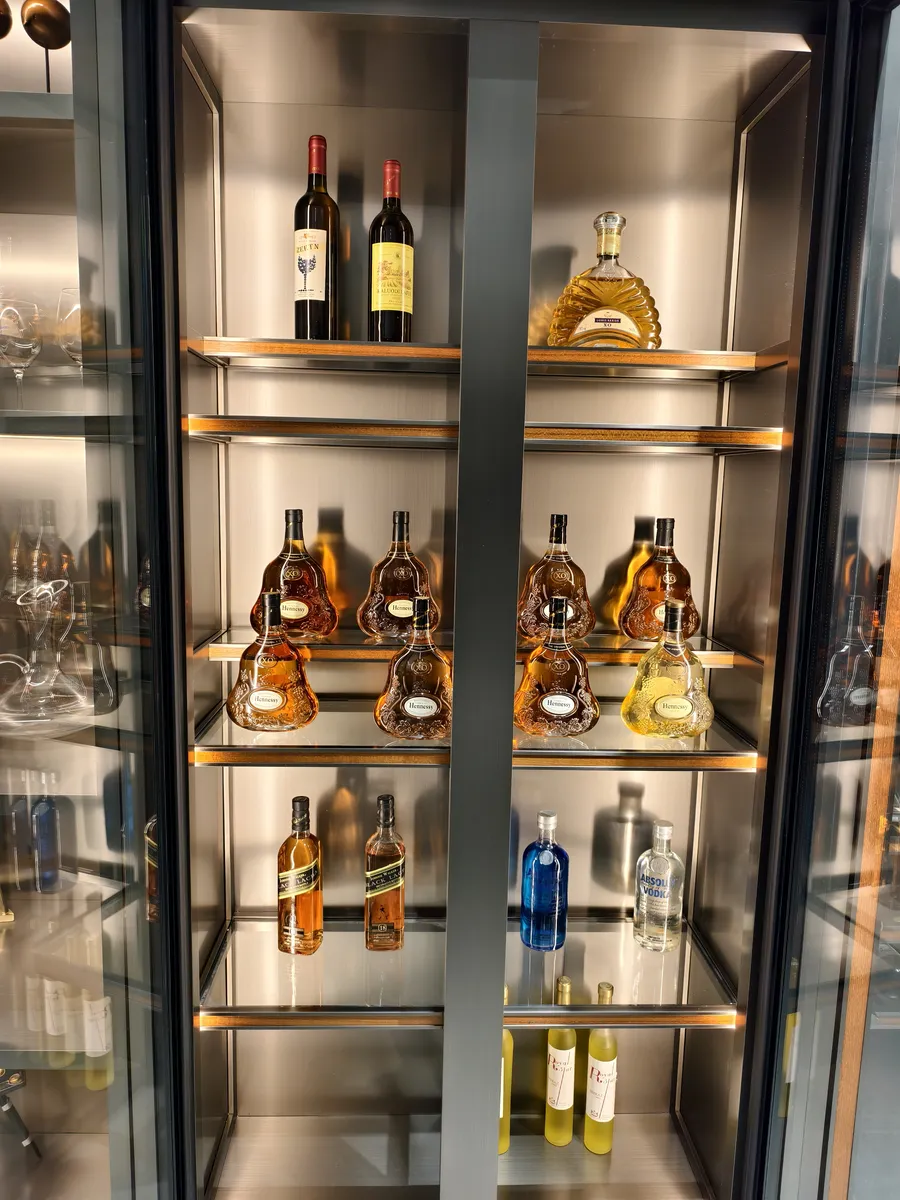
The glass front: bronze frame, lit shelves.
The two units above are the glass standard photographed close: the bronze-framed column with the light-strip shelving running the bay, and the full decanter wall behind the glass door - the bays set to the bottle and the decanter, the hinge line on soft-close, the light doing the work the front glass is for. The frame is the choice that decides how the wall reads: bronze against the dark, black against the light, and the glass in between reading quiet while the bay reads lit. The decanter wall on the right is the standard the wine line shares - same grid, same hinge, same light.
The shelving is rated for what it holds - the glass, the decanter, the small collection - and the rating is on the spec sheet per bay, the way the pull-out ratings are. The light runs the inside of the bay rather than the front, so the objects read lit and the glass stays clear, and the glass crates separately and stages to the bay number, the way the butler pantry's does. The reason a full wall of glass arrives ready to hang is the same reason the pantry's does - the care is done at the factory, not on site, and the 5-year hardware warranty covers the hinge line that carries it.

The open side
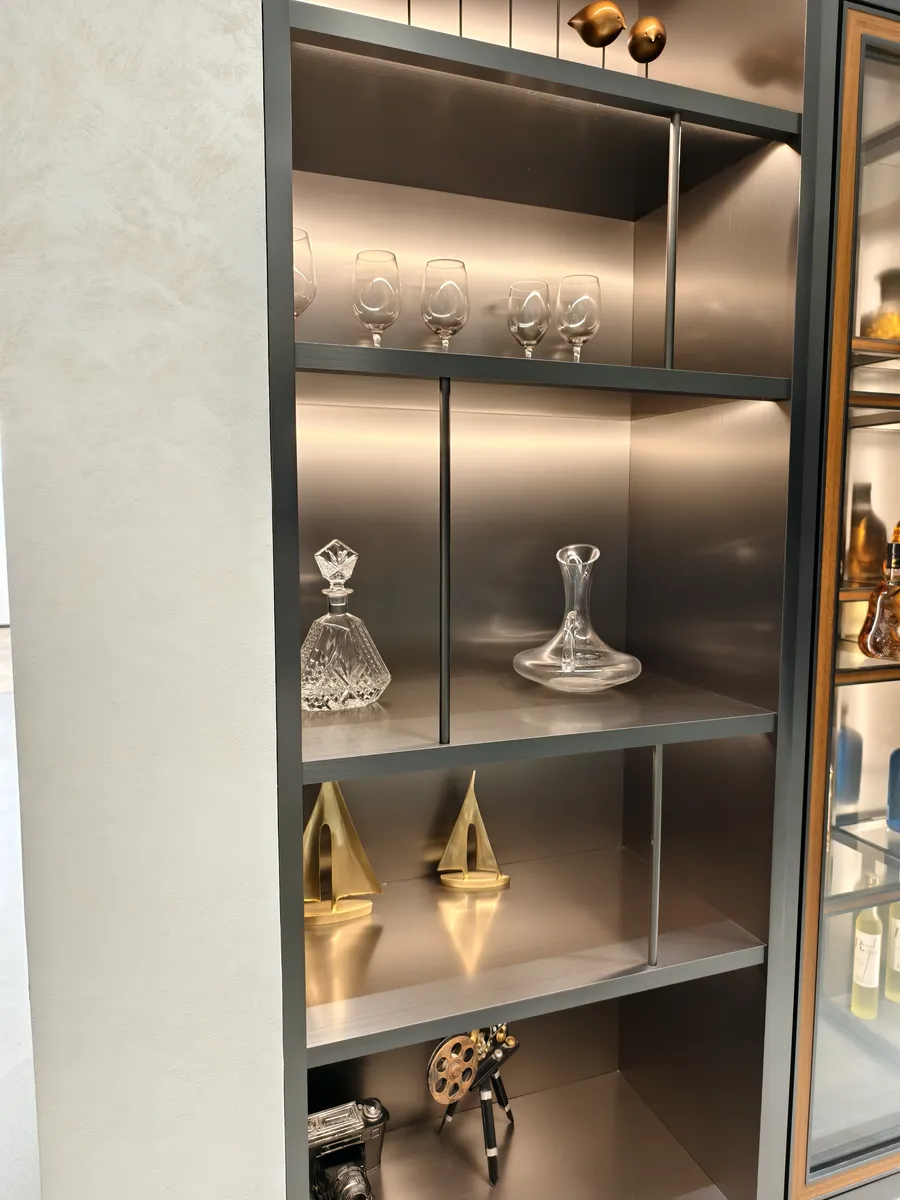
The open shelving: glassware, decanters, the small collection.
Not every display wall is glass-fronted. The open run is the version that shows the collection without the door: the dark grey shelving with the glassware and the decanters set for the eye, the glass cabinet at the edge doing the part of the wall that wants the light and the close. It is the layout for the room that reads the collection the way it reads a shelf of books - open, at eye level, the good things where the eye lands first - and it runs on the same box and the same rating as the glass bays, with the shelf set to the object rather than the grid.
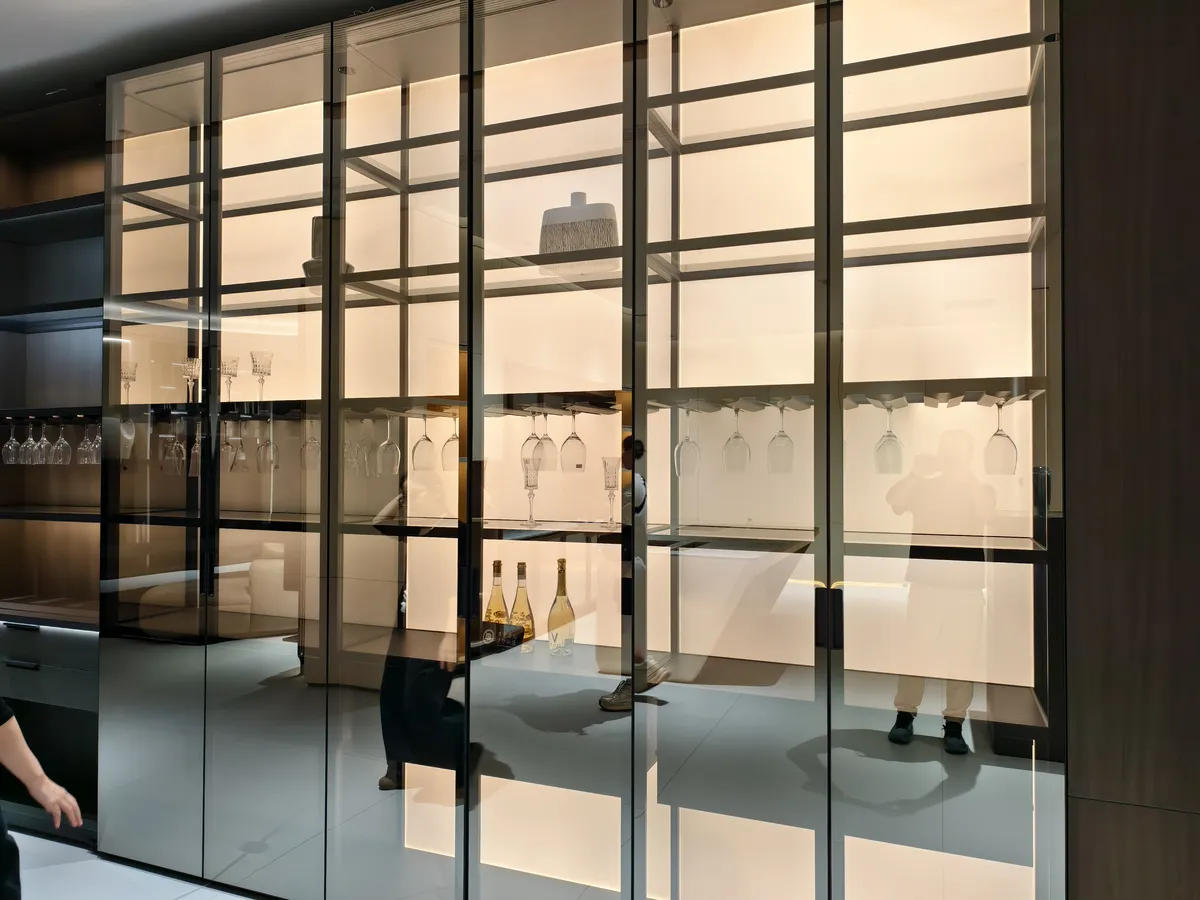
The bar wall below is the open version with the hung stemware and the bottle row: the wall that serves as much as it displays, the one the wine line carries when the collection is the whole point. The light-strip line is the same one the glass columns run, positioned for the object instead of the front, and the counter it stands over is the worktop line cut to the same template as the kitchen - the reason the wall and the bar read as one run. When the room wants the glassware hung and the bottles in the row, this is the wall it is drawn for.

The library run
The book wall: shelving that holds the weight.
The run above is the library version of the display line: the wood shelving with the diagonal bracing doing the work the glass bay does for the decanter, the shelf set to the book and the object, the wall reading as a run instead of a unit. It is the display cabinet for the room that collects in print - the shelf rated for the weight, the brace hidden where the eye doesn't land, the finish on the same three-collections menu the kitchen runs on, from the collections.
The library run is drawn to the wall the way the rest of the line is: the width stepped to the reveal, the height to the ceiling or the soffit, the bracing where the span needs it. It ships on the same box - the 18 mm E0 plywood, the edge band matched to the surface - and the quote is per linear foot against the drawing, the way the kitchen line quotes, so the wall that ships is the wall that was drawn. The veneer line carries the finish menu the run is drawn in, and the sample stage freezes the shelf board and the brace before production, the way the door sample is.
Dimensions
The dimensions the wall is drawn on.
The table is the standard the display line is drawn from - the heights, the widths and the glass set - and anything outside it is detailed to the room, the way the kitchen sizes guide does it.
| Unit | Standard | Range |
|---|---|---|
| Column height | 84" | 90", 96" to ceiling or soffit |
| Column width | 3" steps | 12"-36" |
| Depth | 24" | 12" glass bays |
| Frame | Bronze or black | Frameless or framed glass |
| Lighting | LED inside the bay | Itemised per unit |
| Library shelf | Rated, braced | Set to the object |
The glass bay is the 12-inch deep standard the display line runs on - the bottle and the decanter close to the front, the light at the back - and the 24-inch depth is for the run that doubles as storage behind the glass. The height stops at the ceiling or runs full to the soffit the way the tall line does, and the top is crowned or built to take the upper run. The width is whatever the wall gives, stepped to the reveal, and the frame is the choice that decides how it reads. It is the same table the wine columns are drawn from - one standard, the display and the wine walls both reading from it.
FAQ
Display cabinets, in plain answers.
Do you make display cabinets with glass fronts?
Can the display wall be open shelving instead of glass?
Do you supply the lighting inside the display units?
What is the load rating on the display shelving?
Can a display wall double as a bar or a library?
Can I order a single display unit for a living room or office?
For specifiers
Specifying a display program, not a room?
Volume pricing, OEM/ODM programs and a glass-and-light sample kit - the dealer line answers in your time zone.
The wall, the glass and the light - one spec sheet.
Send the wall width and the collection. The display run is drawn against your drawing and priced per linear foot - usually within one business day.