Home / Cabinet hardware / Pull-out baskets
Pull-out baskets - the storage that gets used every day.
Baskets are the hardware family a kitchen actually lives with: the corner that finally opens, the dish rack that dries in place, the tall tower that brings the top shelf down to hand height. This page is the basket wall in our Foshan showroom, photographed loaded and mid-cycle - the full line, not a highlight reel.
The line
Every unit on the wall, in working order.
The wall behind this page is a working basket range, not a product table: corner units swung out with their spice loads, dish racks with the plates still in them, towers running the full height of a tall box, and the drop-down shelves at the top of the kitchen. Every unit rides the same full-extension soft-close runner standard the drawers use - 35 to 45 kg per pair - and the tray is powder-coated steel, dark or light, with the divider configuration matched to the width. What you photograph is what ships.
That is the point of a photographed line. A catalogue shows a basket empty, angled to hide the runner; the wall shows it loaded, mid-cycle, at the height it will actually sit in your kitchen. When a unit goes on your spec sheet it carries its own rating, its own width code and the same 5-year hardware warranty as the hinges and runners on the hardware page. The spec list below is the default - anything outside it is itemised, not absorbed.
- RunnersFull-extension, 35-45 kg per pair, soft-close
- TrayPowder-coated steel, dark or light, dividers matched to width
- Standard widths450 / 600 mm drawers; towers and corners follow the carcass
- Warranty5-year hardware warranty, aligned with the runner manufacturer's
- Board18 mm E0 plywood, ≤0.05 mg/m³ (GB/T 39600, report SQ2405393) - certificates
- MOQMixed orders from 1,500 sq ft - no minimum at the sample stage
- Lead10-14 days factory; DDP 18-22 US West, 32-40 US East, 15-20 Sydney
- HardwareThe wider fittings line - cabinet hardware
Dish & drainer racks
Dish racks that dry where they wash.
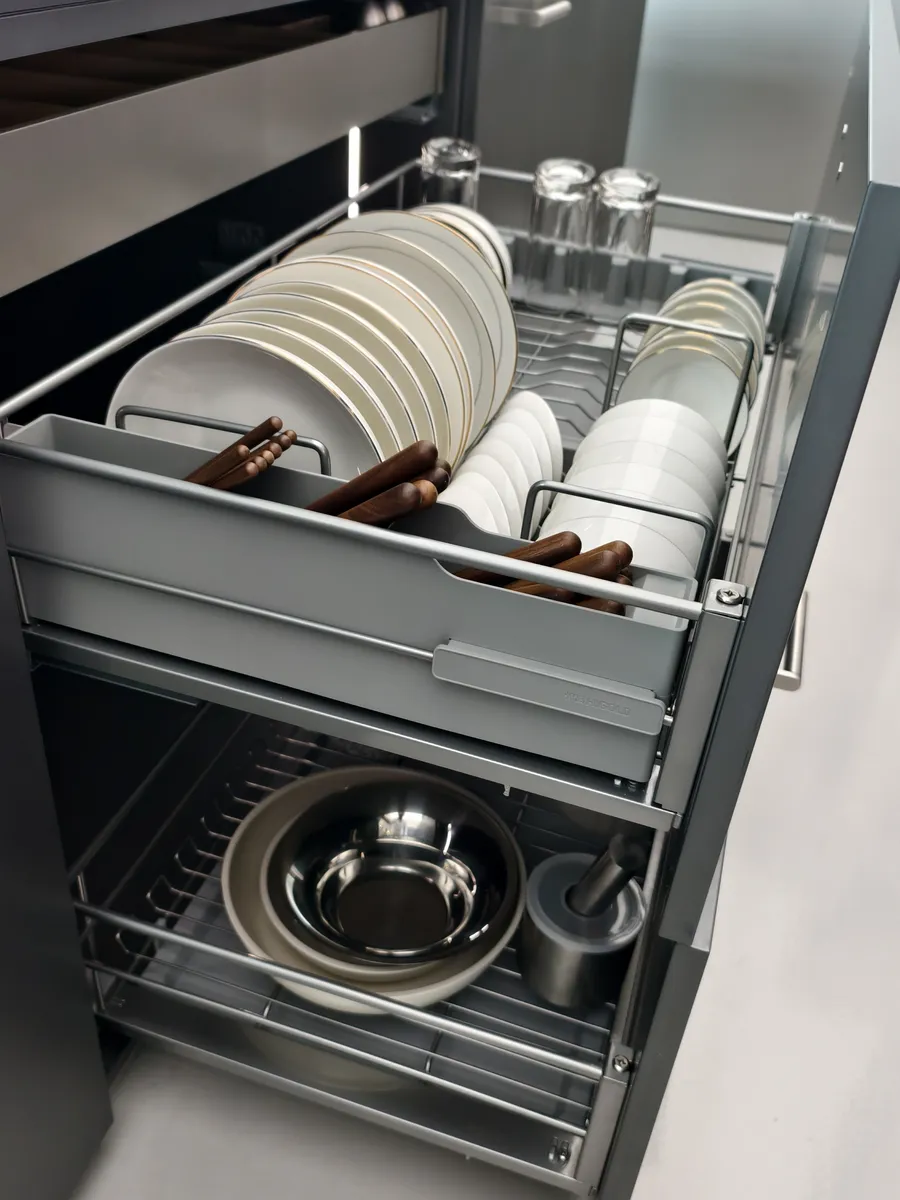
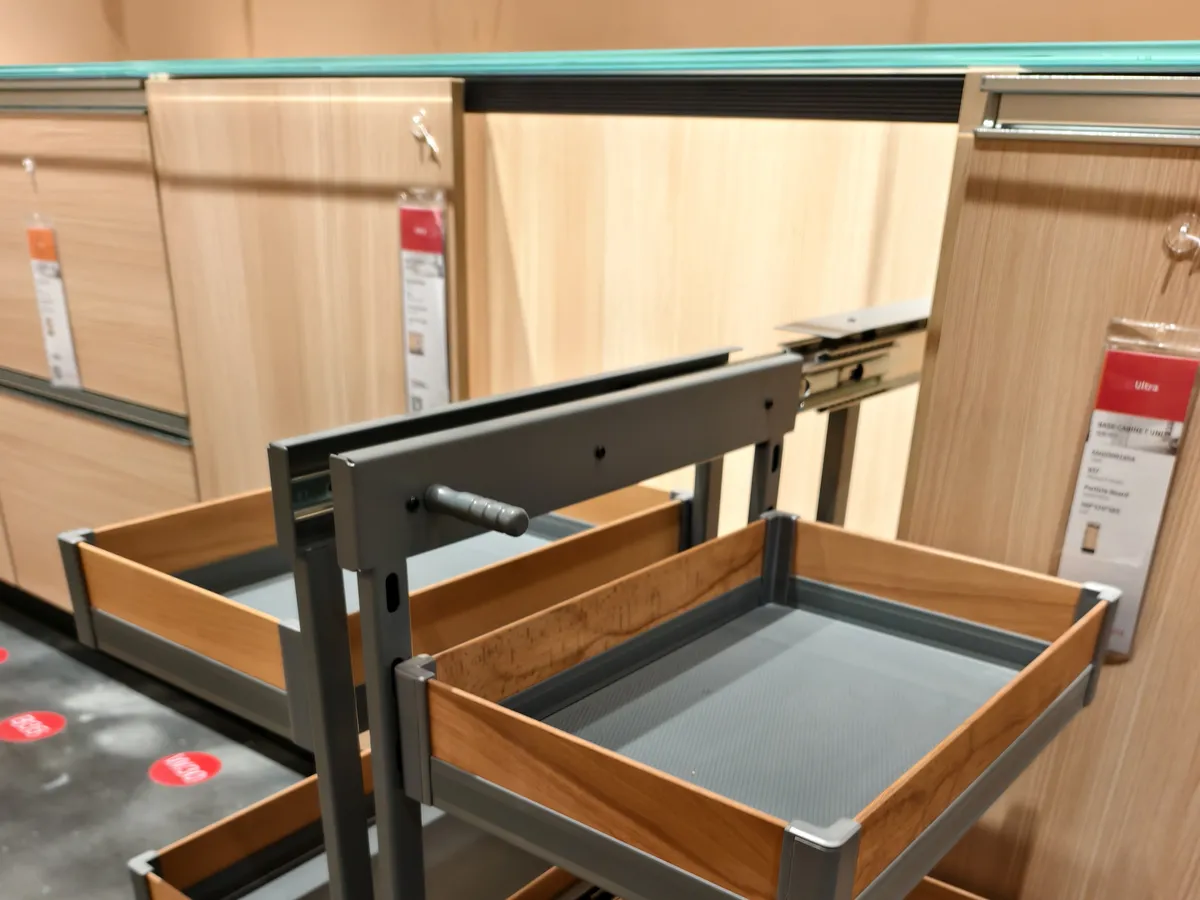
The dish pull-out is the most-used basket in the kitchen and the one most likely to be underbuilt: a wire tray on light runners that warps under a stack of plates, or a drainer that drips onto the drawer below. The two-tier unit on the left is the standard spec - plates and glasses on the upper run, the cutlery tray in front of it, bowls and utensil holders on the lower - so the loading sequence is the same one you already have at home, just at full extension, with the box clear of the carcass when it is out.
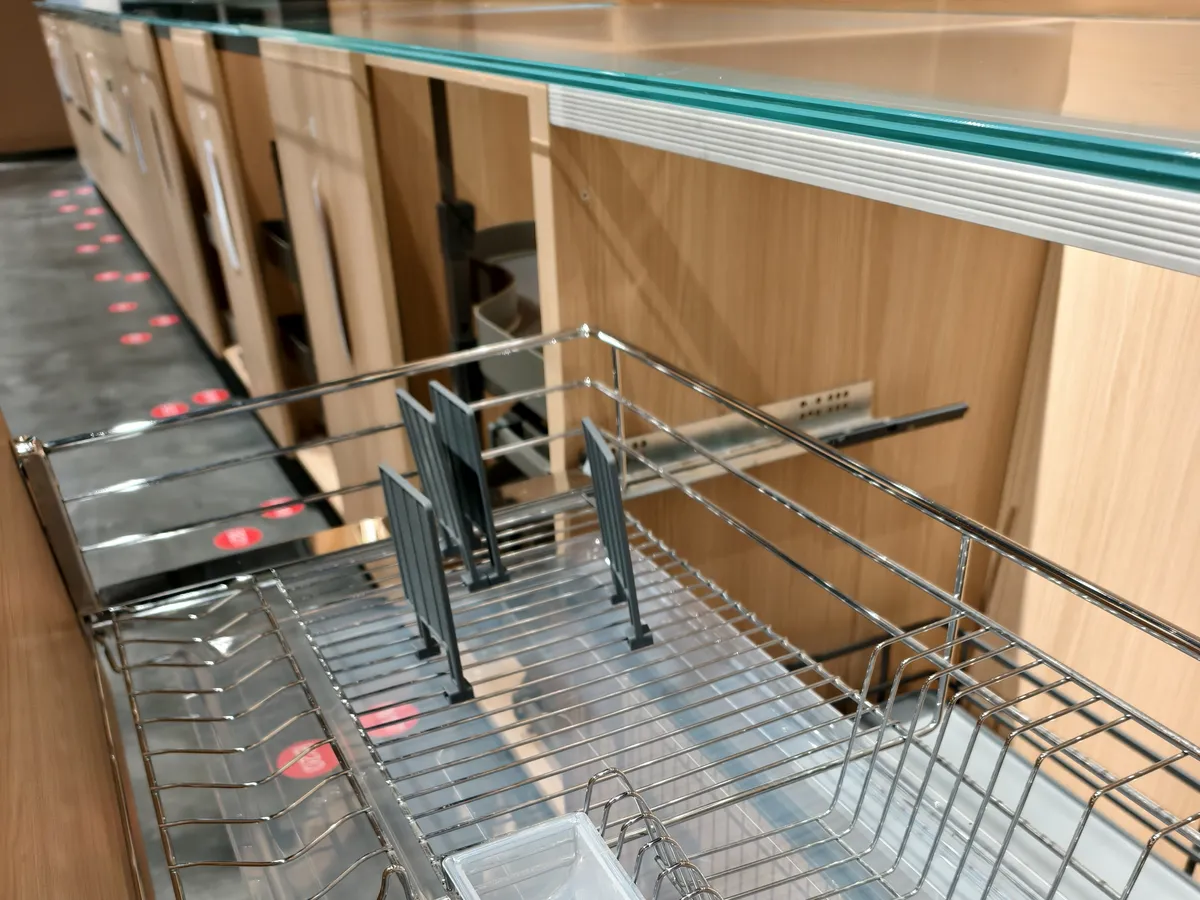
The drainer on the right is the single-tier wire version for narrower bases, the dividers set to keep a stack of plates from migrating at the back of the run. Both ride the 35 to 45 kg per pair runner standard, both are cycled at the factory, and the divider configuration is matched to the drawer width on the spec sheet - a 450 mm and a 600 mm unit carry the same rating. The tray material is powder-coated steel, which is why the line quotes by configuration, not by a stainless checkbox.
Corner units
The corner, finally working.
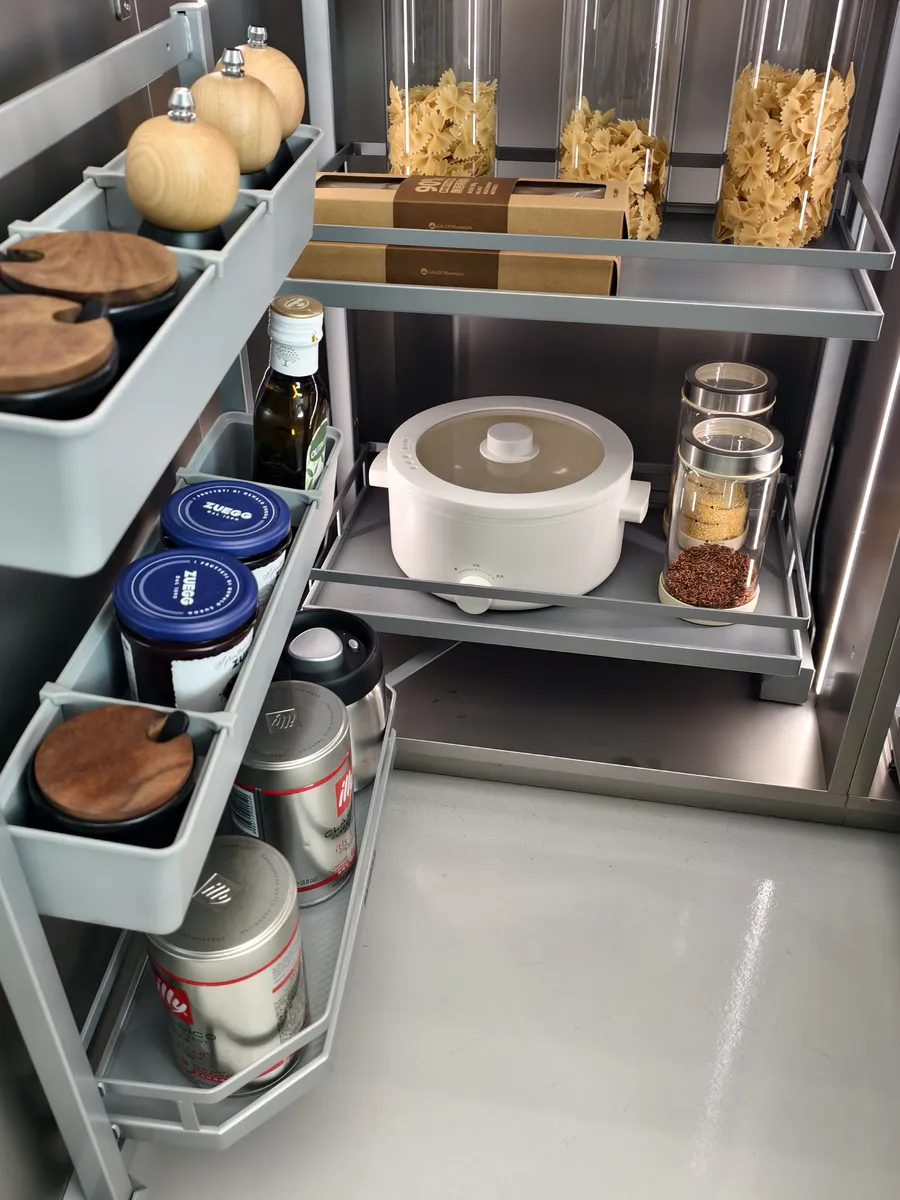
The corner of a kitchen has always been a storage tax: two doors that do not open far enough, a depth you can only reach with a coat hanger, and the habit of pushing things back until the cabinet becomes a closet for things you own but never use. The corner unit above is the fix in its most loaded form - an L-shaped tray that swings out in a single motion, the spice jars at the front edge, the oils and the glass canisters where the wrist does not have to fight the carcass wall.
It follows the same width logic as the rest of the program: base cabinets in 9 to 48 inches in 3-inch steps, the tray cut to the carcass it ships in, the runner class the same 35 to 45 kg per pair standard. Every corner unit is cycled at the factory before the box is wrapped, and the unit is itemised on the spec sheet with its own rating - the reason a corner quote reads as a line, not a surcharge. The loaded state in the photo is the test state: if it carries a full spice run at home, it carries it at year three.
Tall pull-out towers
Towers that take a tall box floor to ceiling.
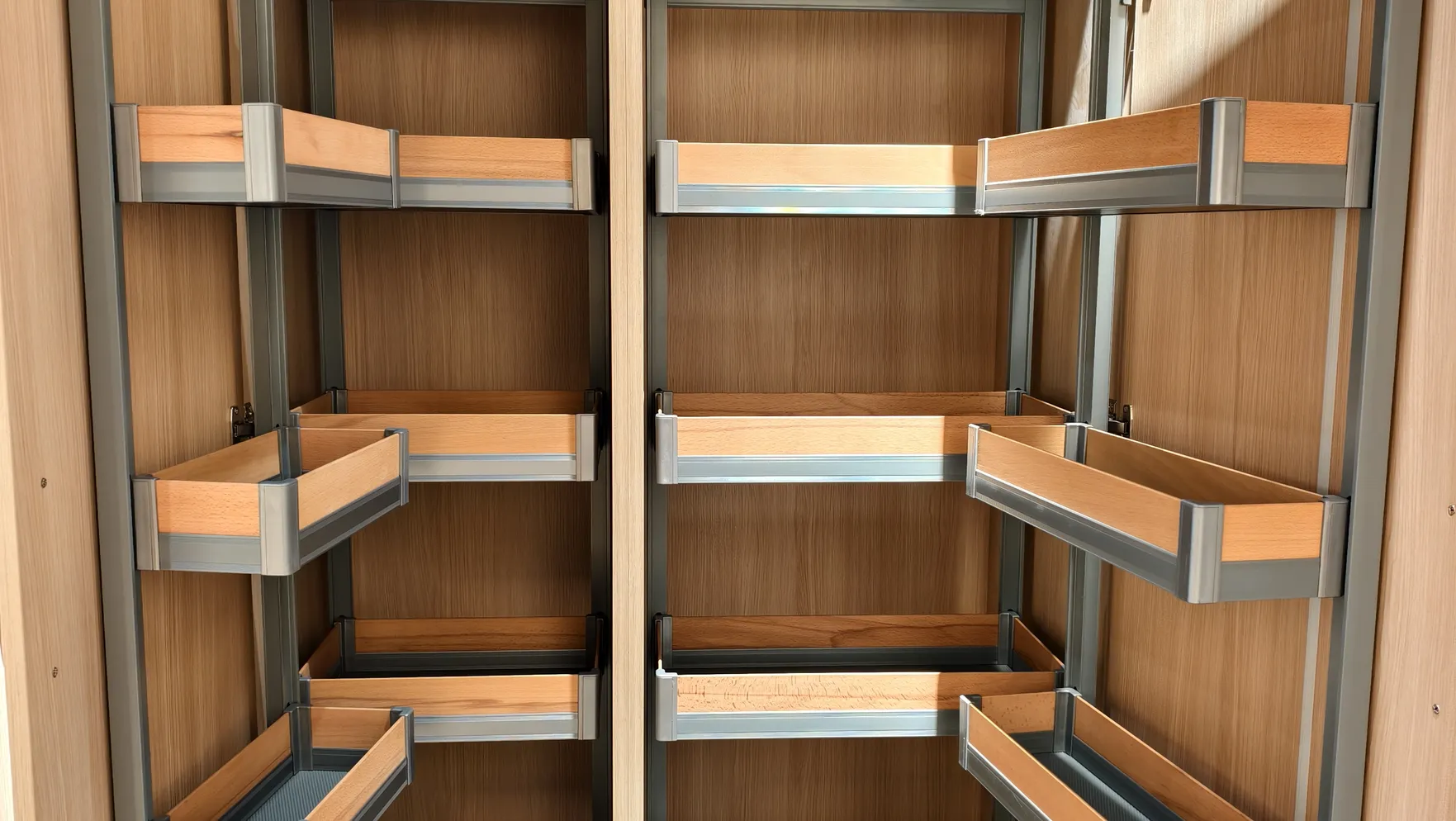
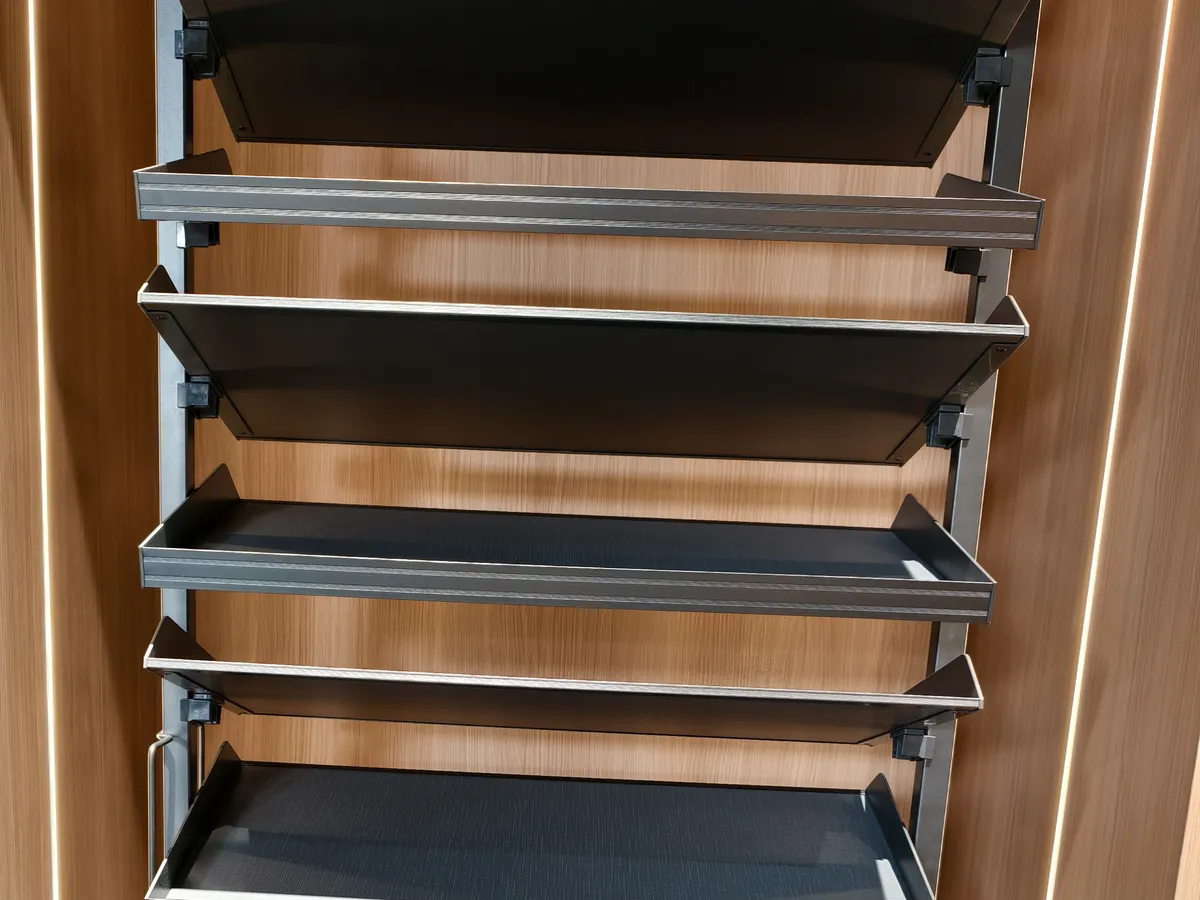
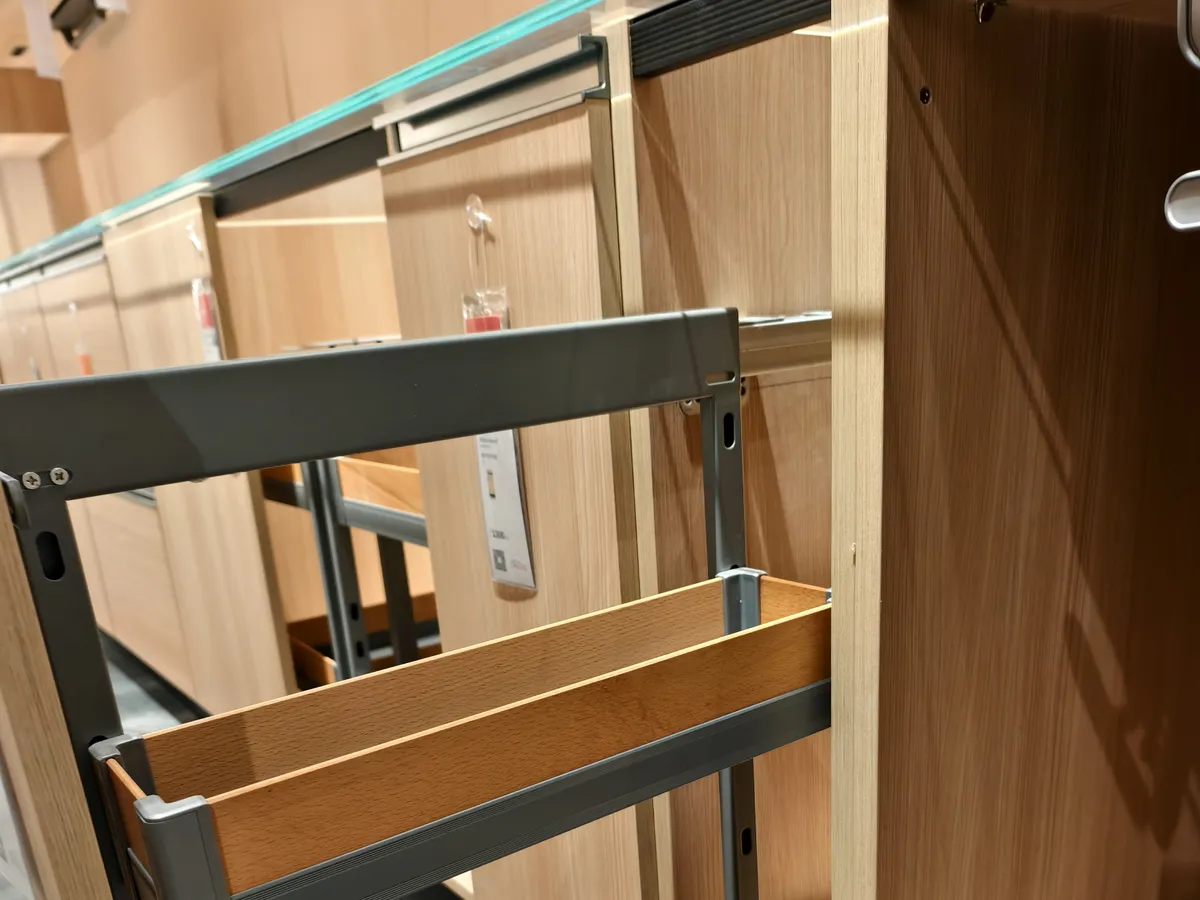
A tall cabinet is usually shelving, and shelving is a compromise: the bottom row works, the middle row is fine, and the top row is storage for the things you stopped using last decade. The tower on the left runs the opposite way - full-height trays on full-extension runners, so the top shelf works at the same reach as the bottom one, and the whole column comes out to be inspected, restocked, or photographed for a progress report before the container closes.
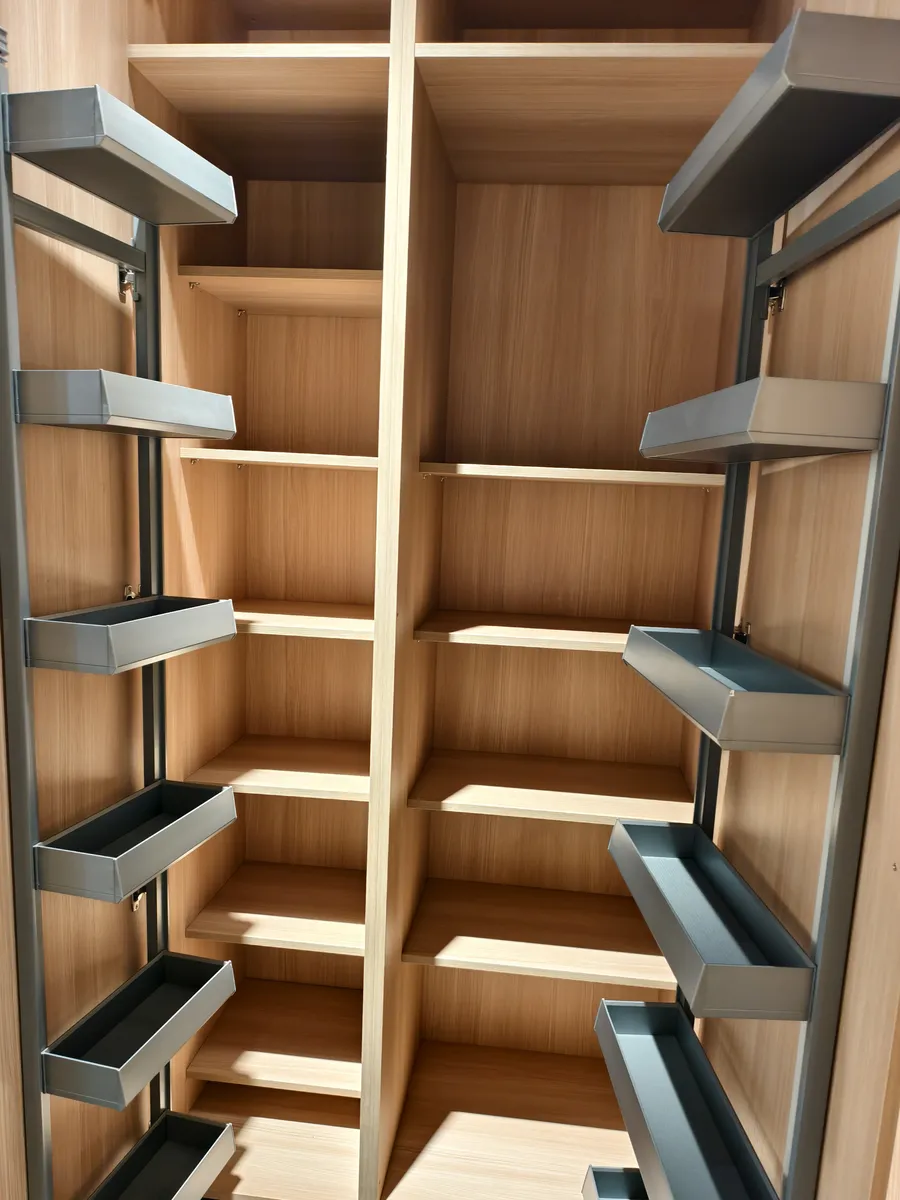
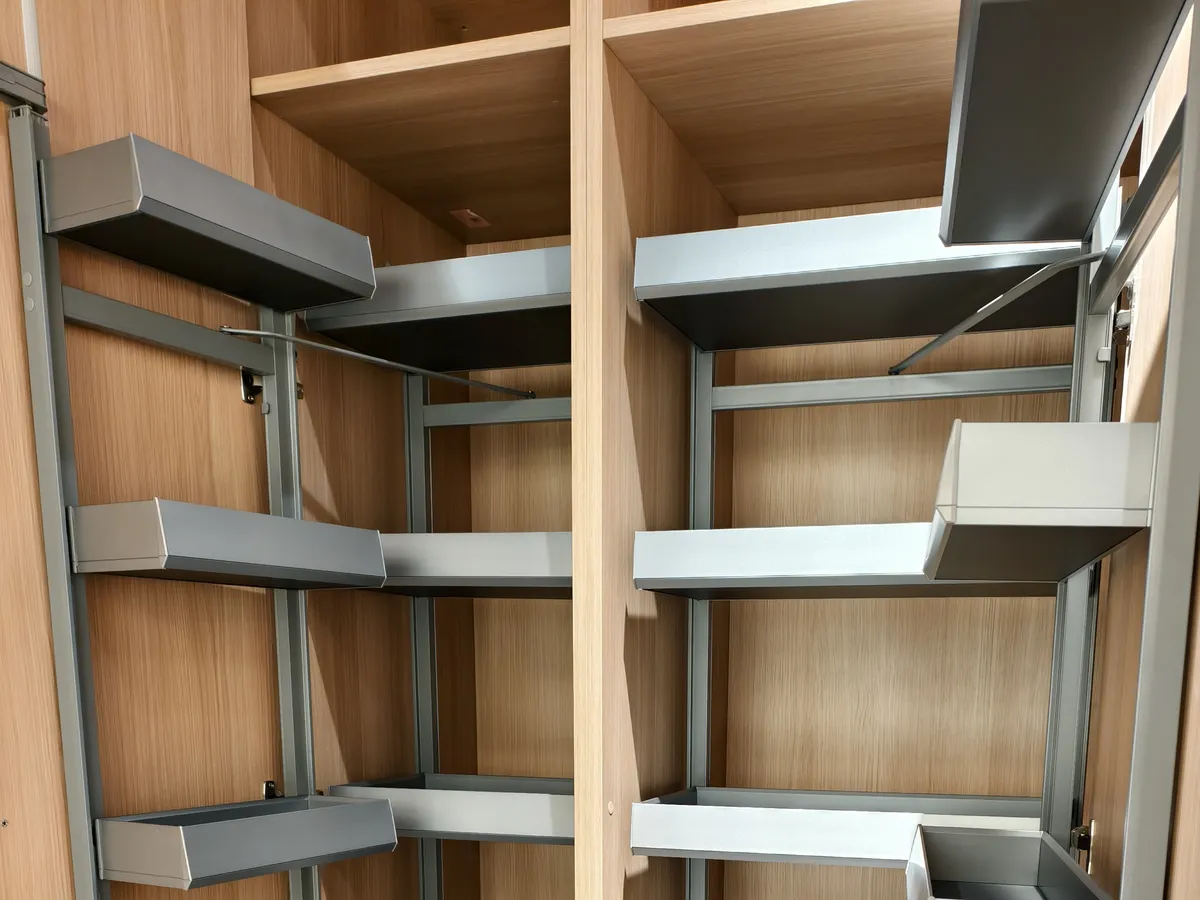
The bay on the right is the wardrobe version of the same logic: lift-down baskets at working heights along the side rails, fixed shelving in the center where the reach is fine. The tower and the lift-down units share the runner standard and the 5-year warranty, and both are built to the carcass rather than to a catalogue size - the panel follows the box, the tray follows the width. A column that is half shelves and half towers is a normal configuration, not a custom one, and it is itemised like any other line on the spec sheet.
Drop-down & wall-mounted
Drop-down shelves for the top of the kitchen.
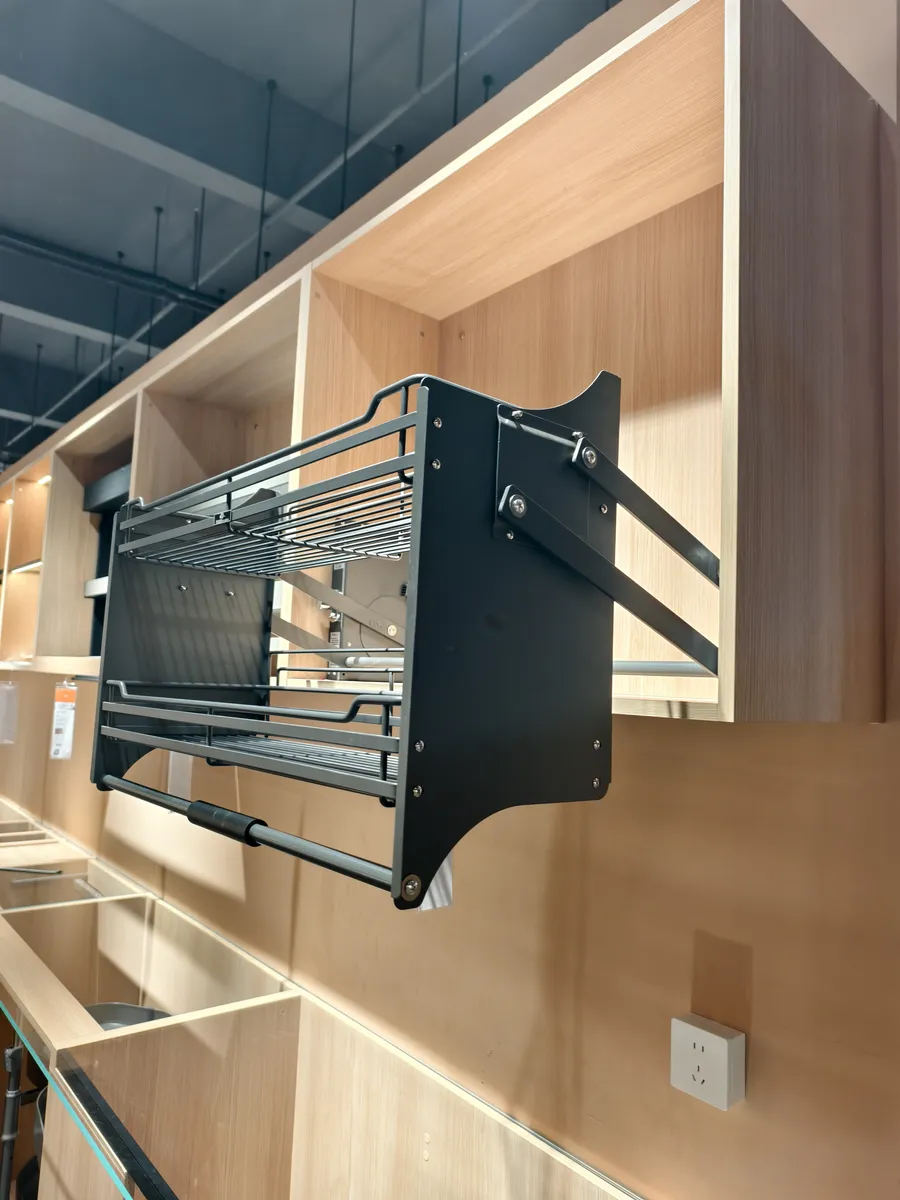
Everything you actually use lives above eye line: the good plates, the serving pieces, the baking trays that only come out for the holidays. The drop-down system on the left is the black-steel frame that swings that row down to working height and holds it there - the wire shelves take the plates, the frame carries the load, and the mechanism is sized to the shelf run, not the door. It closes with a push, and the top of the kitchen stops being a warehouse.
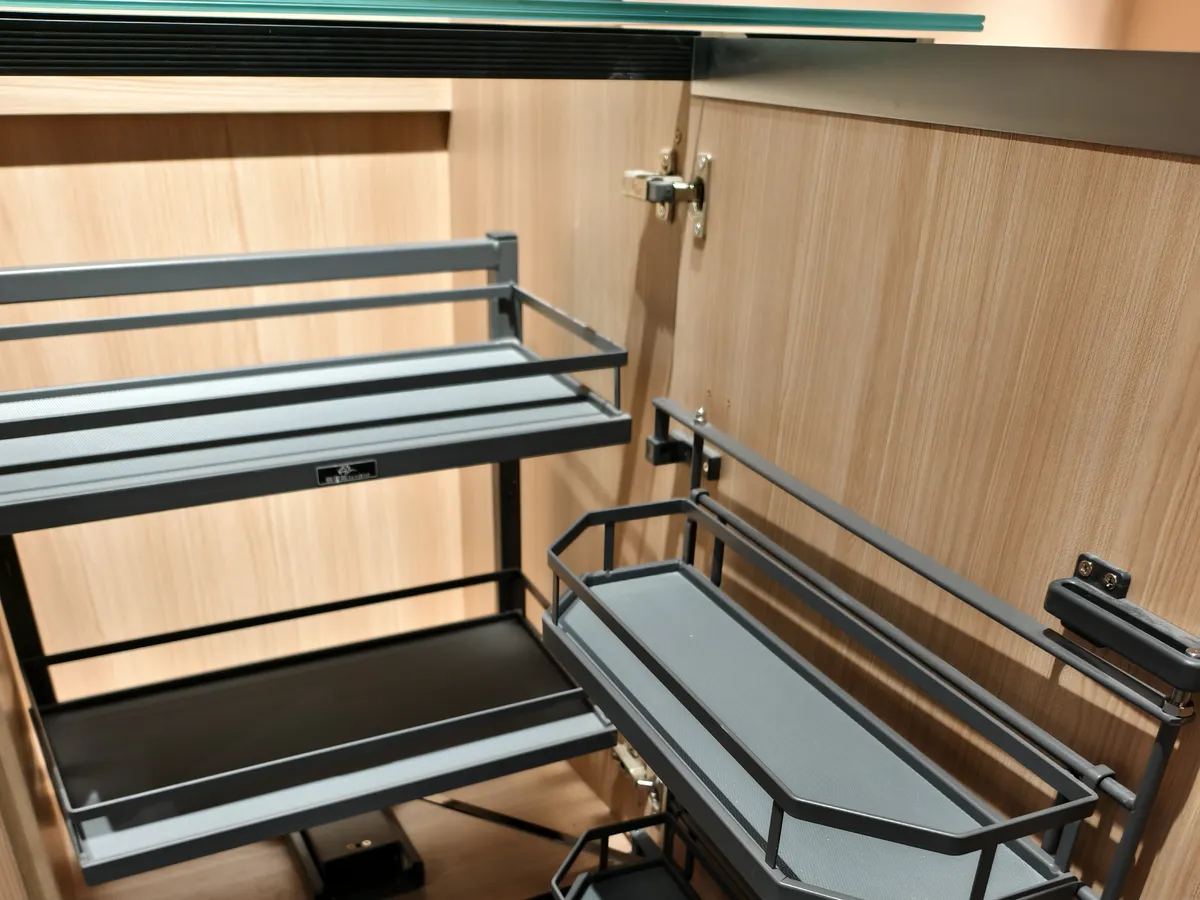
The unit on the right is the pull-out version of the same job: two tiers of steel shelves that come out of the tall cabinet on the full-extension runners, for the trays and the bulk goods that a drop-down is too tall for. Both systems are photographed in the showroom in working order, both are itemised per unit on the spec sheet with the load rating that goes with them, and both sit on the same 5-year hardware warranty as the rest of the line. The rating lives on the spec sheet, per unit - the same discipline the hinge and runner lines on the hardware page follow.
Wardrobe & dressing
The same line runs through the wardrobe.
The basket line is a kitchen family, but the runner standard does not stop at the pantry door. The wardrobe pair on the left is configured the way the closet programs ship: lift-down baskets on the outer bays where the reach is worst, fixed shelving in the center where it is fine, and the hanging rows below - the same hardware that carries the kitchen trays carrying the wardrobe load, at the same 35 to 45 kg per pair rating.
The double-deck unit and the diagonal tray are the two other configurations the wardrobe range uses: stacked trays where the bay is shallow, the diagonal pull-out where a corner or a narrow bay makes a straight run impossible. They are made to order, not catalogue stock - the panel size follows the carcass, the tray follows the width, the finish follows the door. The closet pages show these systems installed in context; this wall shows them mid-cycle.
FAQ
Pull-out baskets, in plain answers.
What is the load rating of a pull-out basket?
Are baskets included in the base price or extra?
What sizes are the corner units available in?
Do tall pull-out towers replace shelving?
What if a basket's runners or hinges fail after installation?
Can I see the basket line before I spec it?
For specifiers
Specifying a basket program, not a kitchen?
Volume pricing, OEM/ODM programs and a hardware sample kit - the dealer line answers in your time zone.
Every basket, itemised before the box ships.
Send your layout - the basket line is written into the quote per unit, with the ratings you will get at installation.